
You were told breastfed babies do not get much wind. Then your baby came off the breast grunting, squirming and pulling their knees up, and the burp you waited for never came. It is one of the more confusing parts of the early weeks, and trapped wind in a breastfed newborn is very common. Breast milk is gentle on a new tummy, but a breastfed baby still swallows air, and a few things about how a feed goes can add a lot more of it.
This page is about reducing that wind at the source: what happens at the breast, feed by feed. It covers the latch, the positions that let less air in, what to do about a fast let-down, when to burp, and what to change if your baby also has expressed milk from a bottle. Most of it costs nothing and takes a few days to test.
At a glance
- Most wind in a breastfed baby is air swallowed during the feed, not something in your milk
- A deep latch and a baby who is more upright than flat let in less air
- A fast let-down is a common cause of gulping. Leaning back and pausing at the first spray both help
- Burp when your baby comes off the breast or you switch sides, not only at the end
- Your diet is rarely the cause. Change your diet only with advice, not on a guess
Why Breastfed Babies Still Get Wind
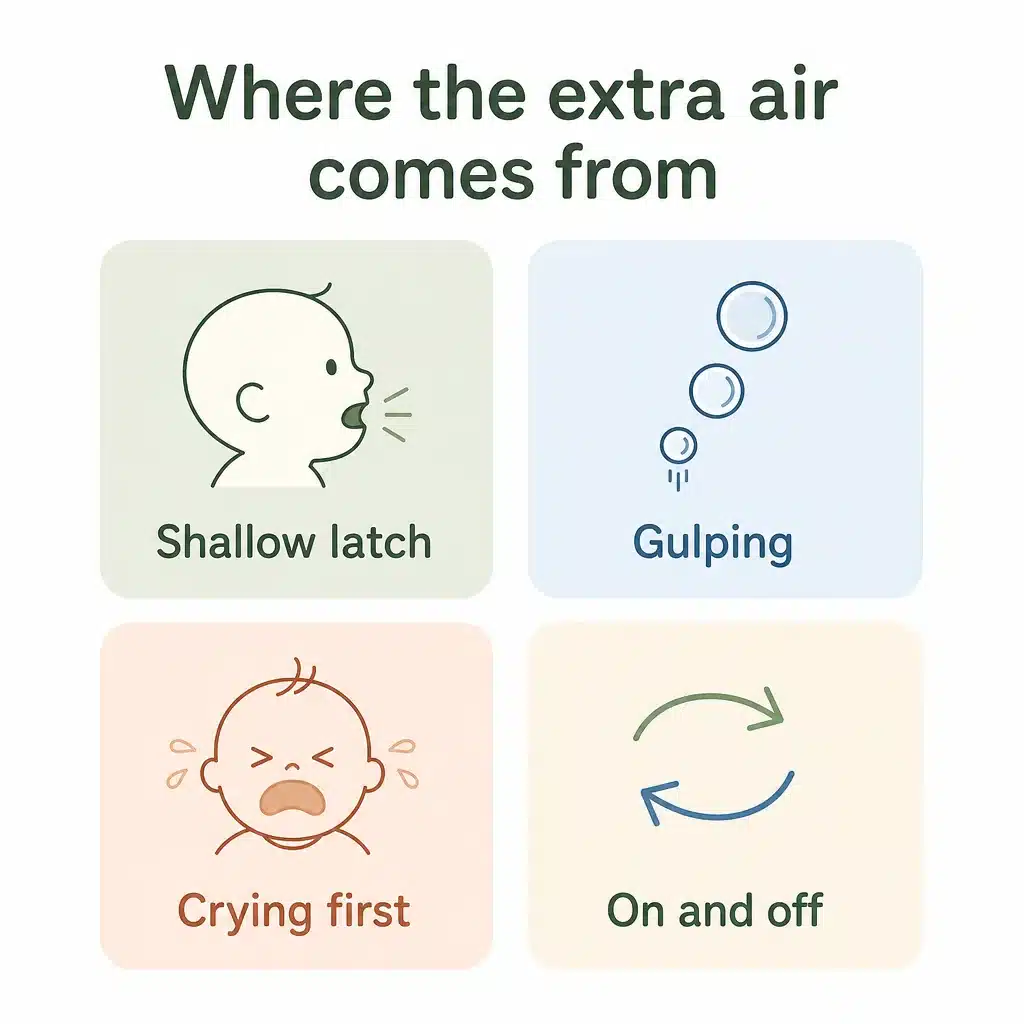
Every baby swallows some air when they feed. Breastfed babies usually swallow less than bottle-fed babies, because a good latch forms a close seal, but “less” is not “none”. On top of that, a newborn’s gut is only weeks old and still learning to move milk and wind along smoothly, so the same small bubble that an older baby would not notice can make a newborn very uncomfortable.
The extra air in a breastfed baby usually comes from one of four places:
- A shallow latch. Air slips in around the edges of the seal with each suck
- Gulping. A fast let-down or a very full breast means your baby swallows quickly to keep up, and takes air in with the milk
- Crying before the feed. A baby who has worked up to a full cry swallows air before the first mouthful
- Coming on and off. Every time your baby pulls off and re-latches, a little more air goes in
The good news is that all four respond to small changes you can make at the next feed. If you want to know whether your baby’s unsettled evenings are wind or something more, our guide to colic in breastfed babies covers the difference.
Before the Feed
The calmer the start, the less air goes in. Two habits make the biggest difference.
Feed at the early hunger cues. Rooting, turning their head, bringing their hands to their mouth and smacking their lips all come before crying. A baby who latches at this stage feeds calmly. A baby who latches mid-scream gulps air before the milk even starts.
Settle a frantic baby first. If your baby is already crying hard, take 30 seconds to calm them against your chest before you offer the breast. A little rocking, a shush, or letting them suck on the tip of your clean finger for a moment takes the edge off. The feed that follows is usually calmer and swallows less air.
During the Feed
Get a deep latch
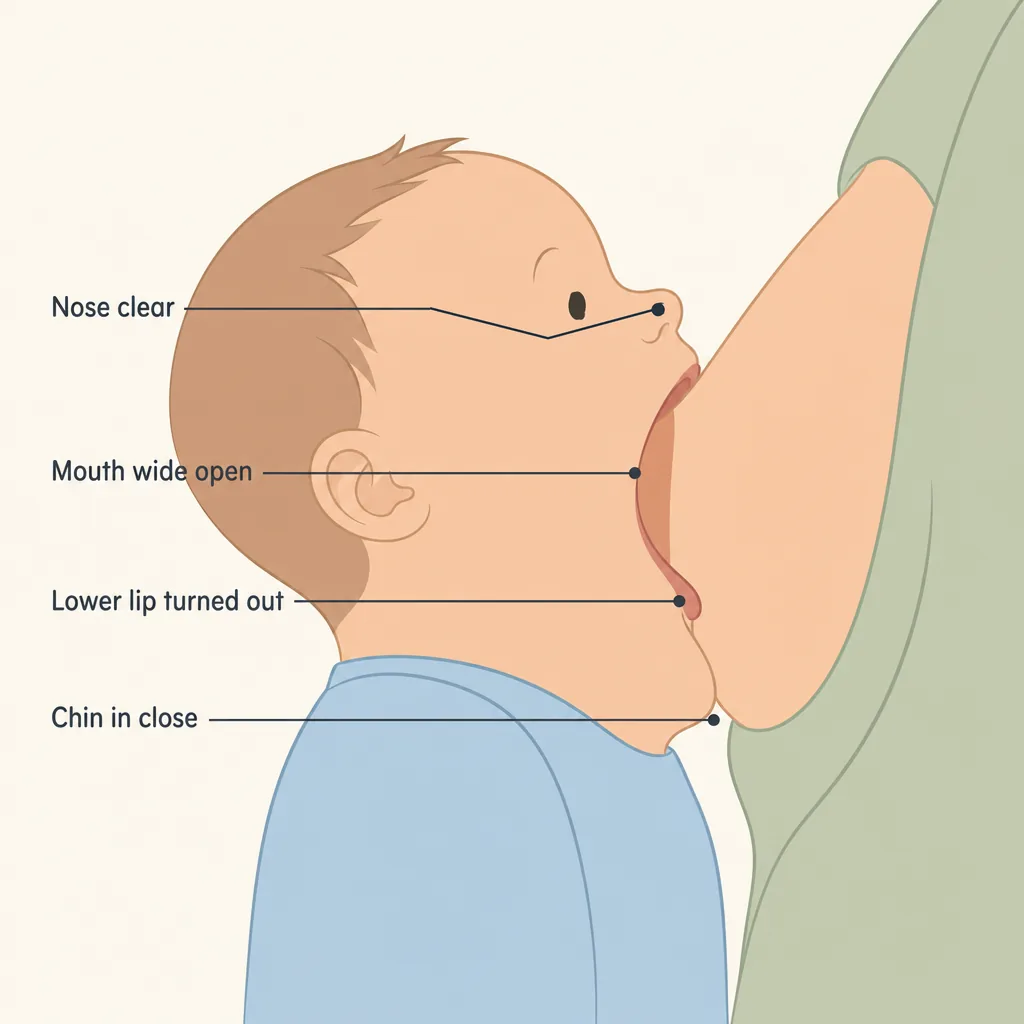
A deep latch is the single biggest thing you can do about wind at the breast. Signs your baby has a good one:
- Their mouth is wide open, with lips turned out, not tucked in
- Their chin presses into your breast and their nose is clear
- More of the dark area around your nipple is in their mouth from below than from above
- You hear swallowing, not clicking or smacking
- The feed feels like a strong tug, not a pinch
Clicking is the sound to listen for. A click usually means the seal is breaking and air is getting in. If you hear it, slide a clean finger into the corner of your baby’s mouth to break the suction gently, and latch again with their mouth wide open.
If the latch stays shallow despite your best efforts, or feeds are painful, ask your child health nurse, midwife or a lactation consultant to watch a feed. They can spot things that are hard to see from above, including a tongue tie, and the fix is often simple.
Choose a more upright position
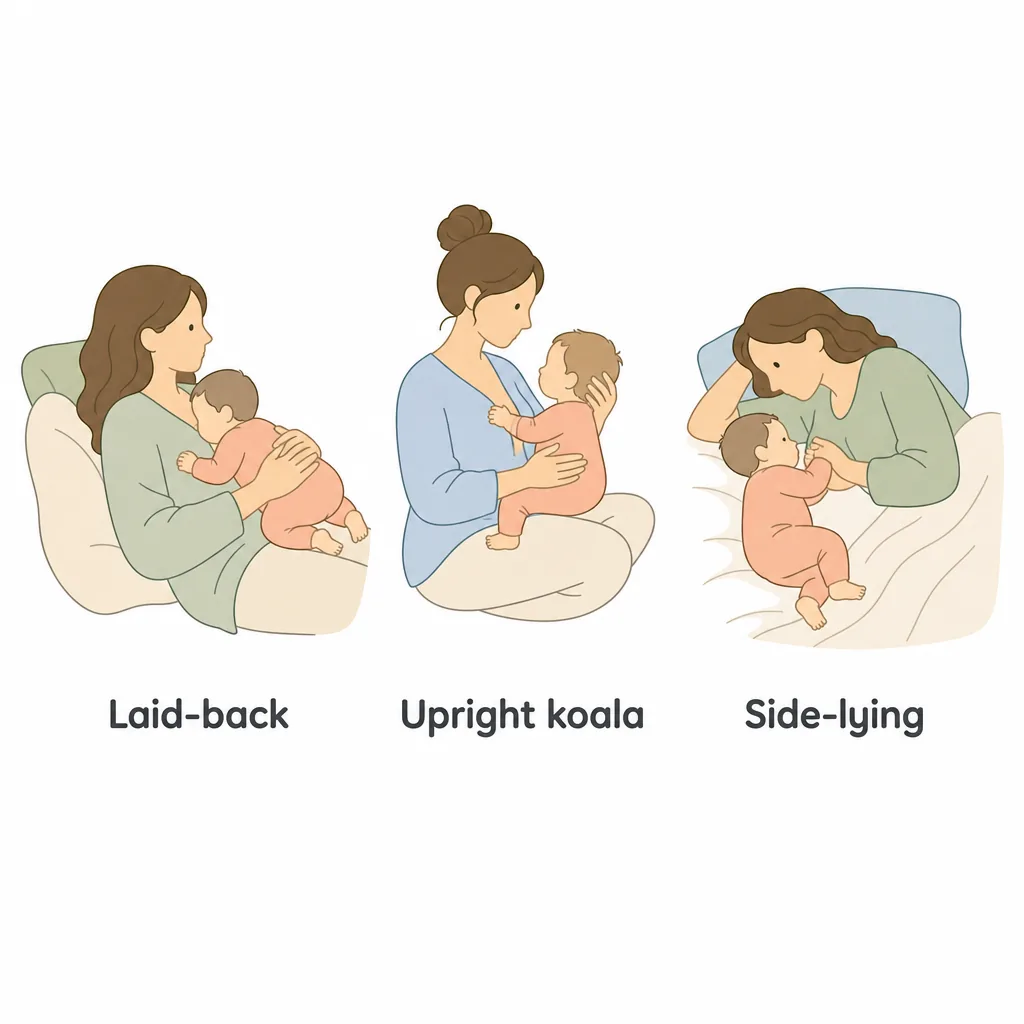
Babies swallow less air when their head is higher than their tummy. Air rises, so when your baby is upright, any air that does go in sits at the top of the tummy where a burp can bring it straight back up.
- Laid-back feeding. Lean back against pillows at about 45 degrees and let your baby lie tummy-down on your chest. Gravity slows the flow, and your baby controls the pace
- Upright or koala hold. Your baby sits straddling your thigh, facing you, with their head and neck supported. This one suits babies with a fast let-down and those who come off the breast spluttering
- Side-lying. Useful at night, and it slows the flow a little. Make sure your baby’s head is in line with their body, not twisted
The cradle hold is fine for many babies. If your baby is windy, try a feed or two in the laid-back or upright position and see whether the grunting afterwards eases.
Slow down a fast let-down
If your baby coughs, splutters, pulls off at the start of the feed, or you see milk spraying when they come off, your let-down is probably faster than they can manage. They gulp to keep up, and gulping means air.
A few things help:
- Lean back. Feeding laid-back means your baby drinks against gravity, which slows the flow
- Pause at the first spray. When you feel the let-down start, let your baby come off, catch the first fast spray in a cloth, and latch again once it slows
- Burp more often. A baby dealing with a fast flow benefits from a burp every few minutes in the first part of the feed
If you also have a lot of milk and your baby seems uncomfortable after most feeds, a lactation consultant can suggest ways to manage the supply safely. Changes to how often you feed from each breast are best made with that advice rather than on a guess.
Let your baby finish the first side
Swapping sides quickly can mean your baby gets a lot of the thinner, lactose-rich milk that comes first and less of the richer milk that follows. For some babies that means a gassier tummy. Letting your baby finish the first side, until their sucking slows and they come off on their own, gives a more even feed. Then burp before offering the second side.
After the Feed
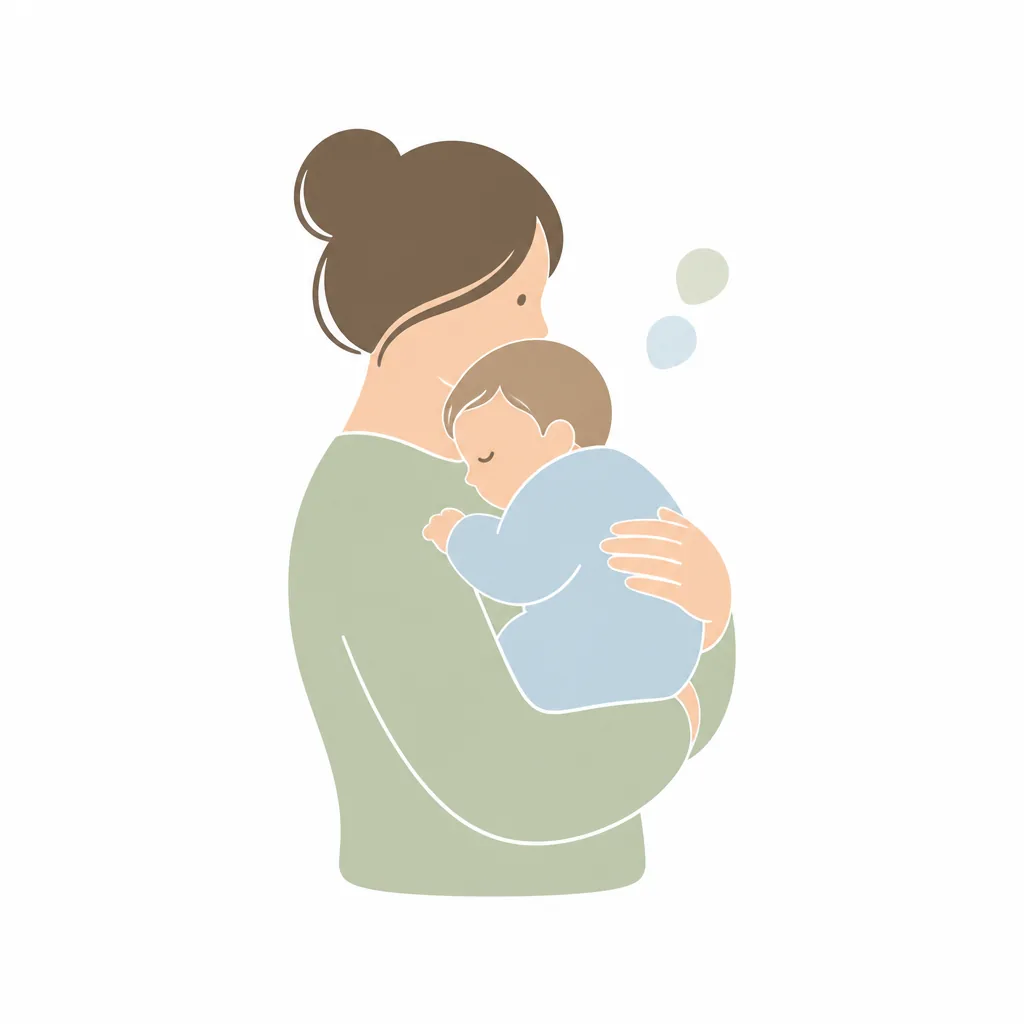
Most of the wind that stays in a breastfed baby is air that did not come back up in the first few minutes after the feed.
Burp at the natural breaks. When your baby comes off the breast, when you switch sides, and at the end of the feed. Breastfed babies often burp less than bottle-fed babies, so do not worry if one does not come every time. Give it a couple of minutes in a change of position rather than patting for ten. Our guide to the best ways to burp a baby covers the positions. If you can tell a burp is there but it will not come up, our guide on how to burp a baby with trapped gas walks you through the stuck-burp sequence.
Keep your baby upright for a while. Twenty to thirty minutes upright against your chest after a daytime feed lets any remaining air rise to the top where it can come out. After a night feed, a shorter five to ten minutes is usually enough, in the dark and without chatting.
Watch the hour after the feed. If your baby is squirming, grunting and pulling their knees up an hour after a feed, the wind has probably moved lower. At that point a burp will not help much, and gentle leg movements and tummy-down holds do more. Our guide on how to release trapped wind in babies explains the routine.
If You Also Give Expressed Milk in a Bottle
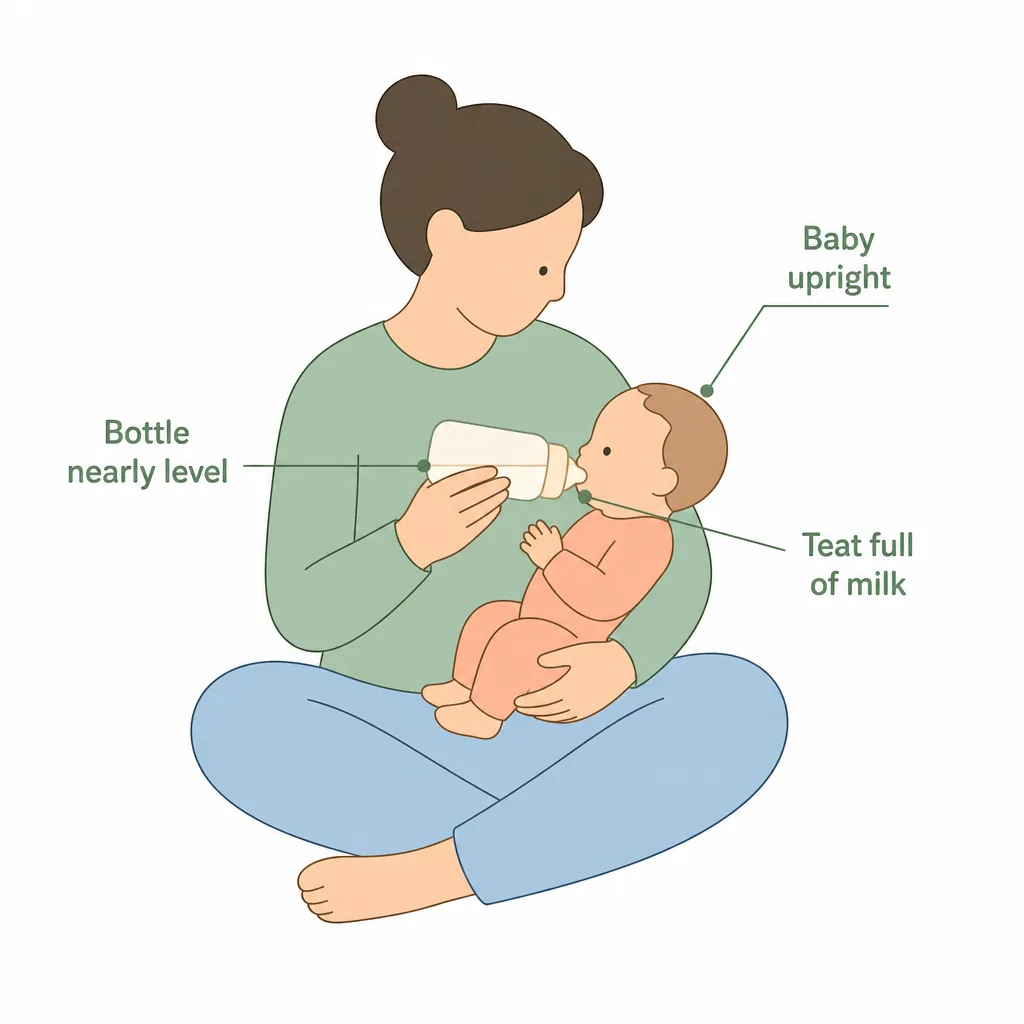
Many breastfed babies have some feeds from a bottle, and bottle feeds are often where the extra air comes from.
- Pace the feed. Hold your baby fairly upright and the bottle closer to horizontal, so the milk flows only when your baby sucks. Let them pause every minute or so
- Keep the teat full of milk. Tip the bottle just enough that the teat is full, so your baby is not sucking air at the end
- Check the teat flow. A teat that is too fast causes gulping, and one that is too slow causes a lot of hard sucking. Your baby should swallow steadily without spluttering
- Burp halfway. Pause about halfway down the bottle for a burp, as you would when switching sides
Is It Something I Am Eating?
This is the question almost every breastfeeding mum asks. For most babies, the answer is no. The wind in a breastfed baby’s tummy is air they swallowed and gas their own gut makes, not gas passed on from the foods you eat. There is no need to cut out onions, broccoli or beans just because your baby is windy.
A small number of babies are sensitive to something passing through breast milk, most often cow’s milk protein. That usually comes with other signs, such as a rash, a lot of vomiting, mucus or blood in the nappies, or slow weight gain. If that sounds like your baby, talk to your GP or child health nurse before changing your diet, so you stay well nourished. Our guides to breastfeeding diet and colic and to cow’s milk protein intolerance cover this in more detail.
Other Ways to Help a Windy Breastfed Baby
Reducing the air that goes in is the long game. For the wind that is already there, a few hands-on methods help, and our guide to 10 ways to relieve trapped wind has more ideas:
- The colic carry. Your baby lies tummy-down along your forearm while you walk slowly. Our step-by-step guide to the colic carry shows how
- Tummy massage. Slow clockwise circles on a calm baby, half an hour or more after a feed. Our baby massage for colic and wind guide has the full routine
- Bicycle legs. Gentle leg cycling on a firm surface after a nappy change
Alongside these, many Australian families use Infants’ Friend Colic & Wind, a traditional herbal remedy given by mouth with feeds. Its ingredients are traditionally used in Western herbal medicine to relieve colic symptoms, wind and gas pain and mild indigestion in infants. It is alcohol-free and suitable from birth when used as directed, whether your baby is breastfed or bottle-fed. Always read the label and follow the directions for use.
When to Talk to Your GP or Child Health Nurse
Wind in a baby who is feeding well, having plenty of wet and dirty nappies and gaining weight is usually just wind. Have a chat to your GP or maternal child health nurse if your baby is not gaining weight, has fewer wet nappies, vomits often or forcefully, has blood or mucus in their poo, has a fever, or seems unwell to you rather than uncomfortable. If feeds are painful for you, or your baby cannot seem to stay latched, a lactation consultant or child health nurse can help with that too.
Always read the label and follow the directions for use. If symptoms persist, talk to your health professional.
Infants’ Friend Colic & Wind (AUST L 367810) contains ingredients traditionally used in Western herbal medicine for colic relief (wind/gas pain). Available Australia-wide since 1935.
Frequently Asked Questions
AUST L 367810. Always read the label and follow the directions for use. If symptoms persist, talk to your health professional.