
Ask a room full of parents who have been through colic what got them through the evenings, and someone will demonstrate it before they explain it: baby draped tummy-down along a forearm, head near the elbow, legs dangling either side, parent pacing slowly around the kitchen. That is the colic carry, and for many families it is the single most useful thing they learn in the first three months.
This page shows you exactly how to do it, why it works so well for colic and wind, the variations worth knowing, and how to keep it safe.
At a glance
- The colic carry is a tummy-down hold: baby lies along your forearm, head supported near your elbow, your hand between their legs
- Gentle pressure on the tummy plus slow movement is what settles a colicky, windy baby
- Head and neck are fully supported, face is always clear, and you are awake and standing or sitting upright the whole time
- It is a settling hold, not a sleeping position. Babies sleep on their backs, every time
What Is the Colic Carry?
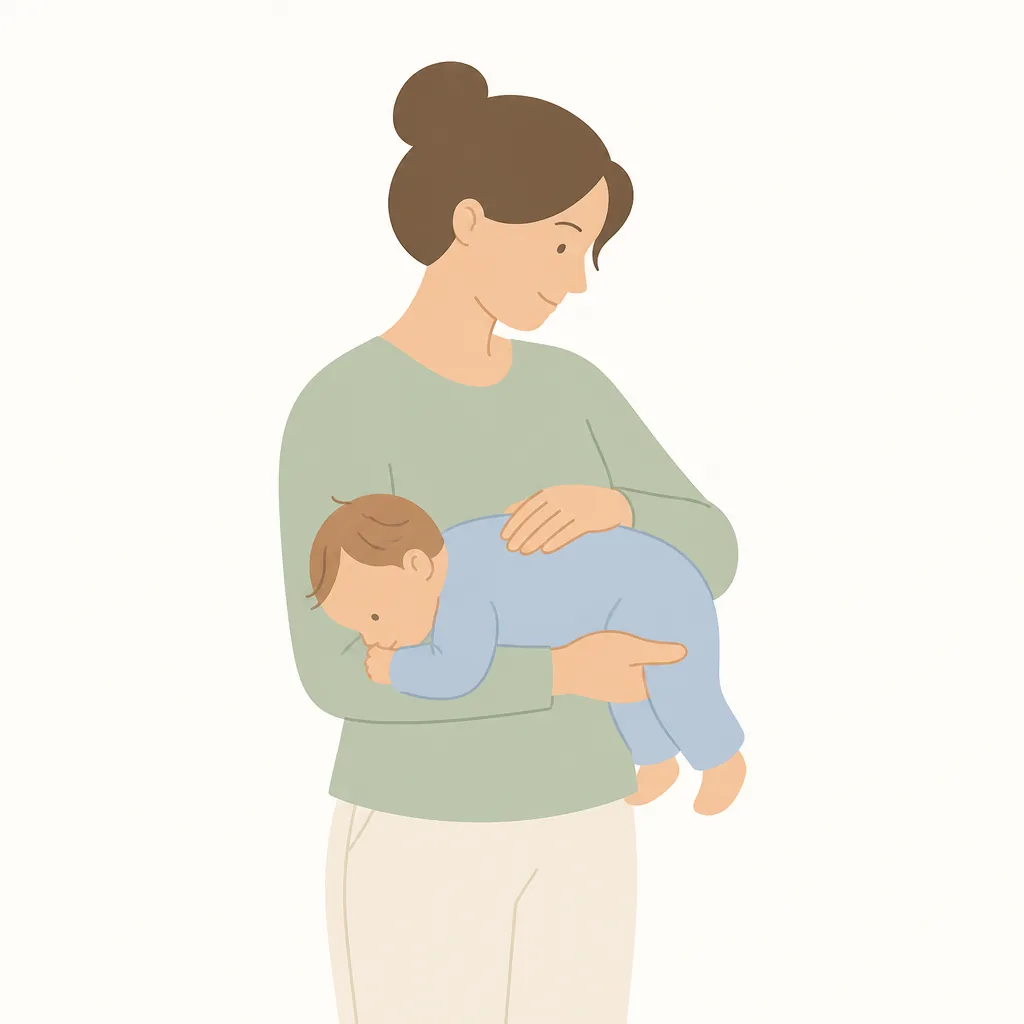
The colic carry, sometimes called the aeroplane hold or the forearm hold, is a way of holding your baby face-down along the length of your forearm. Their head rests near the crook of your elbow, their tummy lies against your arm, and their legs straddle your hand or wrist, which holds them securely between the thighs. Your other hand rests on their back.
It looks casual, almost careless, when a practised parent does it. It is anything but. The hold gives a colicky baby three things at once: firm, even pressure on the tummy, a fully supported position that lets them relax their whole body, and the slow rocking that comes from you walking or swaying.
Why It Works So Well for Colic and Wind
During a colicky episode, babies pull their knees up, clench their fists and go rigid. A lot of that is tension around the tummy, whether wind is the main problem or just part of the picture. The colic carry works on exactly that spot.
- Tummy pressure. The weight of your baby’s own body against your forearm gives steady, gentle counter-pressure across the tummy, which is soothing for wind pain in the same way you might press a hand against your own stomach
- Wind moves. That pressure, plus the slightly head-up angle, helps trapped air work its way up and out. Plenty of parents get the burp in the carry that they could not get over the shoulder
- Full-body support. With the whole front of their body supported, your baby can stop bracing and go floppy. That release is often the moment the crying changes pitch
- Movement. Slow walking adds the rhythmic motion babies spent nine months feeling. Movement alone calms many babies; movement plus tummy pressure calms more
How to Do the Colic Carry, Step by Step
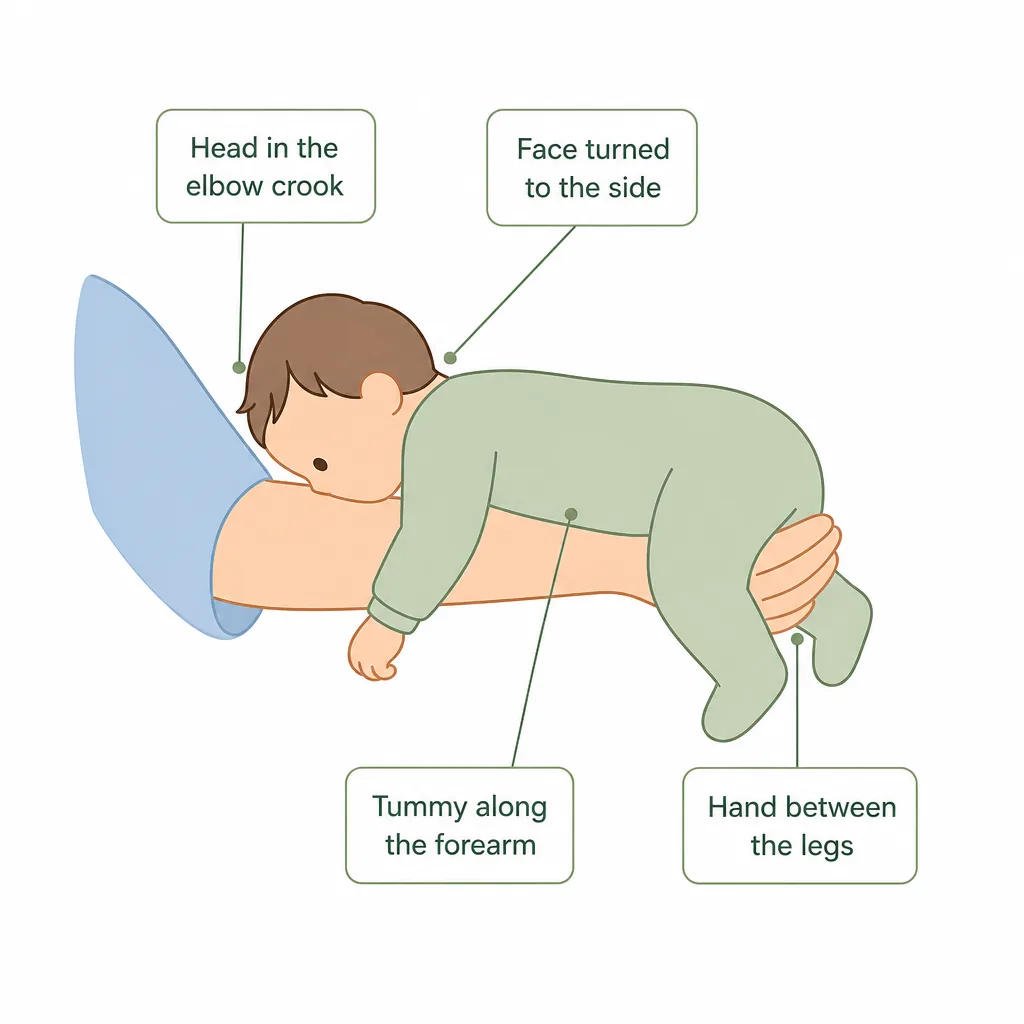
Practise this a few times when your baby is calm, so your hands know what to do when the crying starts.
- Step 1. Start with your baby facing you, upright against your chest, one hand behind their head and neck
- Step 2. Slide your other forearm under their body, so your hand comes through between their legs and your forearm runs along their tummy and chest. Your palm ends up cupping one thigh or their nappy area
- Step 3. Lower them onto your forearm, turning them so they are lying face-down along your arm. Their head settles near the crook of your elbow, turned to one side, cheek resting on your arm
- Step 4. Check the face. Nose and mouth must be completely clear, turned sideways, with nothing pressing against them. If the head is too far down towards your hand, shift your baby back up towards your elbow
- Step 5. Rest your free hand on their back. This is your safety hand and your comfort hand. Keep it there
- Step 6. Start moving. Walk slowly, sway from foot to foot, or add gentle up-and-down bounces from your knees. Slow and steady beats fast and jiggly
- Step 7. Keep your arm slightly angled, elbow a little higher than your hand, so your baby’s head is a touch above their tummy. This helps wind rise and feels more comfortable for them
Most babies settle within a few minutes. If yours does not, a change of pace, a quiet room or a shift to a different hold is a better next step than doing the same thing harder.
Variations Worth Knowing
The colic carry is the classic, but it has cousins. If your baby prefers one over another, use the one that works.
Tiger in the tree
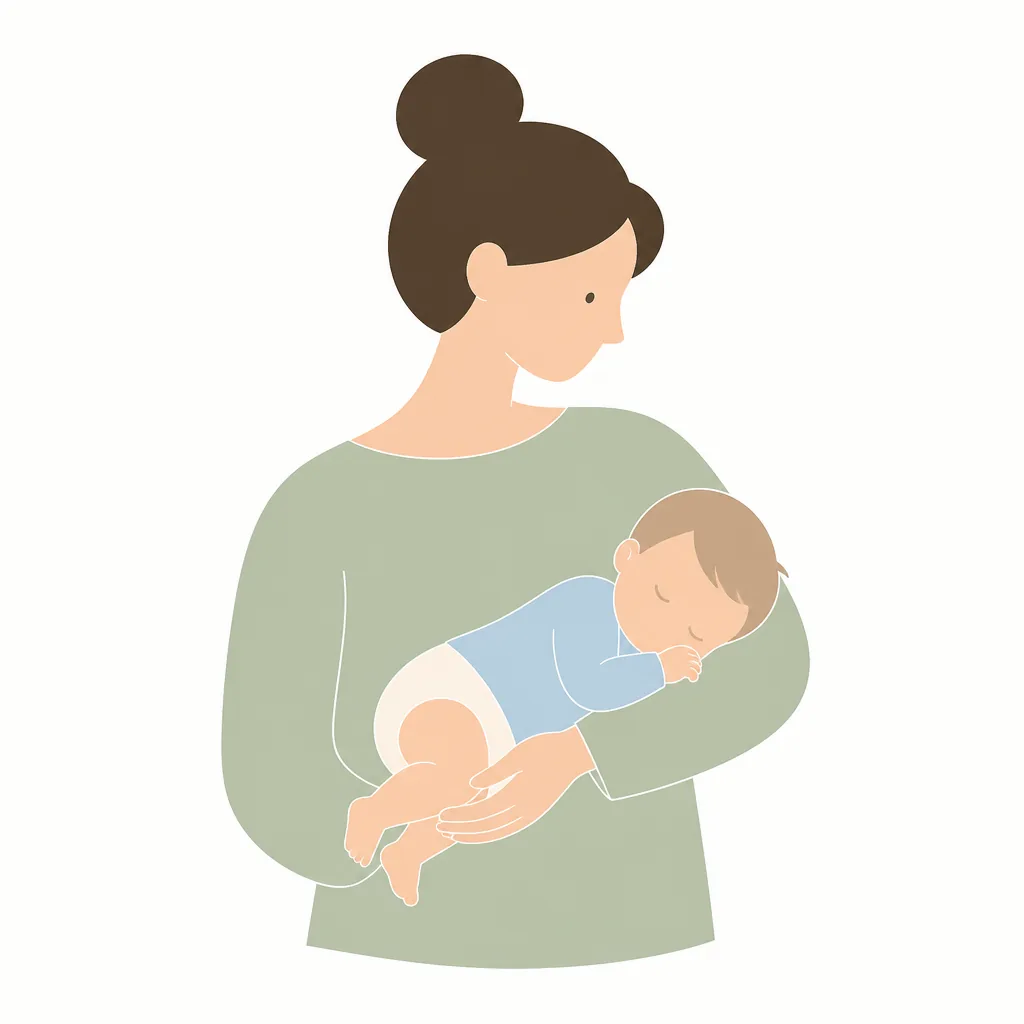
The same forearm position, but your baby lies on their side rather than face-down: their head rests on the inside of your elbow, their back is against your chest, and your hand holds their nappy area. Many parents find this the most comfortable version for long stretches of pacing, and it is the hold our 10 ways to relieve trapped wind guide calls the magic hold.
Across the lap
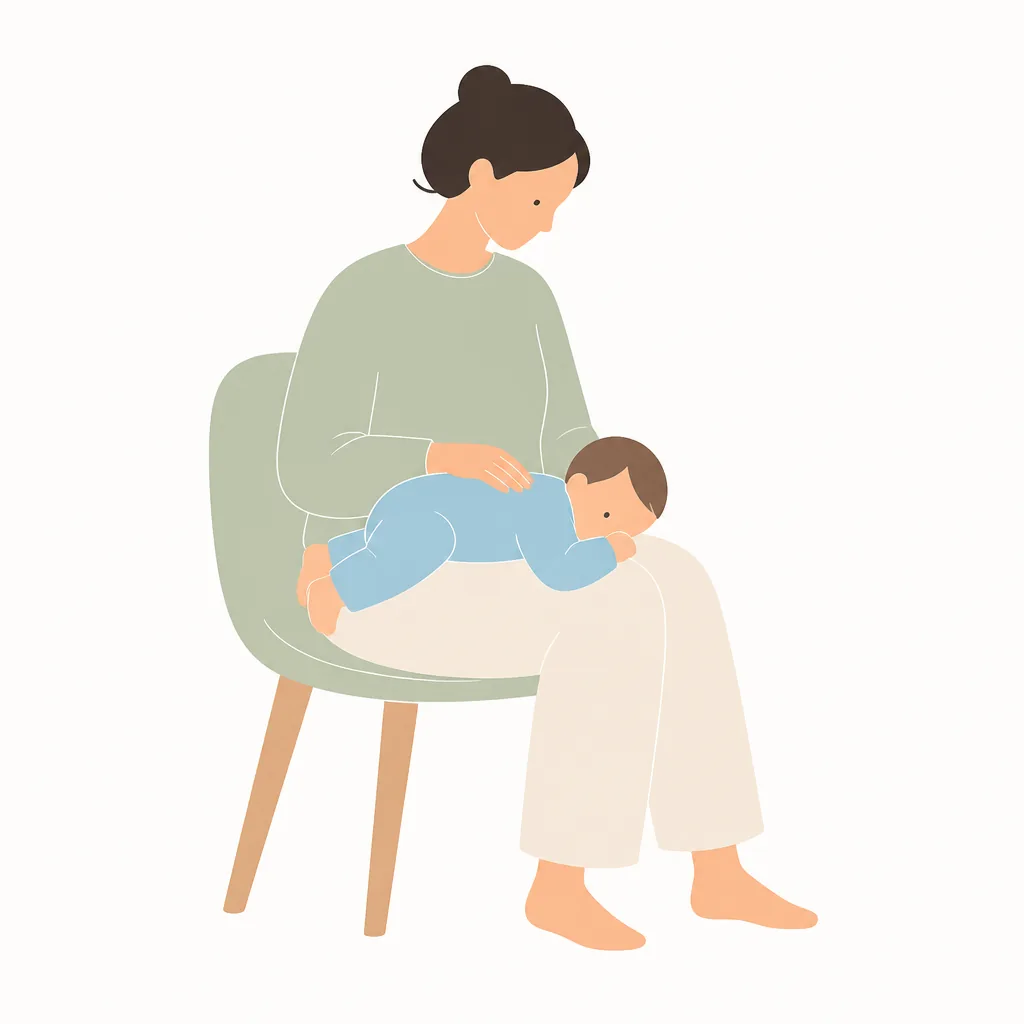
Sit down and lay your baby tummy-down across your thighs, head on one leg and tummy over the other, so your knee gives a soft ridge of pressure under their belly. Rub or pat their back slowly. This is the sit-down version for when your arms have had enough.
Over the shoulder, high and tight
Not a tummy-down hold, but worth pairing with the carry. Hold your baby high so their tummy rests over the top of your shoulder, which gives the same gentle pressure from a different angle, and walk. Alternate between this and the colic carry across a long evening.
The upright chest hold
Baby upright against your chest, head under your chin, your hand supporting their bottom. Less tummy pressure, but the sound of your heartbeat and breathing does a lot. Good for the wind-down after the carry has broken the crying.
Our guide to how to soothe a colicky baby puts these holds alongside sound, warmth and feeding tweaks for the full evening routine.
Keeping It Safe
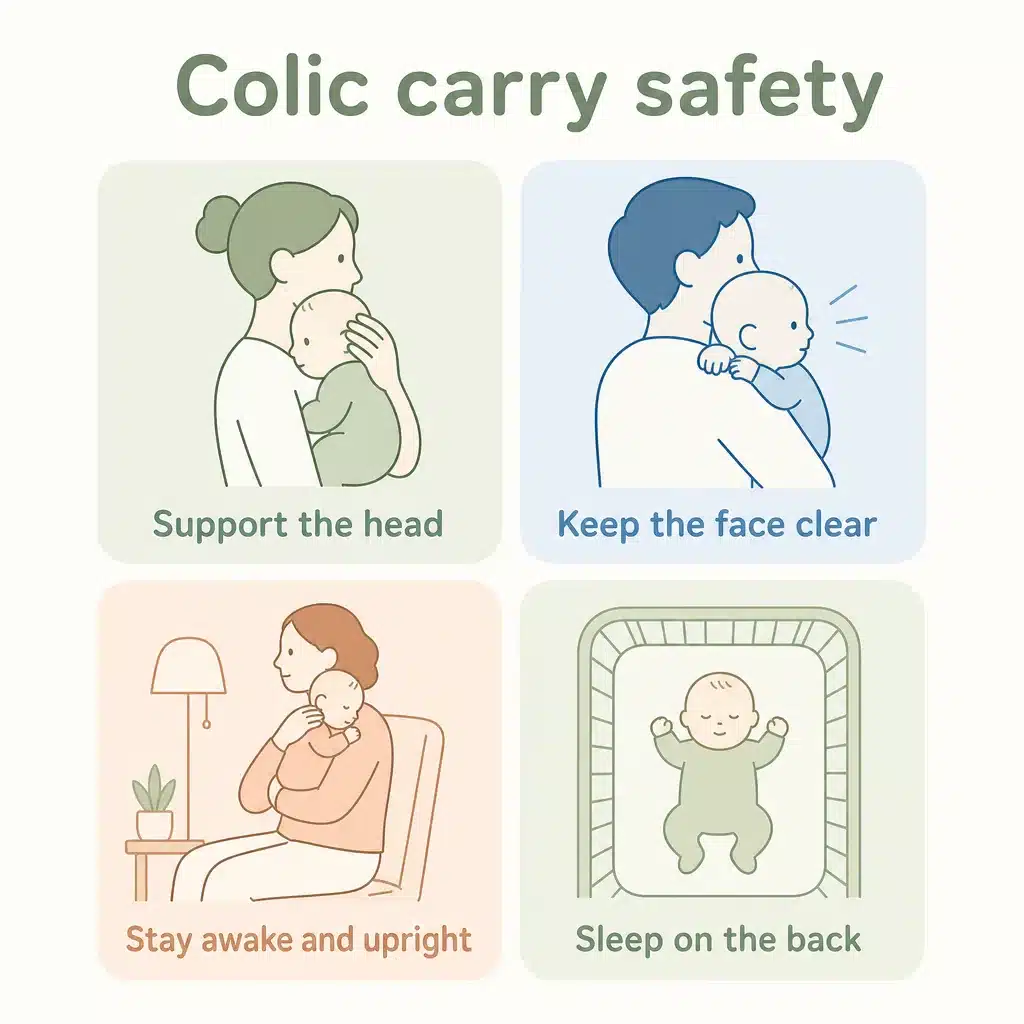
The colic carry is safe when it is done attentively. A few rules make it so.
- Support the head and neck at all times. Newborns cannot hold their own head up. The crook of your elbow does that job
- Keep the face clear. Cheek on your arm, nose and mouth turned to the side and open to the air. Check every time you reposition
- Stay awake and upright. This is a hold for when you are standing or sitting up. Never lie down with your baby on your forearm or chest and never let yourself drift off. If you are so tired you might, put your baby down on their back in their cot and sit near them instead
- Not a sleep position. If your baby falls asleep in the carry, that is a win. Once they are settled, move them onto their back in their cot for sleep
- Give feeds a moment. Tummy pressure straight after a big feed can bring milk back up. If your baby is a spitter, wait ten to fifteen minutes after a feed before using the carry, or use the upright chest hold first
- Watch your own arm. Ten minutes of carrying a four-kilo baby on one forearm is harder than it sounds. Swap arms, sit down for the across-the-lap version, or hand over to another adult
Pairing the Carry With Other Wind Relief
The colic carry settles the crying. It works even better when less wind builds up in the first place: a mid-feed burp, 20 to 30 minutes upright after feeds, and five minutes of clockwise tummy massage at a calm time in the afternoon. Every method, ranked and with the first 60 seconds sequence for a crying baby, is on our wind relief for babies page.
Many Australian families also use Infants’ Friend Colic & Wind, a traditional herbal remedy with ingredients traditionally used in Western herbal medicine to relieve wind and gas pain in infants, alcohol-free and suitable from birth when used as directed. If you are not sure whether what you are seeing is colic, our colic quiz walks through the pattern in a couple of minutes.
When to Talk to Your GP or Child Health Nurse
Colic is exhausting for you and uncomfortable for your baby, but it is not harmful, and it passes, usually by three to four months. Have a chat to your GP or maternal child health nurse if the crying comes with fever, vomiting, feed refusal, poor weight gain, fewer wet nappies, blood or mucus in the poo, or a baby who seems unwell to you rather than unsettled. And if you are struggling to cope with the crying, say so at your next appointment. That matters just as much.
Always read the label and follow the directions for use. If symptoms persist, talk to your health professional.
Infants’ Friend Colic & Wind (AUST L 367810) contains ingredients traditionally used in Western herbal medicine for colic relief (wind/gas pain). Available Australia-wide since 1935.
Frequently Asked Questions
AUST L 367810. Always read the label and follow the directions for use. If symptoms persist, talk to your health professional.