
Your baby is on the change mat, nappy off, kicking and grunting with that tight little tummy, and your hands are already hovering over it because rubbing feels like the obvious thing to do. It is. Done in the right direction, a few slow strokes help trapped wind move through the gut the way it is meant to, and the skin contact settles both of you. It is free, it takes five minutes, and for a windy baby it often works.
This page walks through a simple routine, stroke by stroke, along with when to do it, when not to, and how to make it part of the day so it is already familiar when the tricky evening arrives.
At a glance
- Massage the tummy in a clockwise direction only, which follows the path wind takes through the gut
- A good time is between feeds, when your baby is calm and alert, in a warm room. Not straight after a feed and not mid-meltdown
- Six steps cover it: resting hands, the water wheel, the sun and moon, the I Love U, knees to tummy with bicycle legs, and resting hands again
- Five minutes is plenty. Stop if your baby is not enjoying it
Why Massage Helps a Windy Baby
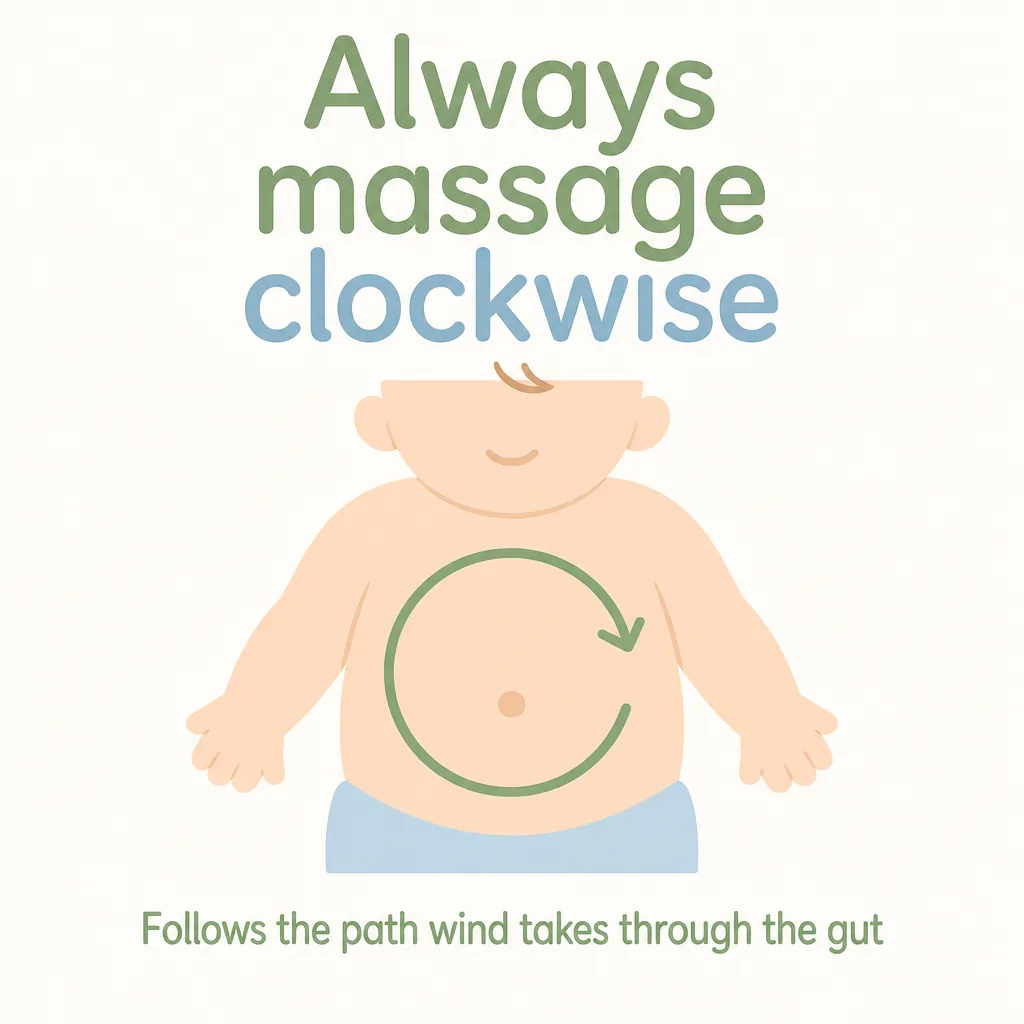
Trapped wind is a mechanical problem: a bubble of swallowed air, sitting in a gut that is not yet very good at moving it along. Massage gives that process a hand.
- Direction. The gut runs clockwise as you look down at your baby’s tummy: up your baby’s right side (your left), across under the ribs, and down their left side (your right). Clockwise strokes push wind the way it is already trying to go
- Pressure. Firm, gentle contact across the tummy relaxes the muscles your baby has been bracing, which is the same reason tummy-down holds like the colic carry work so well
- Warmth and touch. Skin-to-skin contact calms the nervous system. A baby who relaxes lets wind go more easily than a baby who is rigid with tension
- Routine. A baby who is used to a tummy rub after the bath knows what is coming and relaxes into it. That is worth building before you need it
Massage will not stop colic, and no one should tell you it will. What it can do is ease the wind that is often part of the colic picture and give you a calm ritual for the day.
When to Massage, and When Not To
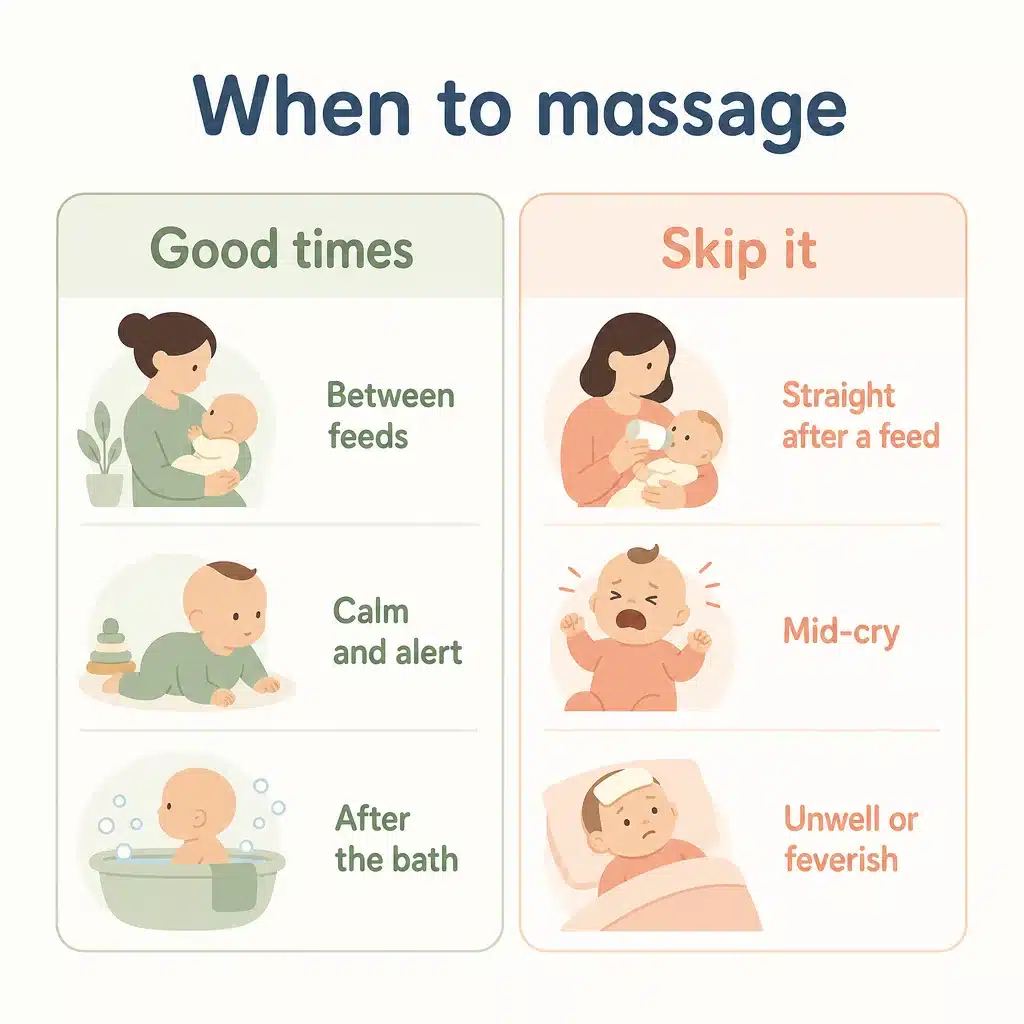
Timing makes more difference than technique.
Good times
- Between feeds, at least half an hour after the last one, so a full tummy is not being pressed
- When your baby is calm and alert, the quiet stretch after a nappy change or a bath
- In the afternoon, before the usual fussy window, so wind has less chance to build up into the evening
- As part of the bedtime routine, in a warm room after the bath
Times to skip it
- Straight after a feed, when it can bring milk back up
- Mid-cry. A screaming baby will not enjoy being put on their back and handled. Settle first with a hold, then massage once things have calmed
- When your baby is unwell, feverish, or has just had their immunisations, unless your nurse says otherwise
- If your baby turns away, stiffens or cries when you start. That is a no for today, and that is fine
Getting Set Up
You do not need equipment, a course or a special oil. You need a warm room, a towel and ten unhurried minutes: five to get ready and dressed again, five for the massage itself.
- Warm the room and your hands. Cold hands on a bare tummy end the session before it starts
- Lay your baby on their back on a soft towel, on the floor or the change mat, somewhere they cannot roll off
- Take off their singlet or open the nappy area so you can reach the tummy. A nappy left on but loosened is fine
- If you like, use a small amount of a plain baby massage oil, warmed between your palms. Skip anything scented on a newborn. Bare hands work too
- Tell your baby what you are doing. Talking or humming as you go keeps them relaxed and keeps your pace slow
The Routine, Step by Step
Do each stroke slowly, six to ten times, before moving to the next. Use the flat of your fingers or your whole palm, never fingertips digging in. The pressure is about what you would use to smooth cream into your own face.
Step 1. Resting hands
Place both hands flat and still on your baby’s tummy for a few breaths. This warms the skin and tells your baby the massage is starting. Wait until you feel them relax a little under your hands.
Step 2. The water wheel
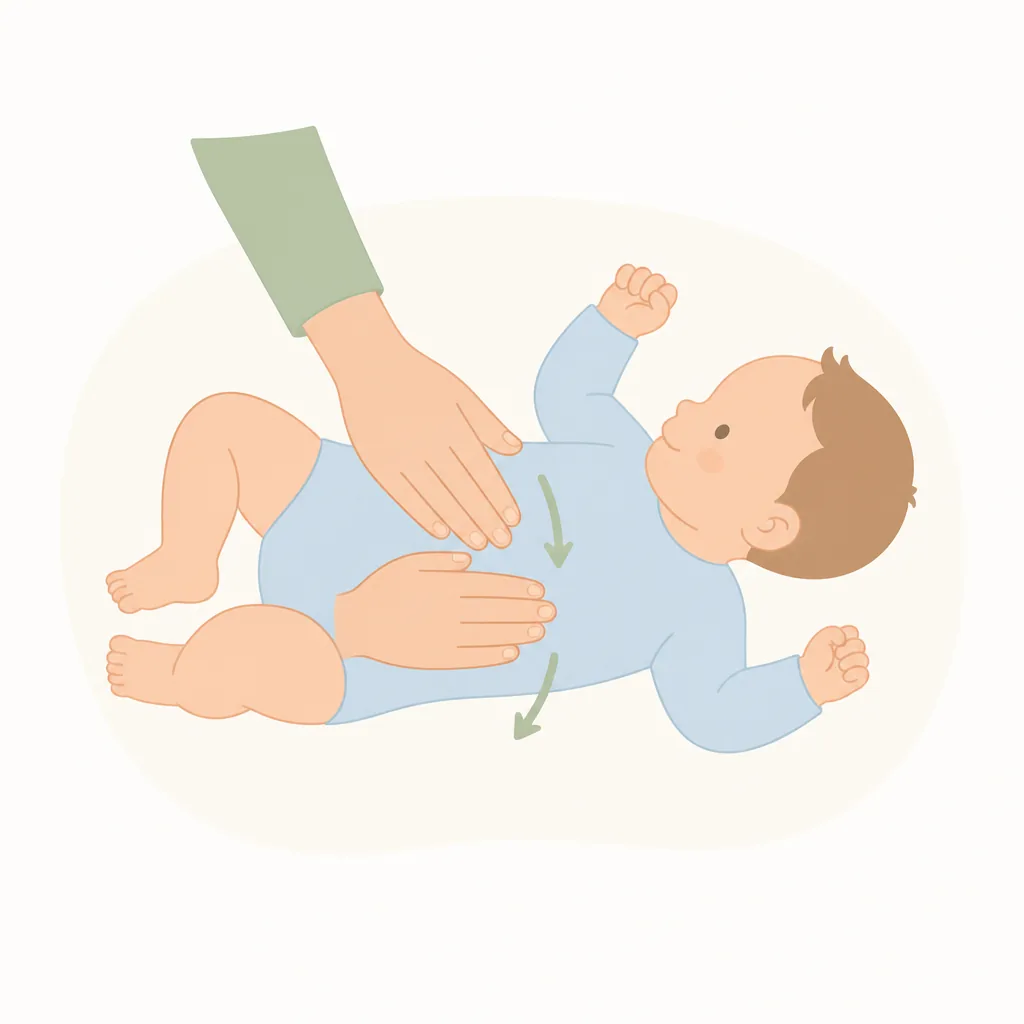
With one hand, stroke downwards from just under the ribs to the top of the nappy, as if scooping water down the tummy. As that hand finishes, start the same stroke with the other hand, so the two hands paddle one after the other like a water wheel. Slow and rhythmic, six to ten strokes with each hand.
Step 3. The sun and moon
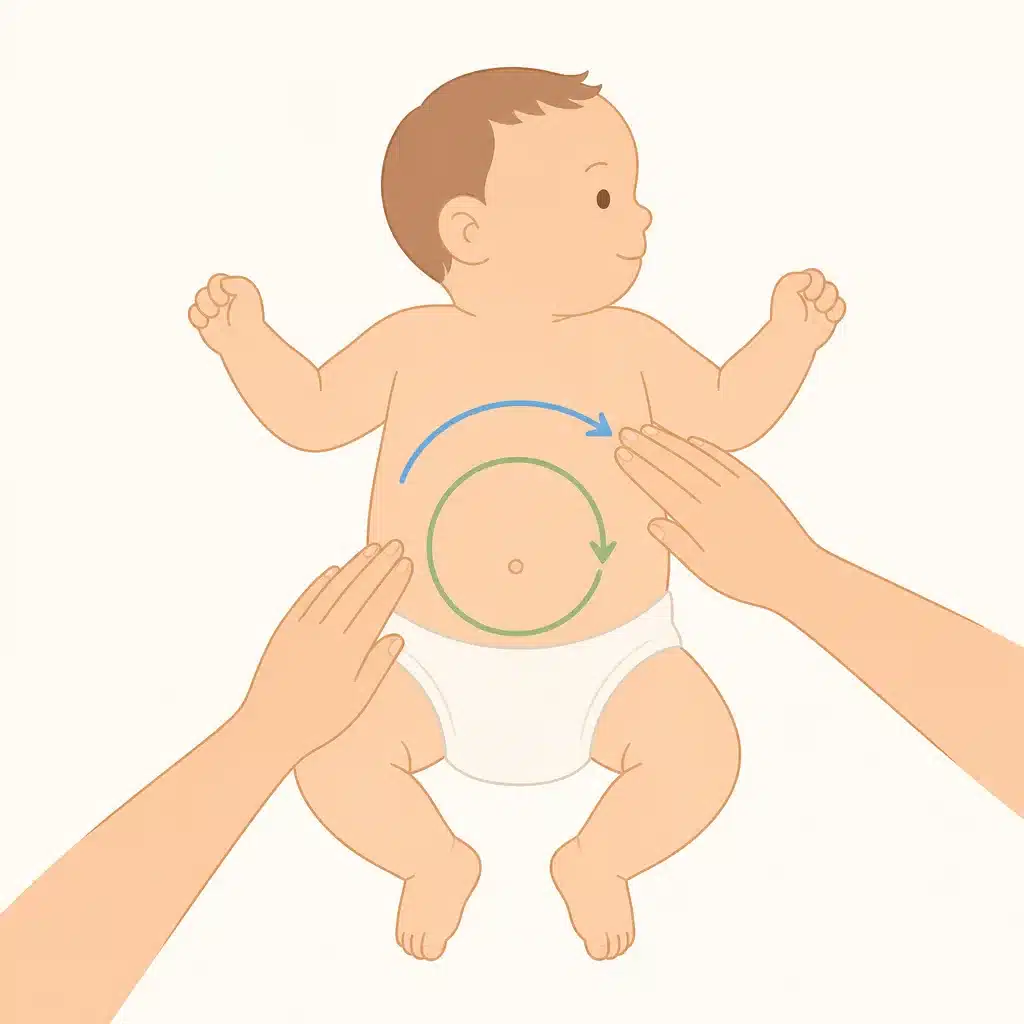
Using your left hand, draw a full clockwise circle around the belly button. That is the sun. With your right hand, draw a half circle across the top, from your baby’s right side to their left (your left to your right as you look down), in the same clockwise direction. That is the moon. Keep the sun turning continuously while the moon follows behind it. This is the stroke that follows the gut most closely, so take your time with it.
Step 4. The I Love U
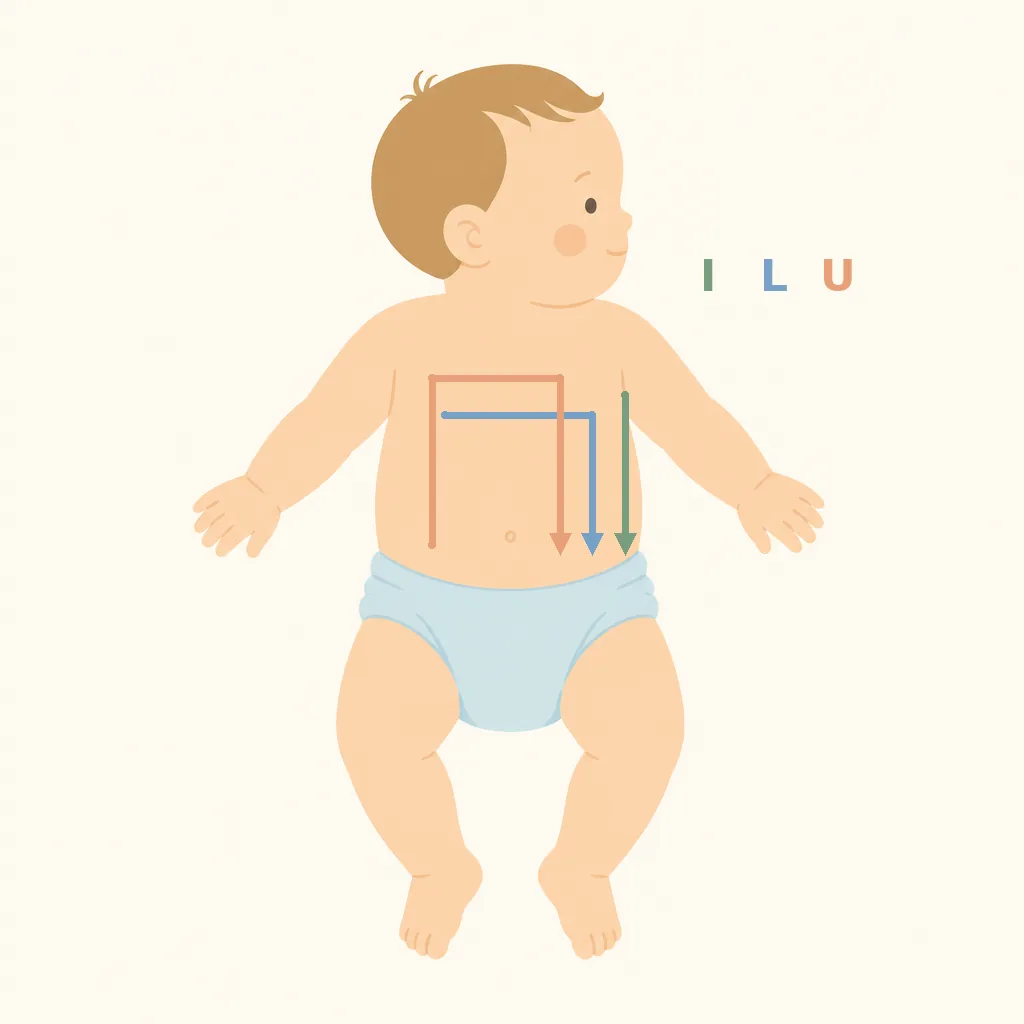
Looking down at your baby’s tummy, imagine the letters written on it upside down so they read correctly to your baby.
- I: stroke straight down the left side of your baby’s tummy (your right as you look at them), from under the ribs to the hip
- L: stroke across the top of the tummy from your baby’s right to left, then down the left side, making an upside-down L
- U: start low on your baby’s right side, stroke up, across under the ribs, and down the left side, making an upside-down U
Each letter pushes wind further along its path towards the exit. Say the letters out loud if it helps you keep the order. Your baby will not mind.
Step 5. Knees to tummy and bicycle legs
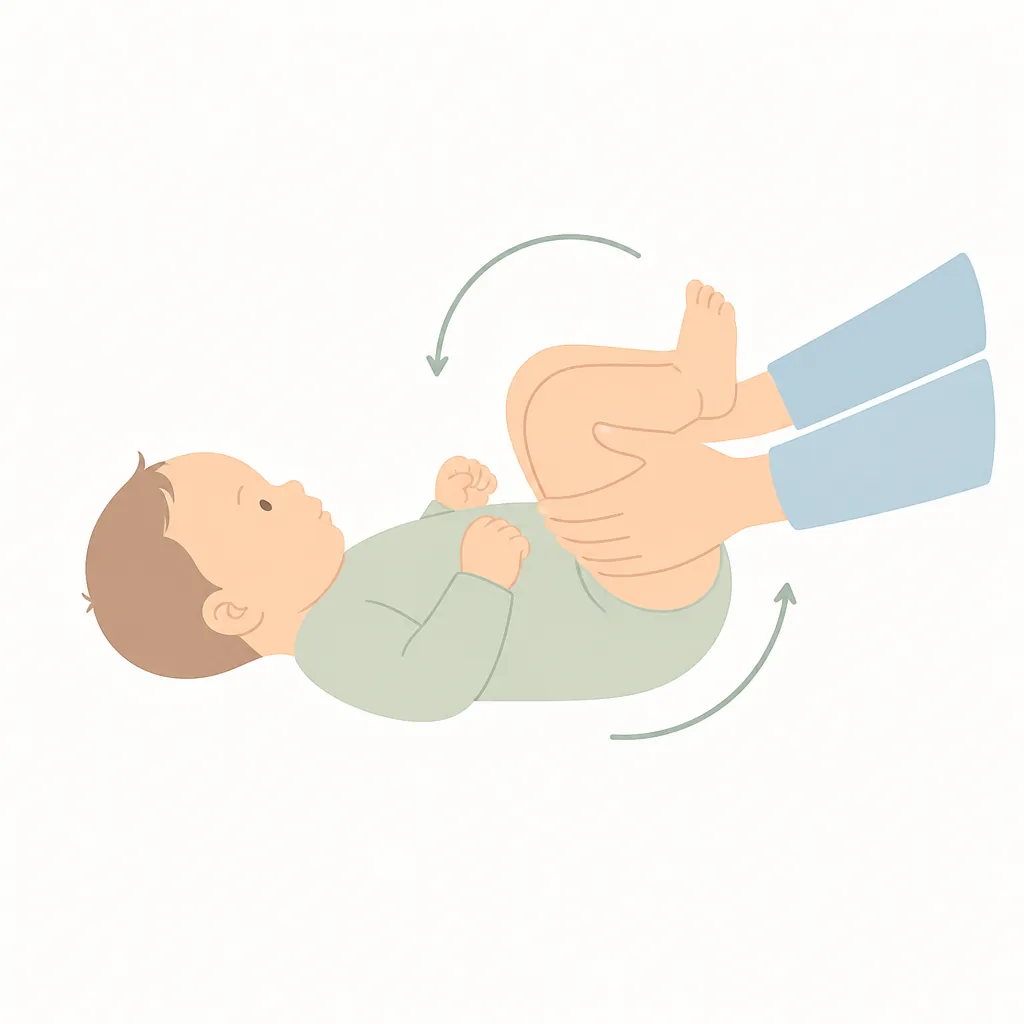
Hold both of your baby’s lower legs and gently bring the knees up towards the tummy, hold for a slow count of three, then release and straighten the legs. Repeat a few times. Then cycle the legs slowly, one at a time, as if pedalling a tiny bicycle. Both moves compress and release the tummy and often produce the bottom burp you have been waiting for.
Step 6. Finish with resting hands
End as you began, with both hands resting still on the tummy for a few breaths. Then dress your baby warmly and pick them up for a cuddle. If a burp or wind has not arrived yet, a few minutes upright against your shoulder often completes the job.
Making Massage Part of the Day
Once or twice a day is plenty. Most families settle on one of two slots: mid-afternoon, to head off the evening build-up of wind, or after the bath as part of winding down for the night. Doing it at the same time each day means your baby learns what is coming and relaxes faster, which is half the benefit.
If you have an older child, let them help with the resting hands at the start and finish. It gives them a job and keeps everyone calm.
Other Ways to Help the Wind Along
Massage sits between episodes. For the episode itself, a mid-feed burp, 20 to 30 minutes upright after feeds and a tummy-down hold like the colic carry do the immediate work. Our wind relief for babies page puts every method in order, including what to do in the first 60 seconds of crying.
Infants’ Friend Colic & Wind, a traditional herbal remedy given before feeds, is the other thing many Australian families keep beside the change mat. Its ingredients are traditionally used in Western herbal medicine to relieve colic symptoms, wind and gas pain and mild indigestion in infants, and it is alcohol-free and suitable from birth when used as directed. If you are unsure whether you are dealing with wind or colic, our guide to colic vs gas explains the difference.
When to Talk to Your GP or Child Health Nurse
Massage is for a windy baby who is otherwise well. Skip it and have a chat to your GP or maternal child health nurse if the tummy is swollen and stays hard and tender, or if the fussing comes with fever, repeated vomiting, blood or mucus in the poo, feed refusal, poor weight gain or fewer wet nappies. Your nurse can also watch you do the strokes and correct your technique; most are very happy to.
Always read the label and follow the directions for use. If symptoms persist, talk to your health professional.
Infants’ Friend Colic & Wind (AUST L 367810) contains ingredients traditionally used in Western herbal medicine for colic relief (wind/gas pain). Available Australia-wide since 1935.
Frequently Asked Questions
AUST L 367810. Always read the label and follow the directions for use. If symptoms persist, talk to your health professional.