
You are standing in the baby aisle with a grizzly newborn in the pram, looking at a shelf of small bottles that all seem to promise the same thing, and you have one question: is there something I can give my baby for gas? This page answers it properly. What actually helps, what the products on Australian shelves are and how they differ, how to read a label, how drops fit around feeds, and the old remedies people will suggest that you can politely ignore.
A note on words first. Australians usually say wind, most of the internet says gas, and this page uses both. They mean the same thing: air in your baby’s gut that is sitting where it can be felt.
At a glance
- The hands-on methods do the most: burping well, tummy pressure, leg moves and upright time. Drops work alongside them, never instead
- Gas relief products for babies in Australia are mostly liquids given by mouth before feeds. They fall into a few types, and the label tells you which
- Look for an AUST L or AUST R number, directions for your baby’s age, and clear dosing
- Infants’ Friend Colic & Wind is a traditional herbal remedy, alcohol-free and suitable from birth when used as directed
What Helps Most: The Free Fixes
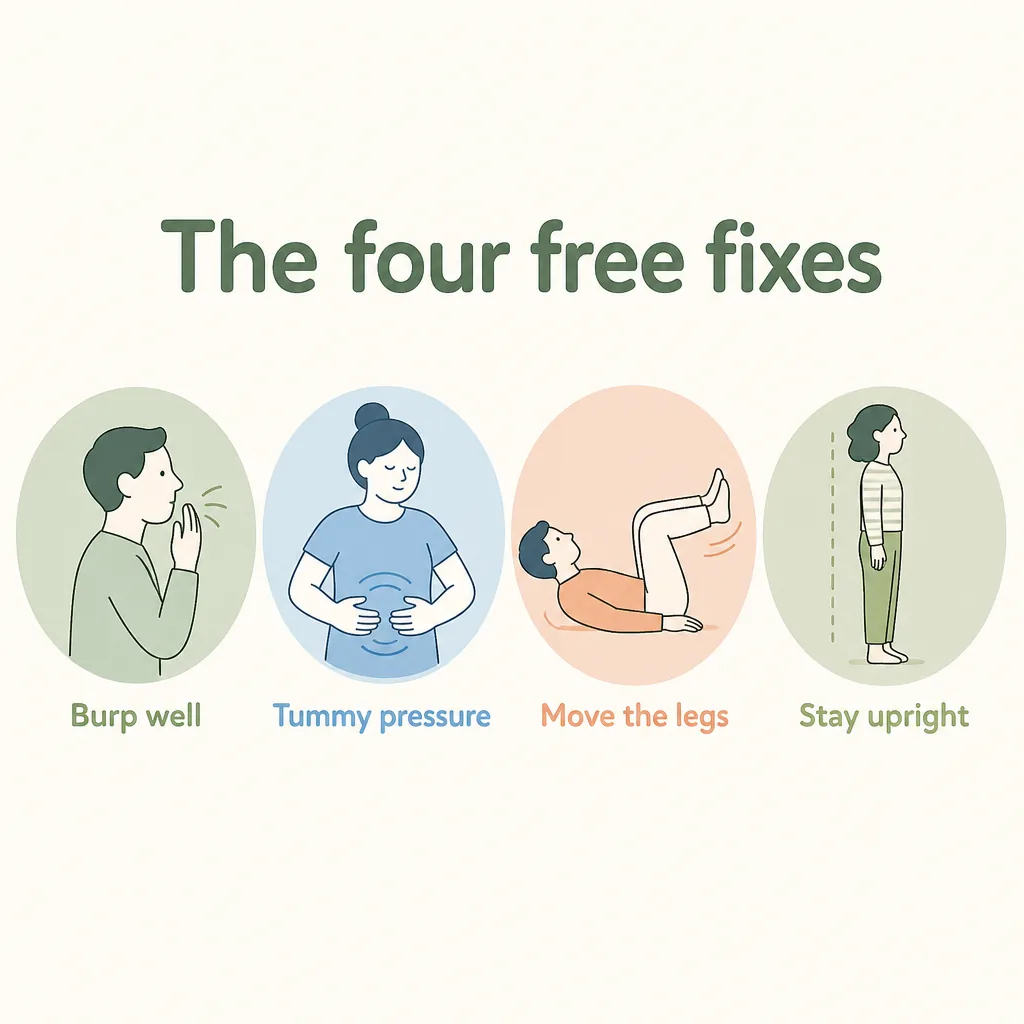
Nothing in a bottle burps a baby. Before, during and after any remedy, these four do the heavy lifting.
- Burp well, in more than one position. Partway through each feed and at the end. Over the shoulder, then sitting upright with the chin supported, then face-down across your knees if needed
- Tummy pressure. The colic carry, baby tummy-down along your forearm while you walk, or across your lap while you rub their back. Awake time only, head supported, face clear
- Move the legs. Bicycle legs and knees to tummy on a firm surface, after a nappy change
- Stay upright after feeds. Twenty to thirty minutes, so air rises to where a burp can reach it
Every one of these is explained step by step, with the first 60 seconds sequence for a crying baby and a night-time plan, on our wind relief for babies page. If you want to know why your baby is gassy in the first place, our gassy baby guide walks through the eight everyday causes.
Gas Relief Products for Babies in Australia
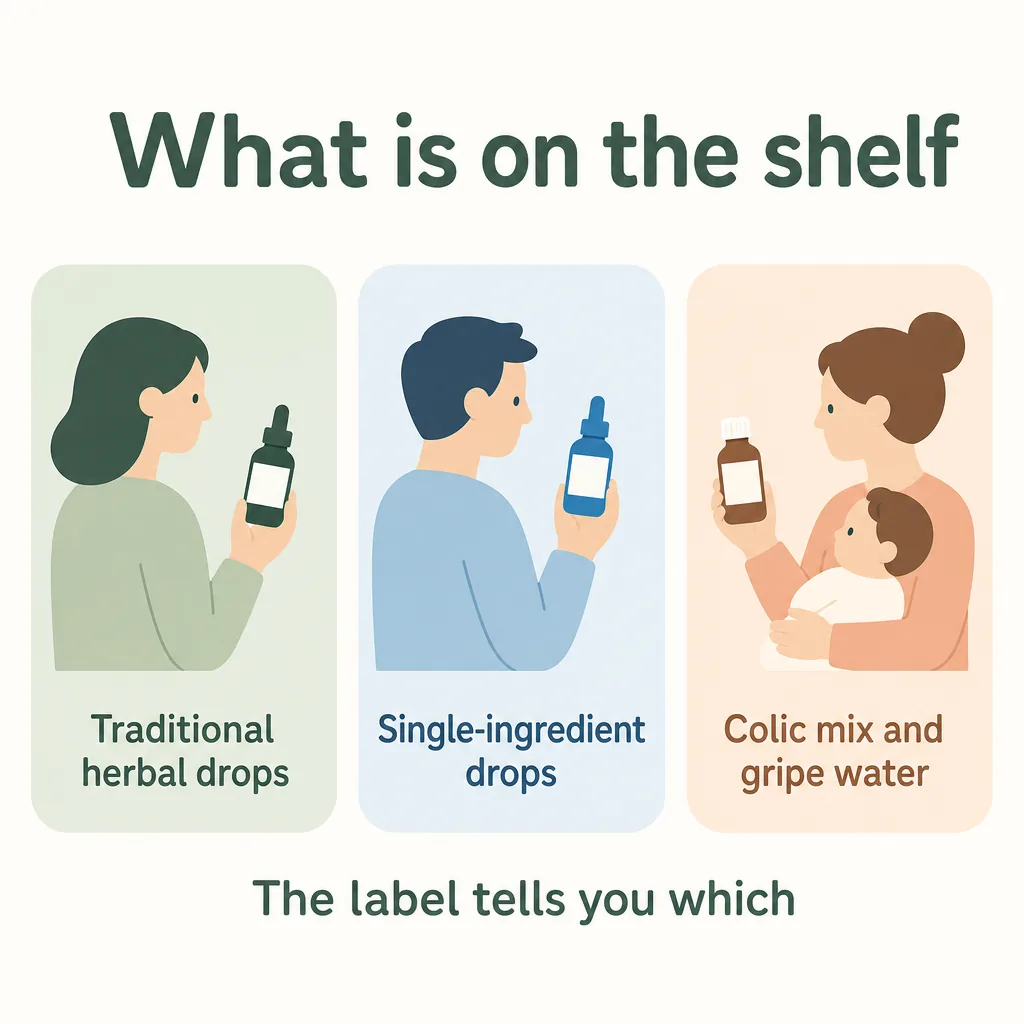
The shelf can be confusing, because similar products use different names: colic drops, wind drops, gas relief drops, colic mix, gripe water. The names do not tell you much. The ingredients and the regulatory number do. Broadly, what you will find:
| Type | What it is | How it is usually given |
|---|---|---|
| Traditional herbal drops | Liquid preparations built on herbs with a long history of use for baby wind and digestive comfort, such as chamomile, dill and lemon balm. Listed medicines carry an AUST L number | By mouth, small measured doses, usually before feeds |
| Single-ingredient pharmacy drops | Liquid medicines built around one active ingredient. Sold in pharmacies and some supermarkets | By mouth, before or with feeds, per label |
| Colic mix and gripe water | Traditional names rather than product types. Today they usually describe a herbal liquid. Read the label of any product you pick up, whatever it is called | By mouth, per label |
This page does not rank them against each other, because that is a conversation for your pharmacist, who can look at your baby’s age, health and what else they are taking. What we can do is tell you how to read any label, and be clear about what Infants’ Friend is.
For the history of the traditional names, our guide to what colic mix is explains where they came from.
How to Read the Label
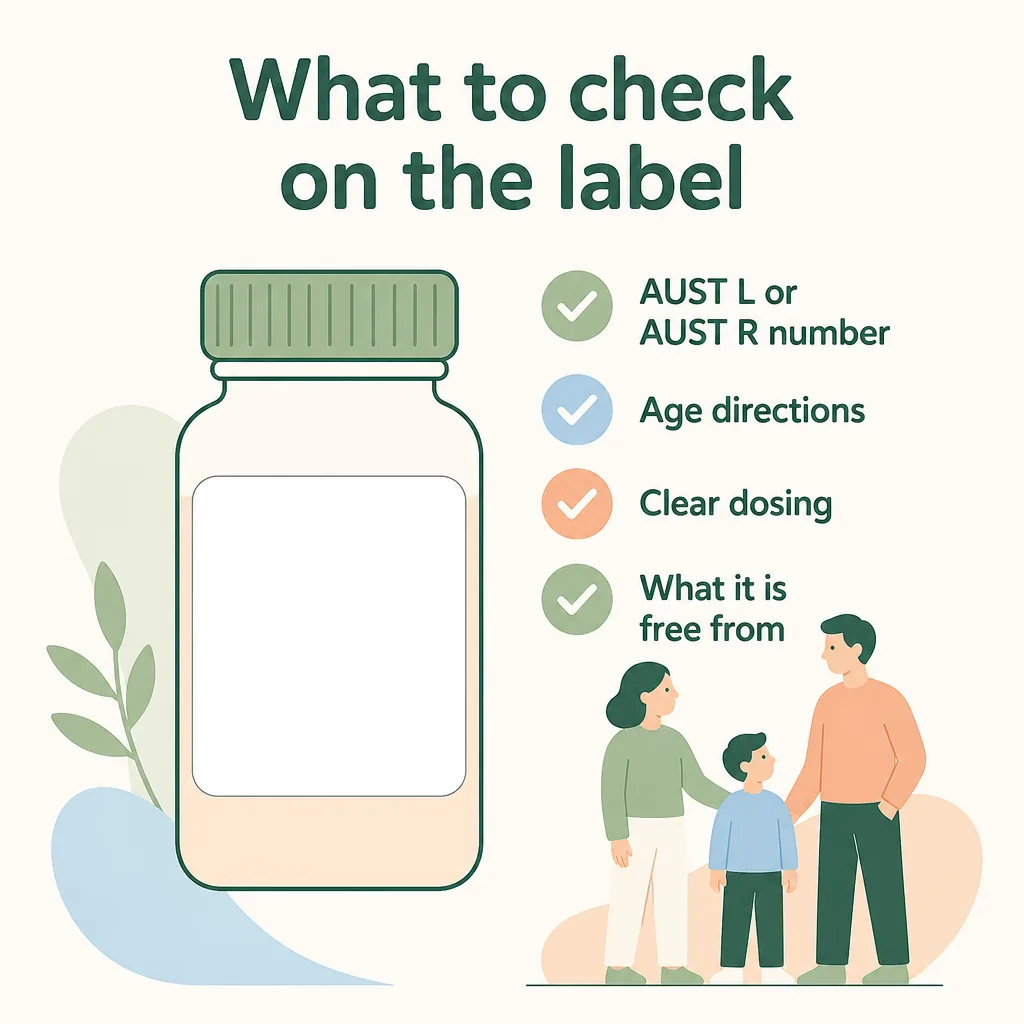
Whatever you pick up, four things to check before it goes in the trolley:
- An AUST L or AUST R number. AUST L means the product is listed with the Therapeutic Goods Administration for use as described; AUST R means it is registered. Either way, it can be legally supplied in Australia as a medicine. No number means it is not a listed or registered medicine
- Age directions. The label should say whether it is suitable for your baby’s age, including whether it can be used from birth
- Clear dosing. How much, how often, and the maximum in a day. If you cannot find this on the pack, put it back
- What it is free from. If avoiding alcohol, sugar or artificial additives matters to you, choose a product whose own label states it is free from them
If your baby was premature, is unwell, has a health condition or is taking anything else, ask your GP or child health nurse before starting any remedy. And do not combine two gas relief products without asking your pharmacist first.
Where Infants’ Friend Colic & Wind Fits
Infants’ Friend has been in Australian cupboards since 1935, which is why so many grandparents recognise the bottle on sight.
Infants’ Friend Colic & Wind is a traditional herbal remedy: a blend of chamomile, lemon balm and dill seed oil, herbs traditionally used in Western herbal medicine to relieve wind and gas pain, colic symptoms and mild indigestion in infants. It is listed with the TGA as AUST L 367810. It is alcohol-free, free from sugar and artificial flavours, sweeteners and colours, and suitable from birth when used as directed.
It is given by mouth before feeds. You can read about how it works, see the how to use Infants’ Friend guide for the dosing steps, and find it at Coles, Woolworths and Chemist Warehouse via our where to buy page. Always read the label and follow the directions for use.
How Drops Fit Around a Feed
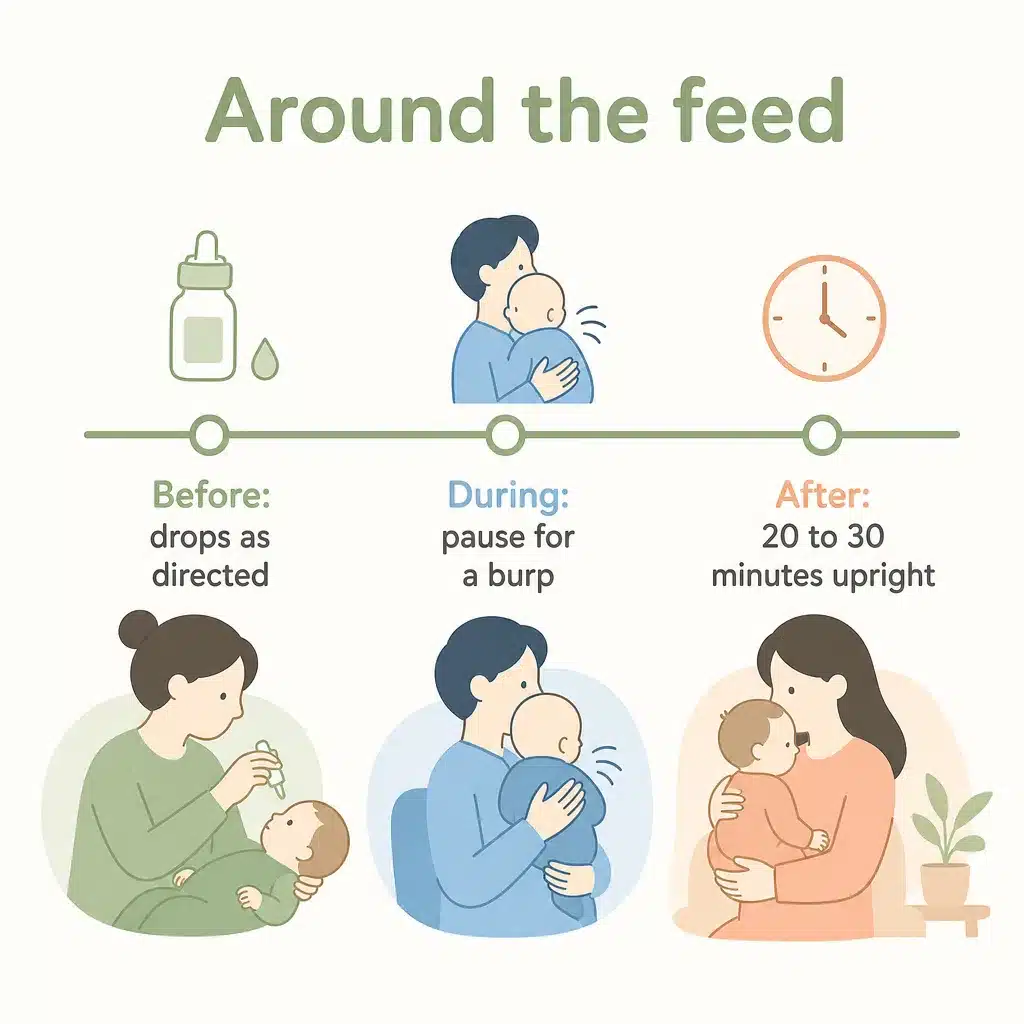
Parents often ask when in the feed to give a remedy, and how it sits with burping and upright time. A simple routine that many families settle into:
- Before the feed: drops as the label directs, ideally when your baby is showing early hunger cues rather than crying, so the feed that follows is calm
- During the feed: pause halfway for a burp, when switching sides or about halfway down the bottle
- After the feed: burp again in a second position, then 20 to 30 minutes upright before laying your baby down
- Between feeds: bicycle legs after nappy changes, and five minutes of clockwise baby massage for colic and wind at a calm time in the afternoon
Do not give a dose mid-cry to try to stop the crying. Settle first, with a hold, then keep to the routine at the next feed. Drops are a steady habit, not an emergency button.
Old Remedies You Will Be Offered
Someone who loves you will suggest these. Here is what to say.
- Cooled boiled water. Under six months, your baby’s fluid comes from milk. Water does not relieve wind and takes up room a milk feed needs. If your child health nurse ever advises water, they will tell you when and how much
- Sugar water or honey. No. Honey is not for babies under one, and sugar water does nothing for wind
- Alcohol-based gripe water. The old recipes had it. Infants’ Friend Colic & Wind is alcohol-free, and you should never add alcohol to any remedy yourself
- Laying baby on their tummy to sleep. Tummy-down is a settling position for awake time with you watching. Sleep is on the back, every time
- Cutting whole food groups from your own diet. For most breastfed babies, wind is about latch and air, not what you ate. If you suspect a link with one food, our guide to breastfeeding diet and colic explains how to check sensibly
When to Talk to Your GP or Child Health Nurse
No remedy on this page is a substitute for a check-up when something else is going on. Book your GP or maternal child health nurse if the gas comes with fever, repeated vomiting, diarrhoea, blood or mucus in the poo, a swollen tummy that stays hard and tender, feed refusal, poor weight gain, fewer wet nappies, or a baby who seems unwell to you rather than uncomfortable. If gassiness comes with rashes or changed poos, cow’s milk protein intolerance is worth raising at the same visit. And if your baby was premature or has a health condition, ask before starting any remedy rather than after.
Always read the label and follow the directions for use. If symptoms persist, talk to your health professional.
Infants’ Friend Colic & Wind (AUST L 367810) contains ingredients traditionally used in Western herbal medicine for colic relief (wind/gas pain). Available Australia-wide since 1935.
Frequently Asked Questions
AUST L 367810. Always read the label and follow the directions for use. If symptoms persist, talk to your health professional.