
If your baby has been crying through the evenings with their knees pulled up and their little tummy tight as a drum, someone has probably already said the words to you. Your mum, your nan, the pharmacist down the road: “Have you tried a colic mix?”
It is one of those phrases that has floated around Australian households for generations, yet nobody ever quite explains it. This page covers what a colic mix actually is, what usually goes into one, how it differs from gripe water and colic drops, and what to look for when choosing one for your baby.
What Is a Colic Mix?
A colic mix, sometimes called a colic mixture, is a liquid preparation given to babies by mouth to help ease the symptoms of colic and wind, such as gas pain and general tummy discomfort. It is not a single recipe. The name describes a whole family of remedies that share the same job: settling an unsettled tummy.
Most colic mixes available in Australia today are herbal preparations. They combine gentle plant extracts that have a long history of traditional use for digestive comfort, blended into a liquid that can be measured out in small doses and given directly into your baby’s mouth, usually before feeds.
The word “mix” is the giveaway to its history. Long before neat retail packaging, these preparations were mixed by hand, by pharmacists, and by mothers following recipes passed down through the family. The name stuck, even as the products themselves became standardised and regulated.
A Remedy With a Long History

Colic itself is nothing new. Babies have always had those crying spells in the first few months, and parents have always looked for something gentle to help. Herbal preparations for infant wind have been part of Western herbal medicine for centuries, with herbs like chamomile and dill appearing again and again in traditional recipes for digestive upset.
In Australia, colic mixtures were a staple of the local chemist through much of the twentieth century. Infants’ Friend has been part of that story since 1935, which is why so many grandparents recognise the name on sight. If your mother-in-law swears by it, there is a fair chance her own mother did too.
That heritage matters for a simple reason: colic remedies tend to be passed along by word of mouth, from one exhausted parent to the next. A preparation that has stayed in Australian homes for 90 years has earned its place on the change table.
What Goes Into a Colic Mix?

Every brand has its own formulation, but traditional colic mixes are typically built around a small number of herbs with a long history of use in Western herbal medicine for digestive comfort. Common examples include:
- Chamomile, traditionally used to relieve wind and gas pain
- Dill seed oil, traditionally used to relieve bloating and digestive discomfort
- Lemon balm, traditionally used to ease indigestion and support settled, restful behaviour
- Fennel and similar carminative herbs, which appear in many traditional recipes for wind
Infants’ Friend Colic & Wind, for example, is a blend of chamomile, lemon balm and dill seed oil. These herbs are traditionally used in Western herbal medicine to relieve colic symptoms, wind and gas pain, and mild indigestion in infants.
Modern formulations also differ in what they leave out. This can be hard to check from the label alone, because products are only required to list their active ingredients, so alcohol will not always appear on the label even when it is in the bottle. If a product is free from something, look for a label that says so clearly. Infants’ Friend Colic & Wind states that it is free from alcohol, sugar, artificial sweeteners, flavours and colours.
Colic Mix, Gripe Water or Colic Drops: What’s the Difference?

The three names get used almost interchangeably, which does not help a sleep-deprived parent standing in the pharmacy aisle. They describe products that do a similar job, with some differences in history and format. You may also hear the term colic water, and our guide to what colic water is explains it.
| Name | What it usually means |
|---|---|
| Colic mix / colic mixture | The traditional Australian name for a liquid preparation for colic and wind, usually herbal |
| Gripe water | An old English name for a water-based infant digestive remedy. Original recipes contained alcohol; the ingredients in modern versions vary between brands |
| Colic drops | A modern name that reflects the format: a liquid given in small, measured doses |
In practice, a product like Infants’ Friend Colic & Wind could fairly be described by any of the three. What matters is not the name on the shelf label but the ingredients, the dosing instructions, and whether the product is listed with the TGA for use in infants.
How to Give a Colic Mix

Always follow the directions on the label of the specific product you buy, because dosing varies between brands. That said, most colic mixes share a familiar routine:
- Doses are small and given by mouth, using the measure supplied with the product
- They are usually given shortly before feeds
- The frequency and maximum daily dose are set out on the label
If you are using Infants’ Friend, the how to use Infants’ Friend guide walks through the dosing steps, and the first time using Infants’ Friend page covers what to expect when you start. For timing, giving it by syringe and judging a fair trial, see our practical guide to colic mix for babies.
A practical tip from decades of parents: build the dose into your feed routine, the same way you would a nappy check. Colic tends to flare in the late afternoon and evening, so parents often focus on the feeds leading into that stretch of the day.
Choosing a Colic Mix in Australia
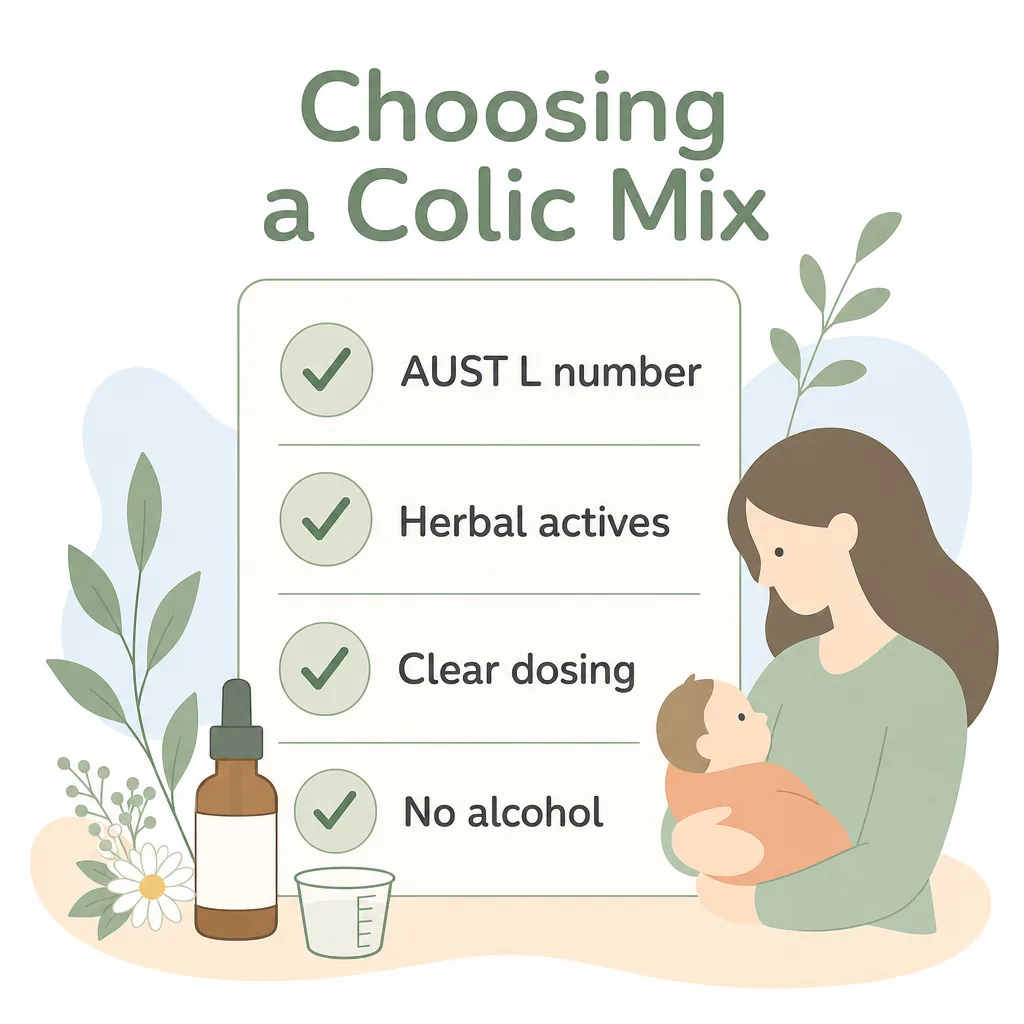
A few things worth checking on the label before you buy:
- An AUST L number. This means the product is listed with the Therapeutic Goods Administration (TGA) and can be legally supplied in Australia as a listed medicine. Infants’ Friend Colic & Wind is AUST L 367810.
- Ingredients you recognise. Traditional herbal actives such as chamomile, dill and lemon balm. Products will not always say “alcohol free”, and if they do not, they may or may not contain alcohol, so it can be hard to check when you are out shopping. Some products, like Infants’ Friend, state “alcohol free” on the label so you can know for sure.
- Clear dosing for your baby’s age. The label should state the dose and how often it can be given, and whether it is suitable from birth.
- Availability. A remedy only helps if you can get it at 8pm on a Tuesday. Infants’ Friend is stocked at Coles, Woolworths, Chemist Warehouse and many local Pharmacies, and the where to buy page lists current stockists.
It is also worth being clear about what a colic mix is for. It is one part of a bigger settling toolkit, alongside burping, positioning, massage and calming techniques. Our guides to what colic is and 10 ways to relieve trapped wind cover the rest of that toolkit.
When to Check In With Your GP
Colic is common and passes with time, and an unsettled baby is usually just that. Still, trust your instincts. If your baby has a fever, is vomiting, refuses feeds, is not gaining weight, or simply seems unwell to you rather than unsettled, have a chat to your GP or maternal child health nurse. It is also sensible to mention any remedy you are giving your baby, including herbal ones, at your regular check-ups.
Always read the label and follow the directions for use. If symptoms persist, talk to your health professional.
Infants’ Friend Colic & Wind (AUST L 367810) contains ingredients traditionally used in Western herbal medicine for colic relief (wind/gas pain). Available Australia-wide since 1935.
Frequently Asked Questions
AUST L 367810. Always read the label and follow the directions for use. If symptoms persist, talk to your health professional.