
Your newborn was feeding happily twenty minutes ago. Now they are squirming, grunting, going red and crying in short, sharp bursts, and their little tummy feels tight under your hand. Odds are good you are dealing with trapped gas, or trapped wind as most Australians call it.
The good news is that of all the things that upset newborns, trapped gas is one of the most fixable. This page covers why new babies get so gassy, how to recognise it, how to tell it apart from colic, and the techniques that actually move the wind along.
Why Newborns Get Trapped Gas
Almost all newborn gas starts as swallowed air. Every feed carries some air down with the milk, more if the latch is shallow, the teat flows too fast, or the feed is frantic. Crying swallows air too, which is how a windy baby crying about wind ends up windier.
The second half of the problem is that newborn digestion is brand new. A mature gut moves air along and out without much fuss. A newborn gut is still learning, the muscles are weaker, the baby spends most of the day lying flat, and their tummy is tiny, so even a small air bubble can create real pressure. Add it up and you get the classic newborn combination: lots of air going in, and not much skill at getting it out.
None of this means you are feeding your baby wrongly. Gassiness peaks in the first couple of months and improves steadily as the gut matures, usually settling noticeably by three to four months.
Signs Your Newborn Has Trapped Gas
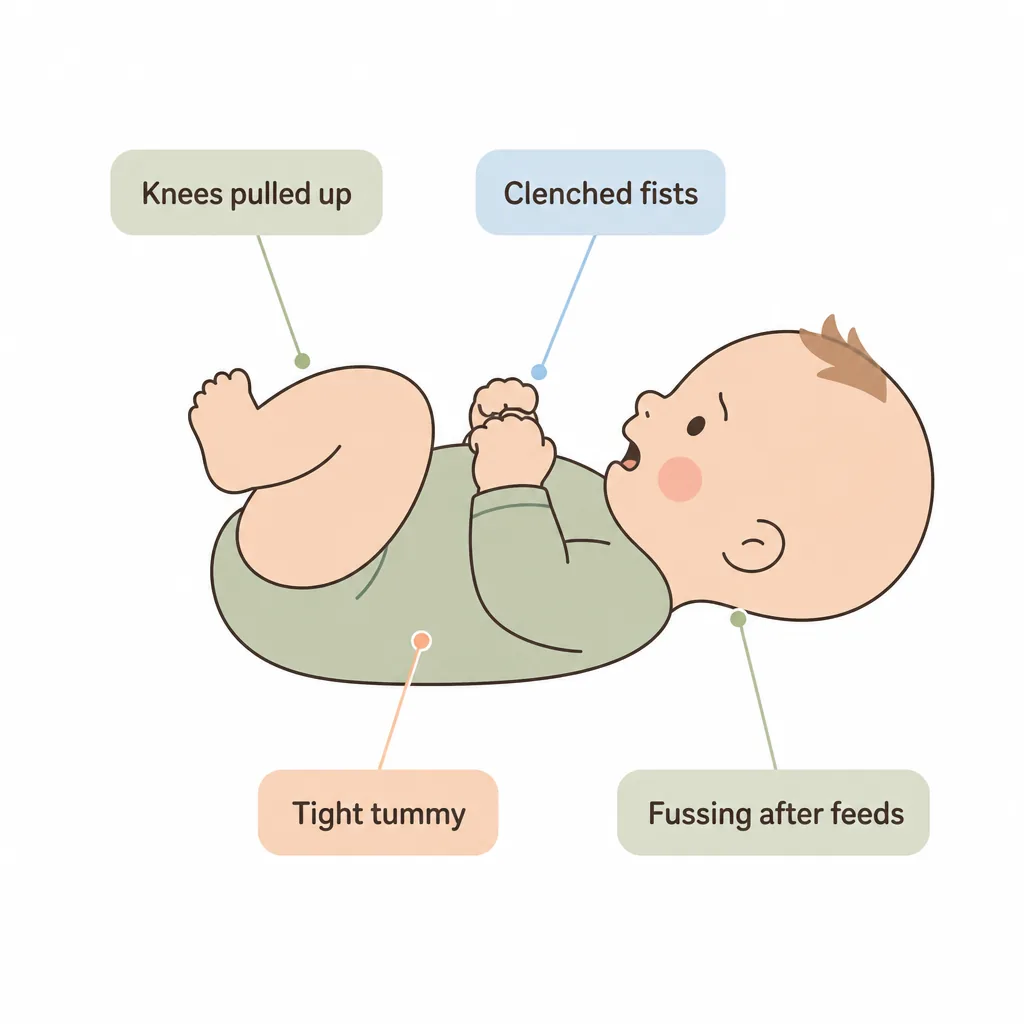
Newborns cannot point at what hurts, but trapped gas has a fairly recognisable signature:
- Squirming, wriggling and grunting, especially after feeds
- Pulling the knees up to the chest, or stiffening and arching the back
- A tummy that feels firm or looks slightly swollen
- Crying in short, sharp bursts that build after a feed, rather than continuous crying
- Going red in the face and clenching fists while straining
- Relief, sometimes instant, after a good burp or passing wind
- Fussiness when laid flat that eases when held upright
That last-but-one sign is the most useful one. If a burp or a bottom burp regularly ends the crying, wind is your culprit.
Trapped Gas or Colic? How to Tell
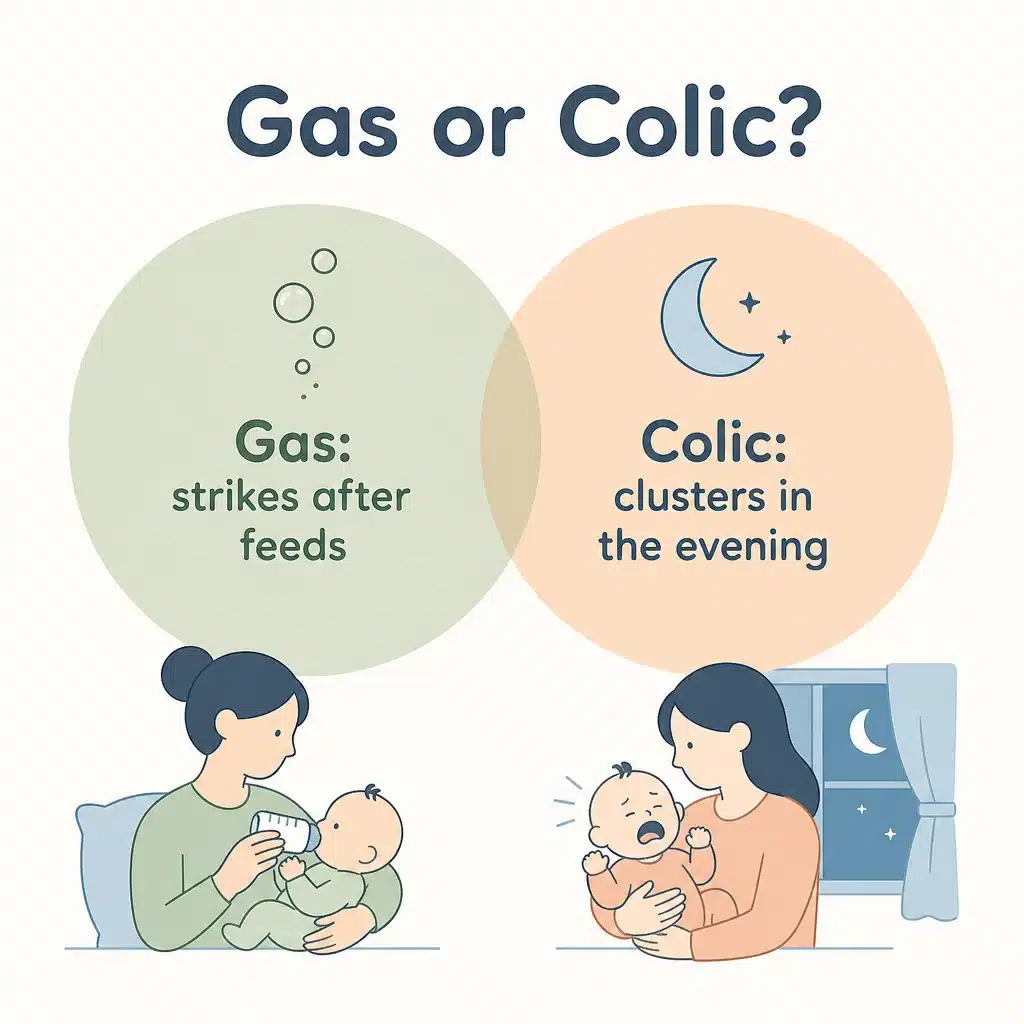
Trapped gas and colic overlap heavily, and wind is often part of a colicky picture, but they are not the same thing. The key differences:
| What to look at | Trapped gas | Colic |
|---|---|---|
| Timing | Any time of day, usually soon after feeds | Clusters in late afternoon and evening |
| Crying | Bursts of fussing and straining that ease when wind passes | Intense crying that runs for hours, often 2 to 3 at a stretch |
| Relief | Burping, movement or passing wind often ends it | Settling helps but rarely switches it off |
| Pattern | Comes and goes with feeds | Follows a daily rhythm, most days of the week |
If your baby’s crying is long, intense, concentrated in the evenings and not clearly tied to wind, read our guides to colic vs gas and the signs of colic in newborns. If it is feed-linked bursts with a tight tummy, keep reading, the techniques below are aimed squarely at your problem.
How to Relieve Trapped Gas
The goal with trapped gas is mechanical, not mysterious: help the air bubble travel up and out, or down and out. These techniques do exactly that.
Burp in More Than One Position
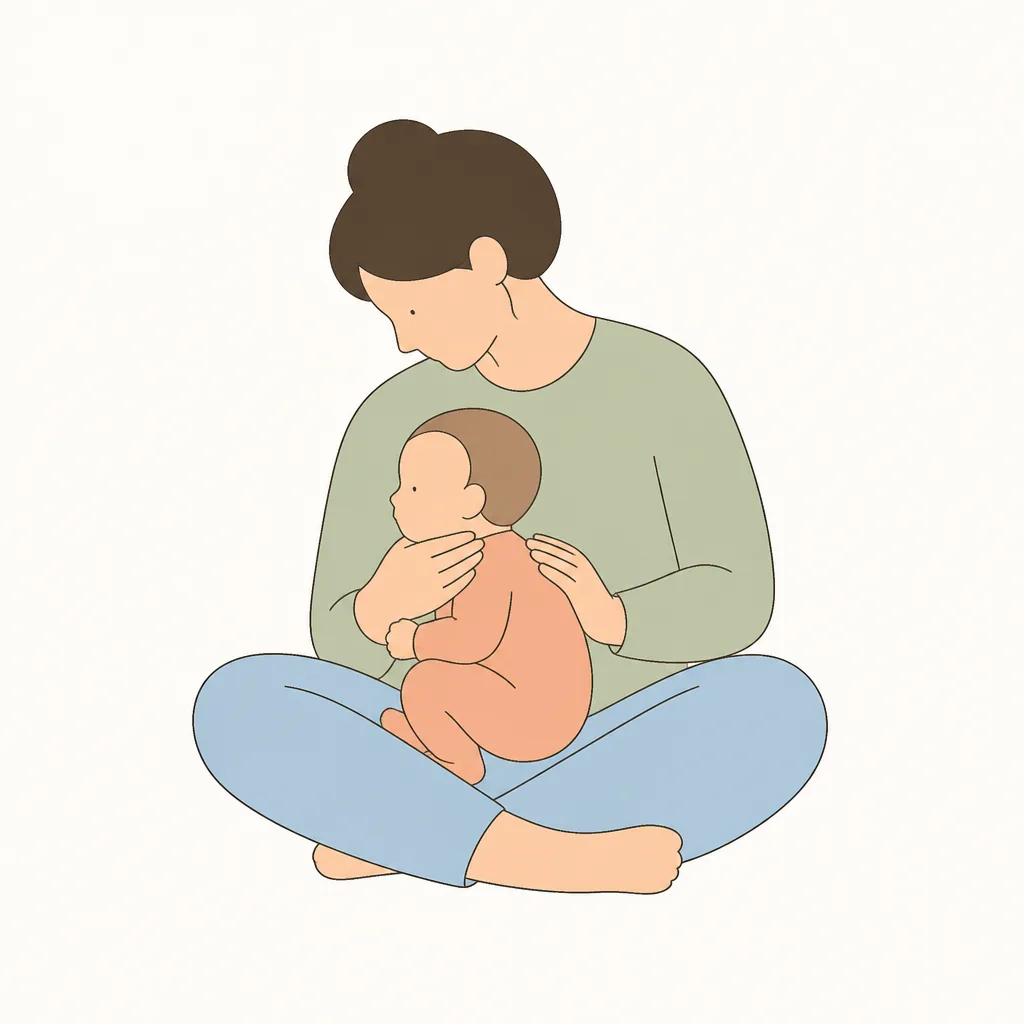
If the over-the-shoulder burp is not delivering, change the angle:
- Over the shoulder, with baby’s tummy gently pressed against your chest as you pat and rub
- Sitting upright on your lap, chin supported in your hand, leaning slightly forward
- Face-down across your knees, with slow back rubs
Burp partway through each feed as well as at the end, and give stubborn burps a few minutes of walking and rubbing rather than giving up at thirty seconds. Our guide to the best ways to burp a baby walks through each position.
Bicycle Legs and Gentle Knee Pushes
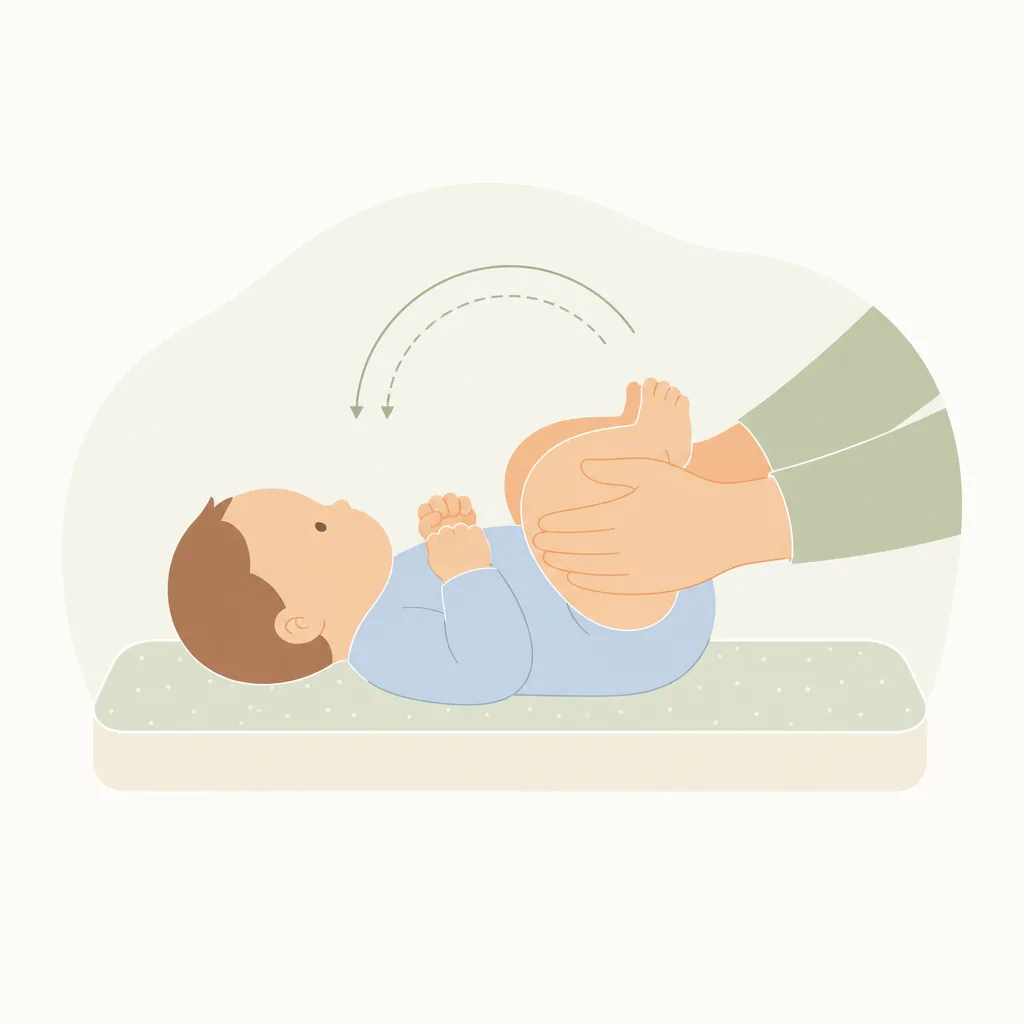
Lay your baby on their back and slowly cycle their legs, as if pedalling a tiny bicycle. Then try bringing both knees gently up towards the tummy, holding for a few seconds, and releasing. Both moves compress and release the tummy in a way that encourages trapped wind to move down and out. A firm surface and a calm baby make this work best, straight after a nappy change is a natural moment.
Tummy Massage
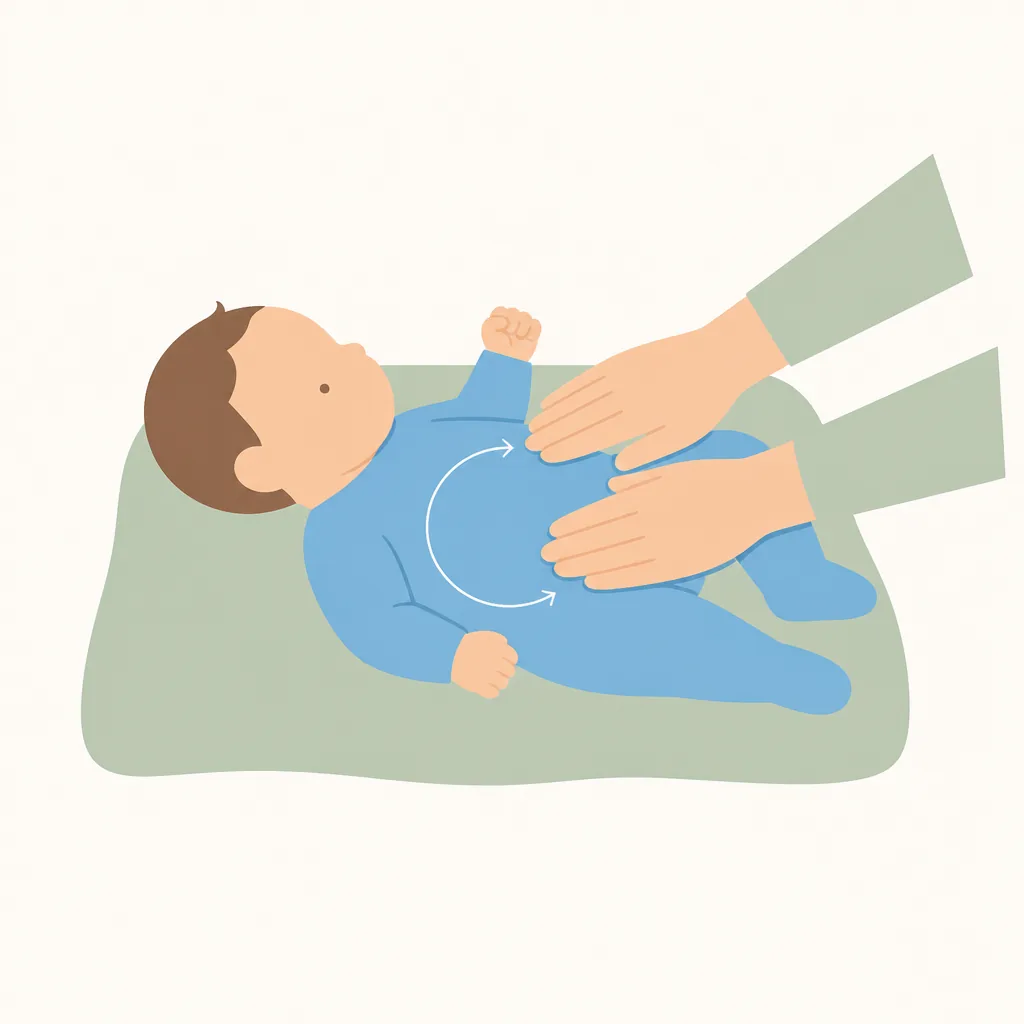
With warm hands, massage your baby’s tummy in slow, clockwise circles around the belly button. Clockwise matters, because it follows the direction wind travels through the gut. Two or three minutes in a warm room, perhaps after the bath, is plenty. Many parents fold this into the bedtime routine during the gassy months. Our home remedies for colic guide covers massage in more detail.
Tummy-Down Holds and Tummy Time
Gentle pressure on the tummy is remarkably effective at easing gas discomfort:
- The colic carry: baby lies tummy-down along your forearm, head near your elbow, while you walk slowly
- Lying tummy-down across your lap while you rub their back
- Short sessions of supervised tummy time when your baby is awake, which doubles as development practice
Always supervise tummy-down positions, and remember that sleep is different: babies sleep on their backs, every time.
Preventing Gas Build-Up at Feeds

Relieving gas is good. Swallowing less of it in the first place is better:
- Feed before your baby is frantically hungry, since desperate gulping swallows the most air
- Keep your baby fairly upright during feeds rather than flat
- If bottle feeding, angle the bottle so the teat stays full of milk, and check the teat flow suits your baby
- If breastfeeding, a deeper latch means less air. A lactation consultant or child health nurse can help if the latch is shallow or noisy
- Pause for a mid-feed burp instead of saving it all for the end
- Keep your baby upright for twenty to thirty minutes after feeds before laying them flat
You will not eliminate swallowed air, and you do not need to. You are just keeping the daily total low enough for your baby’s maturing gut to handle. For the full toolkit, see 10 ways to relieve trapped wind.
Natural Relief for Wind and Gas Pain
Alongside the physical techniques, many Australian families use a traditional herbal remedy for wind and gas pain. Infants’ Friend Colic & Wind is a blend of chamomile, lemon balm and dill seed oil, herbs traditionally used in Western herbal medicine to relieve wind and gas pain, colic symptoms and mild indigestion in infants. It is alcohol-free and suitable from birth when used as directed.
It is given by mouth before feeds, which pairs naturally with the feed-time habits above. You can read about how it works, and find it at Coles, Woolworths and Chemist Warehouse via our where to buy page. Always read the label and follow the directions for use.
When to See Your GP or Child Health Nurse
Trapped gas is uncomfortable, not dangerous, and a gassy baby who feeds well and grows well is a healthy baby. See your GP or maternal child health nurse if the picture includes more than wind: fever, repeated vomiting, diarrhoea or blood or mucus in the poo, a swollen tummy that stays hard and tender, feed refusal, poor weight gain, fewer wet nappies, or a baby who cannot be settled at all and seems unwell to you. Persistent symptoms alongside rashes or poor growth are worth discussing in case something like cow’s milk protein intolerance is involved.
And as always: you know your baby best. If something feels wrong, a GP visit that ends in reassurance is a good outcome, not a wasted one.
Infants’ Friend Colic & Wind (AUST L 367810) contains ingredients traditionally used in Western herbal medicine for colic relief (wind/gas pain). Available Australia-wide since 1935.
Frequently Asked Questions
AUST L 367810. Always read the label and follow the directions for use. If symptoms persist, talk to your health professional.