
Somebody has mentioned colic water to you. Maybe it was your mum, maybe a friend in your parents’ group, maybe a stranger in the supermarket queue who heard your baby’s evening cry. It sounds simple enough, but when you go looking for “colic water” on the shelf, you will not find a product with that name on it. You will find colic mixes, colic drops, gripe water and wind drops instead.
This page untangles the name. It explains what people usually mean by colic water, where the term comes from, why it is not the same as giving your baby water, and what to look for on the label of any product you are offered.
At a glance
- Colic water is an everyday name, not a product type. People use it for liquid remedies for colic and wind, like gripe water and colic mix
- It is closely tied to gripe water, an English remedy from the 1800s. “The gripes” was an old word for tummy pain
- Colic water is not plain water. Under six months, your baby’s fluid comes from breast milk or formula
- Today these remedies are usually herbal. The name on the shelf matters less than the ingredients, the AUST L number and the directions
What People Mean by Colic Water
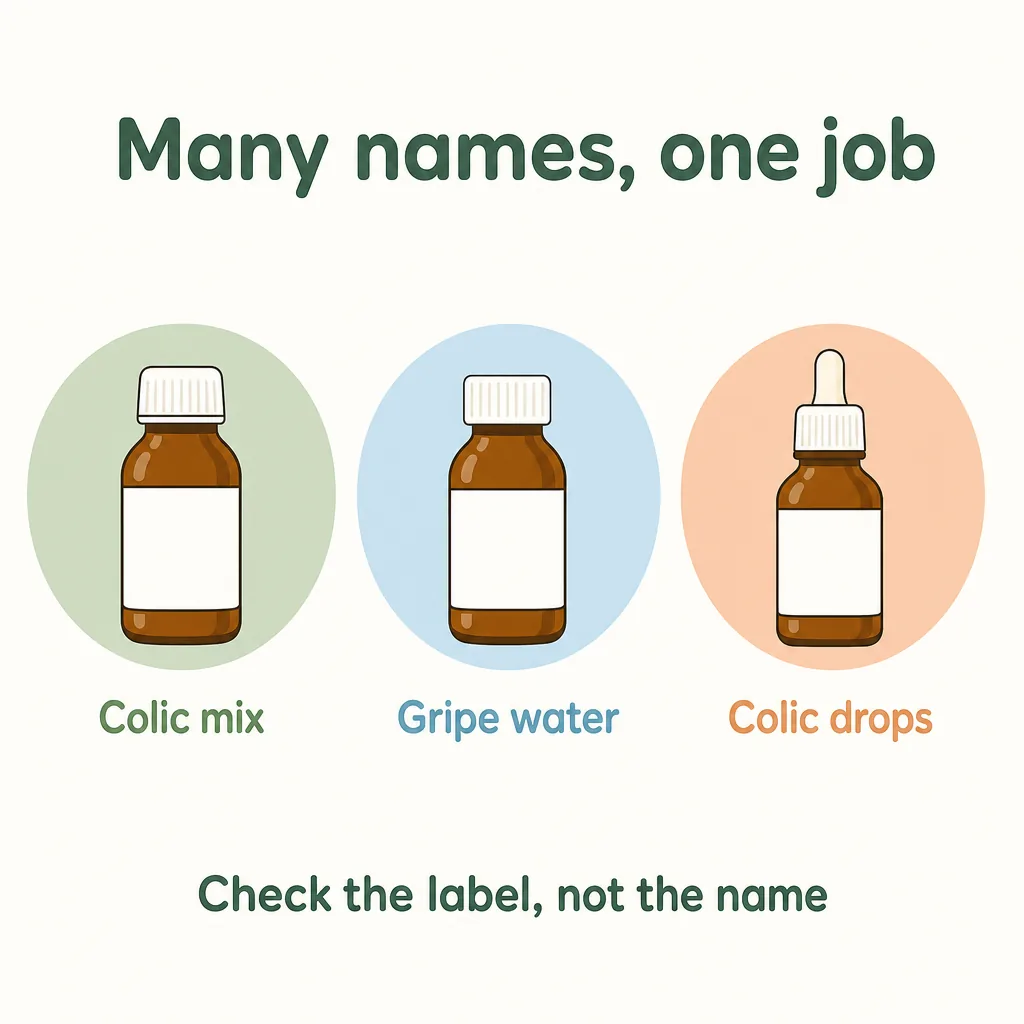
When a parent or grandparent says “colic water”, they almost always mean a small-dose liquid remedy given to a baby by mouth to help with colic and wind. It is a household name that has been passed down through families rather than a name printed on a box.
In Australia, the products that fit that description are usually sold as:
- Colic mix or colic mixture. The traditional Australian name
- Gripe water. The traditional English name, and the closest match to what most people mean by colic water
- Colic drops or wind drops. Newer names that describe the format: a small, measured dose
These names overlap a great deal, and none of them tells you what is actually in the bottle. That is why the label matters more than the name. Our page on what colic mix is goes deeper into the colic mix side of the family.
Where the Name Comes From
In the 1800s, “the gripes” was a common way to describe sharp, cramping tummy pain. An English remedy for babies’ wind and tummy pain was sold as gripe water from the mid-1800s, and the name spread through the English-speaking world, Australia included.
The original gripe water recipes contained alcohol, along with ingredients like dill and sugar. As “the gripes” fell out of everyday speech, it is easy to see why a name like colic water caught on in its place: it says what the remedy is for, colic, and what it looks like, a watery liquid.
Recipes and regulations have moved on a long way since then. In Australia, remedies sold for babies today are regulated medicines, and the label has to show the active ingredients, the dose and the directions.
Colic Water Is Not Plain Water
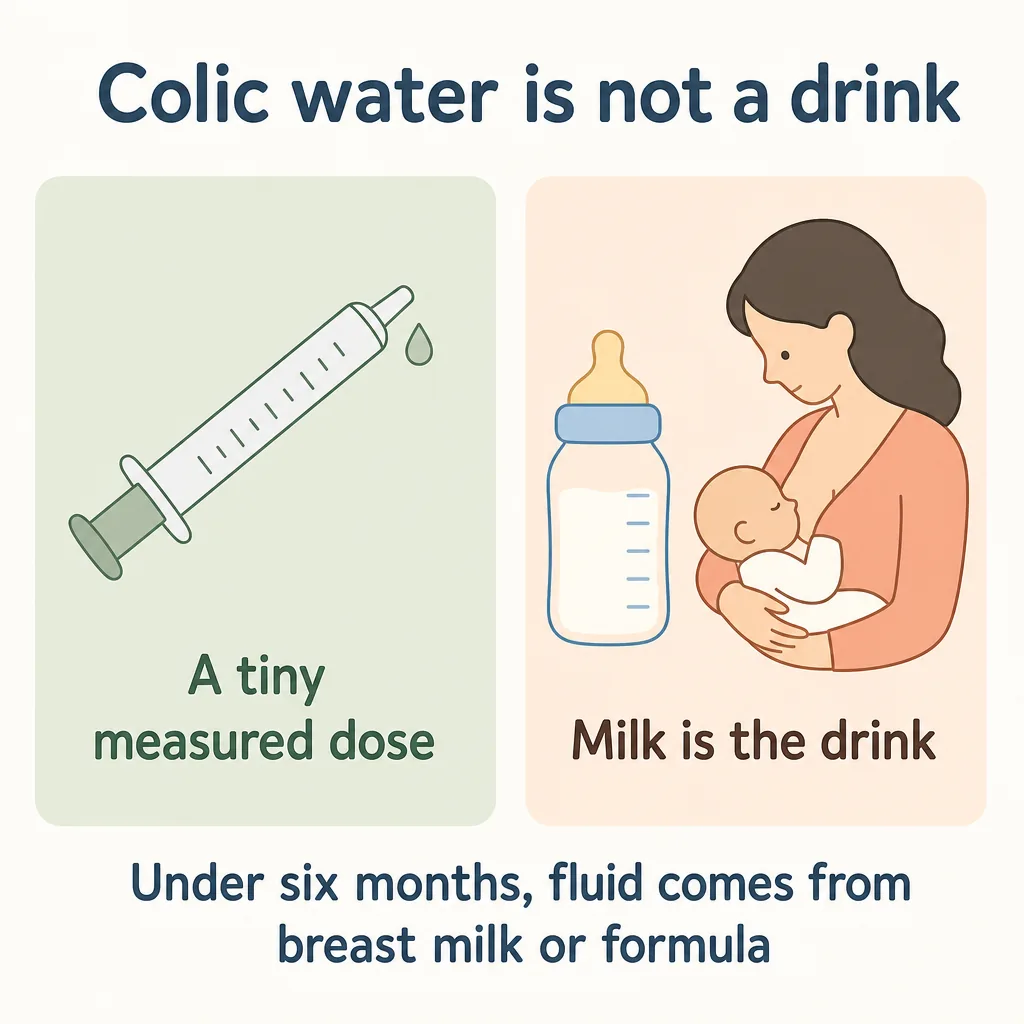
This is the most important point on the page. Colic water is a remedy given in tiny, measured doses. It is not a drink, and it is not a reason to give your baby water.
Under six months, your baby’s fluid comes from breast milk or formula. Water does not relieve wind, and it takes up room in a small tummy that a milk feed needs. If your child health nurse ever advises water for your baby, for example in hot weather, they will tell you when and how much.
The same goes for home-made “colic waters”, such as herbal teas brewed in the kitchen. The strength of a home-brewed tea is impossible to measure, it can be too strong for a baby, and it can take the place of a milk feed. If you want to use a herbal remedy, choose one made and labelled for babies, and follow the directions.
What Is in Colic Water Today?
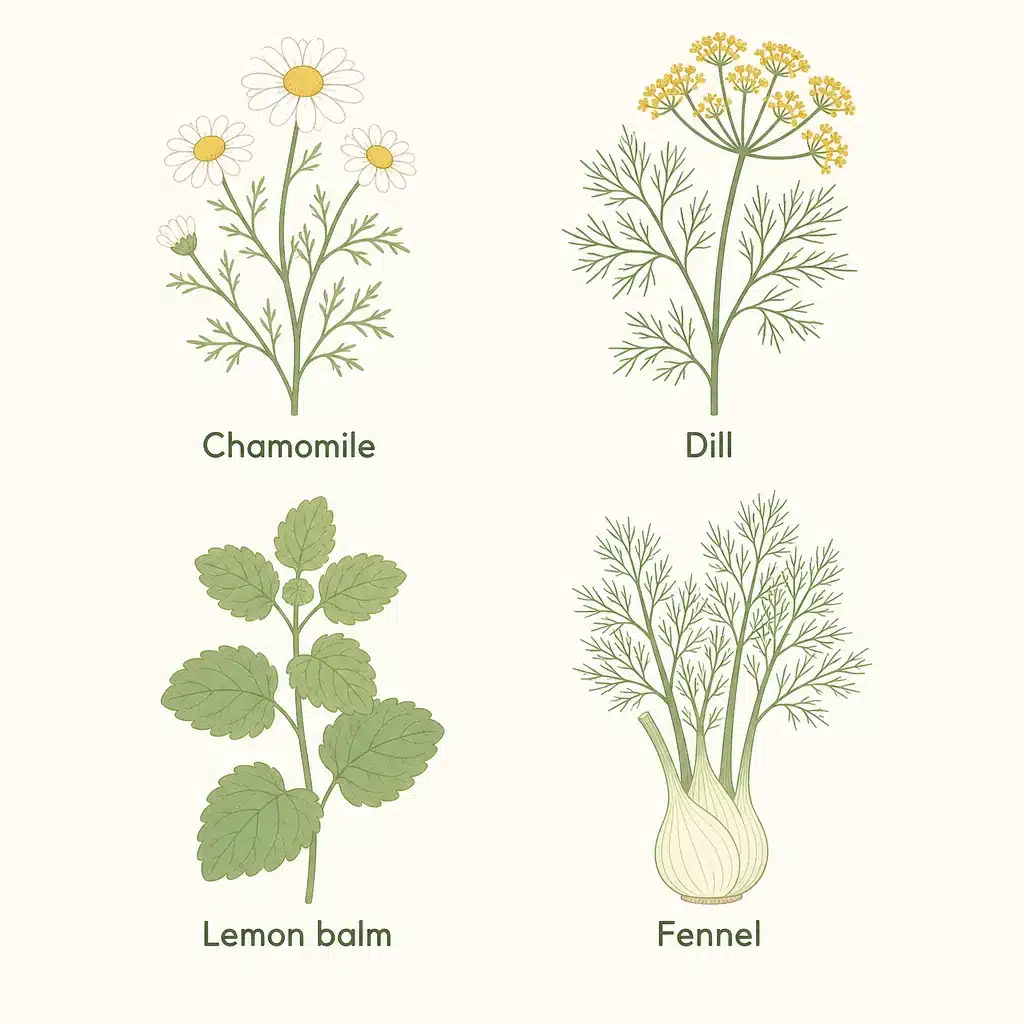
Ingredients vary between brands, but most colic waters, colic mixes and gripe waters sold for babies in Australia today are herbal. Herbs with a long history of traditional use for digestive comfort appear again and again, including:
- Chamomile, traditionally used to relieve wind and gas pain
- Dill, often as dill seed oil, traditionally used to relieve bloating and digestive discomfort
- Lemon balm, traditionally used to ease indigestion
- Fennel, which appears in many traditional recipes for wind
What is left out varies too, and it is harder to check than you might think. Products only have to list their active ingredients on the label, so something like alcohol will not always appear, even when it is in the bottle. If a product is free from something that matters to you, look for a label that says so clearly. Infants’ Friend Colic & Wind states that it is free from alcohol, sugar, and artificial sweeteners, flavours and colours.
How Colic Water Is Given
Always follow the directions on the label of the product you buy, because doses and timing vary between brands. Most follow a familiar pattern:
- A small dose, measured with the syringe or measure that comes with the product
- Given by mouth, into the inside of the cheek, with your baby awake and semi-upright
- Given with feeds, up to the number of doses a day the label allows
Our guide to colic mix for babies walks through giving a dose step by step, including how to fit it into your baby’s day and how to give it a fair trial.
What to Check on the Label
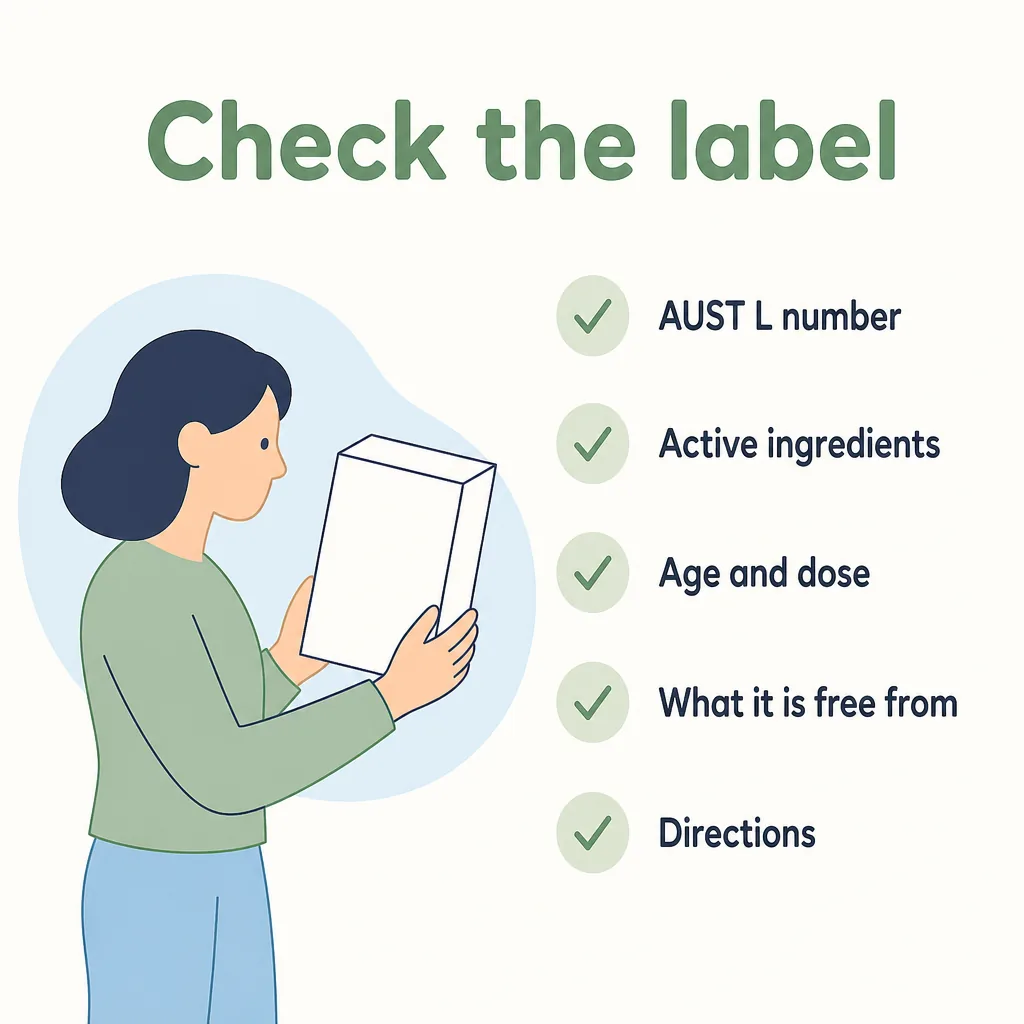
Whatever it is called, a quick look at the label tells you most of what you need to know. Look for:
- An AUST L number. This shows the product is listed with the Therapeutic Goods Administration (TGA) and can be supplied in Australia. Infants’ Friend Colic & Wind is AUST L 367810
- The active ingredients. Names you recognise, and a clear amount of each
- The age range and dose. When it is suitable from, how much to give at each age, and how often
- What it is free from. A clear statement if it is free from alcohol, sugar or artificial additives, rather than assuming from what is not listed
- The directions. How to give it, how to store it, and how long it keeps once opened
If anything on the label is unclear, your pharmacist can talk you through it. Our infant gas relief guide also compares the main types of remedy you will see on the shelf.
Where Colic Water Fits
A colic remedy is one part of a bigger settling toolkit. It sits alongside the hands-on basics:
- Burping during and after feeds, in more than one position. Our guide to the best ways to burp a baby covers the positions
- Tummy-down holds like the colic carry
- Tummy massage between feeds
- Upright time after feeds so wind can rise
Our wind relief for babies page puts all of these in order, including what to do in the first 60 seconds when the crying starts.
About Infants’ Friend Colic & Wind
If someone has told you to “get some colic water”, Infants’ Friend Colic & Wind is the kind of remedy they probably mean. It has been on Australian shelves since 1935, which is why so many grandparents know the name. It is a blend of chamomile, lemon balm and dill seed oil, herbs traditionally used in Western herbal medicine to relieve colic symptoms, wind and gas pain and mild indigestion in infants. It is alcohol-free and suitable from birth when used as directed, and our where to buy page lists current stockists.
When to Talk to Your GP or Child Health Nurse
Colic and wind are common and pass with time. Still, trust your instincts. If your baby has a fever, vomits often or forcefully, refuses feeds, is not gaining weight, has fewer wet nappies, or simply seems unwell to you rather than unsettled, have a chat to your GP or maternal child health nurse. It is also worth mentioning any remedy you are giving your baby, herbal ones included, at your regular check-ups.
Always read the label and follow the directions for use. If symptoms persist, talk to your health professional.
Infants’ Friend Colic & Wind (AUST L 367810) contains ingredients traditionally used in Western herbal medicine for colic relief (wind/gas pain). Available Australia-wide since 1935.
Frequently Asked Questions
AUST L 367810. Always read the label and follow the directions for use. If symptoms persist, talk to your health professional.