
You can feel it. Your baby has finished the feed, they are squirming, grimacing and pushing against you, and you know there is a burp in there. You have patted for five minutes. Nothing. Then you lay them down and the crying starts.
A stuck burp is one of the most frustrating parts of the early months, and it is rarely about how hard you pat. It is usually about the shape of your baby’s body and the angle the bubble needs to escape. This page is about how to burp a baby with gas in that situation: the burp that is there but will not come. For the everyday burping positions, our guide to the best ways to burp a baby covers the basics.
At a glance
- A burp gets stuck when your baby’s body is curled or slumped. Straighten them out first
- Changing the angle often moves the bubble to where it can escape. Try a second position before patting harder
- Firm, slow pats and upward rubs work better than fast, light taps
- A few minutes of good attempts is enough. After that, upright time or a tummy-down hold does more
- If the wind has already moved lower, a burp will not come. Switch to leg and tummy methods instead
Why a Burp Gets Stuck
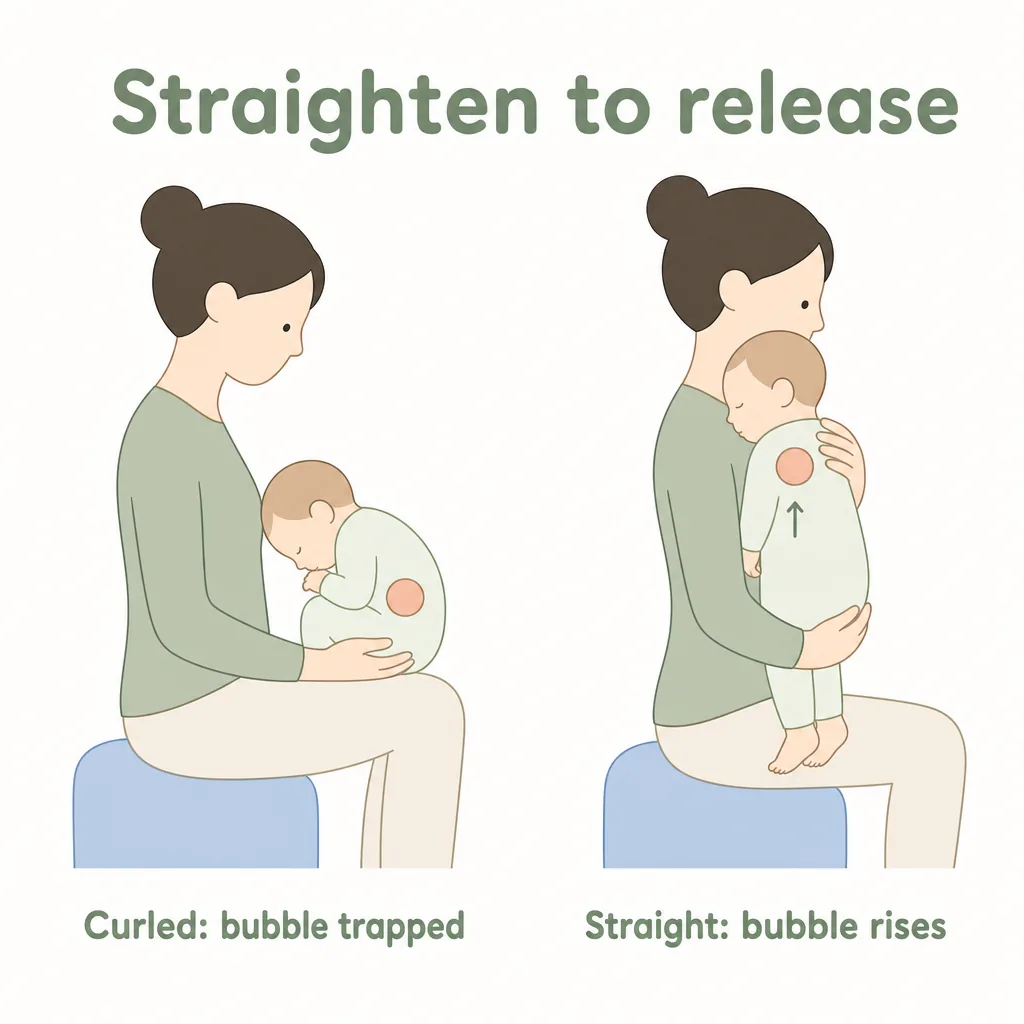
A burp is a bubble of swallowed air rising from the top of the tummy and out through the mouth. For it to escape, it needs a clear, fairly straight path upwards.
Newborns make that hard. They curl up naturally, knees tucked and back rounded, and a curled baby has a folded tummy with the bubble pinned under the fold. A baby who is slumped on your lap or tucked tightly into your shoulder is in the same position. Crying makes it worse, because a crying baby swallows more air and tenses their tummy.
That is why a stuck burp usually responds to changing your baby’s shape and angle, not to more patting in the same position. Our guide to trapped gas in newborns explains the signs to look for.
Is It a Stuck Burp or Lower Wind?
Before you start, it helps to know which kind of wind you are dealing with, because they need different things.
| A stuck burp | Lower wind | |
|---|---|---|
| When | During the feed or in the first 10 to 15 minutes after | Usually 30 minutes or more after a feed |
| What you see | Pulling off the breast or bottle, squirming, a scrunched face, pushing against you | Knees drawn up, grunting, straining, a firm tummy |
| What helps | Straightening, a change of angle, burping | Bicycle legs, knees to tummy, tummy-down holds, massage |
| How it ends | A burp, sometimes with a little milk | A bottom burp or a poo |
If it looks like lower wind, our guide on how to release trapped wind in babies has the routine for that.
The Stuck-Burp Sequence
Work through these in order. Give each one about a minute before moving on.
Step 1. Straighten your baby out
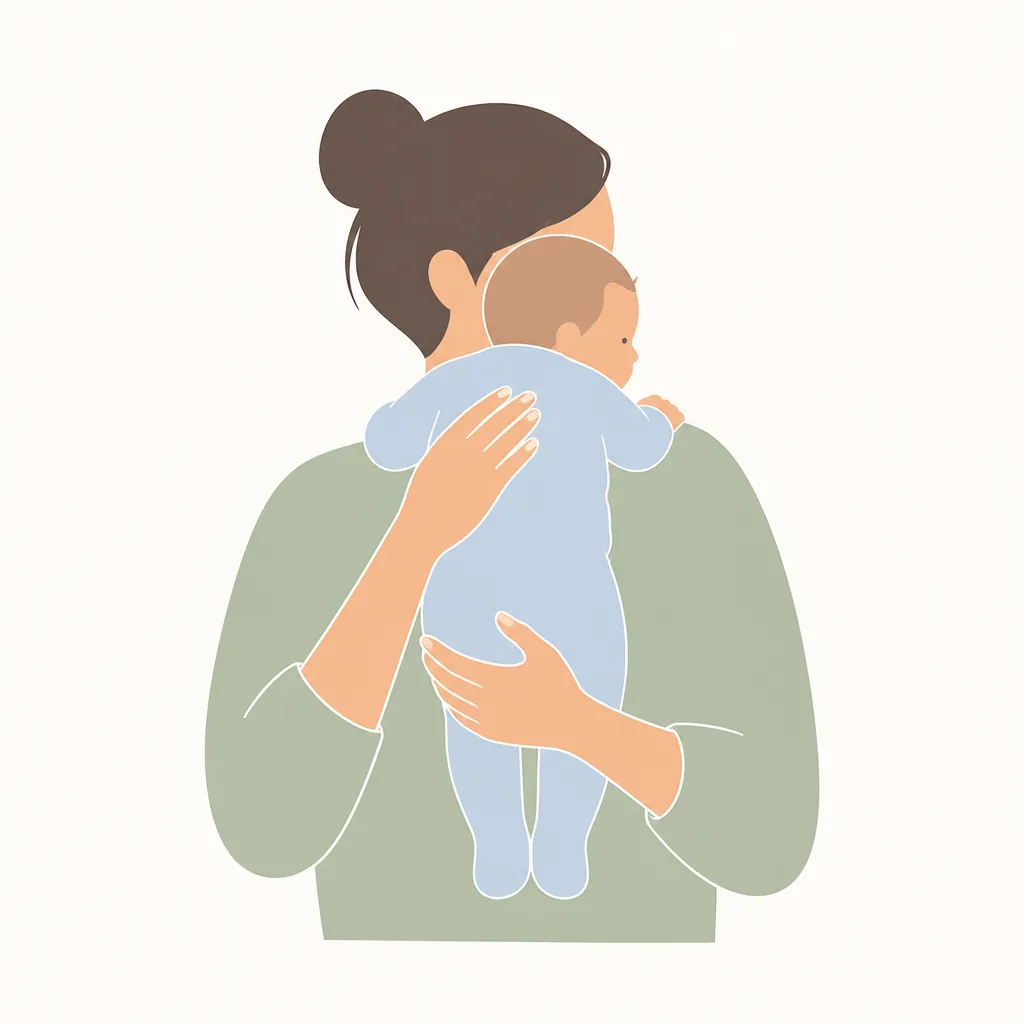
Hold your baby upright against your chest, then lift them a little higher so their tummy is over the top of your shoulder and their body is long and straight, not curled. Support their head and bottom. The gentle pressure of your shoulder against their tummy, plus a straight body, often lets the bubble up on its own. Rub slowly upwards from the lower back towards the shoulders.
Step 2. Sit up and lean forward
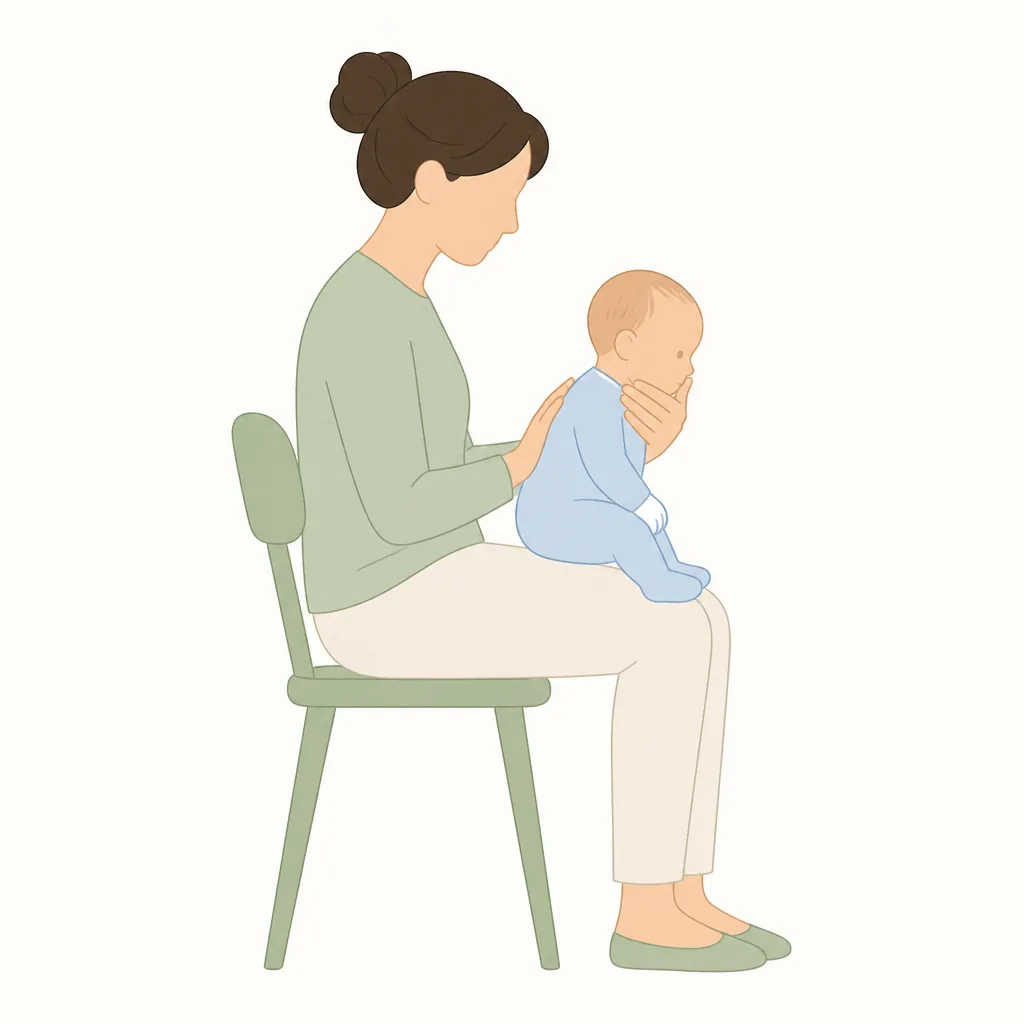
Sit your baby on your lap, facing sideways. Support their chest with one hand, with your thumb and finger gently holding their jaw, not their throat. Lean them slightly forward so their back is straight, then pat or rub with your other hand. This angle reaches a bubble that the shoulder position did not.
Step 3. Gentle circles while seated
Still sitting on your lap and supported under the jaw, move your baby’s upper body in slow, small circles, a few in one direction then a few in the other. Keep it gentle and smooth. The movement shifts the bubble towards the top of the tummy.
Step 4. Lay down, then sit back up
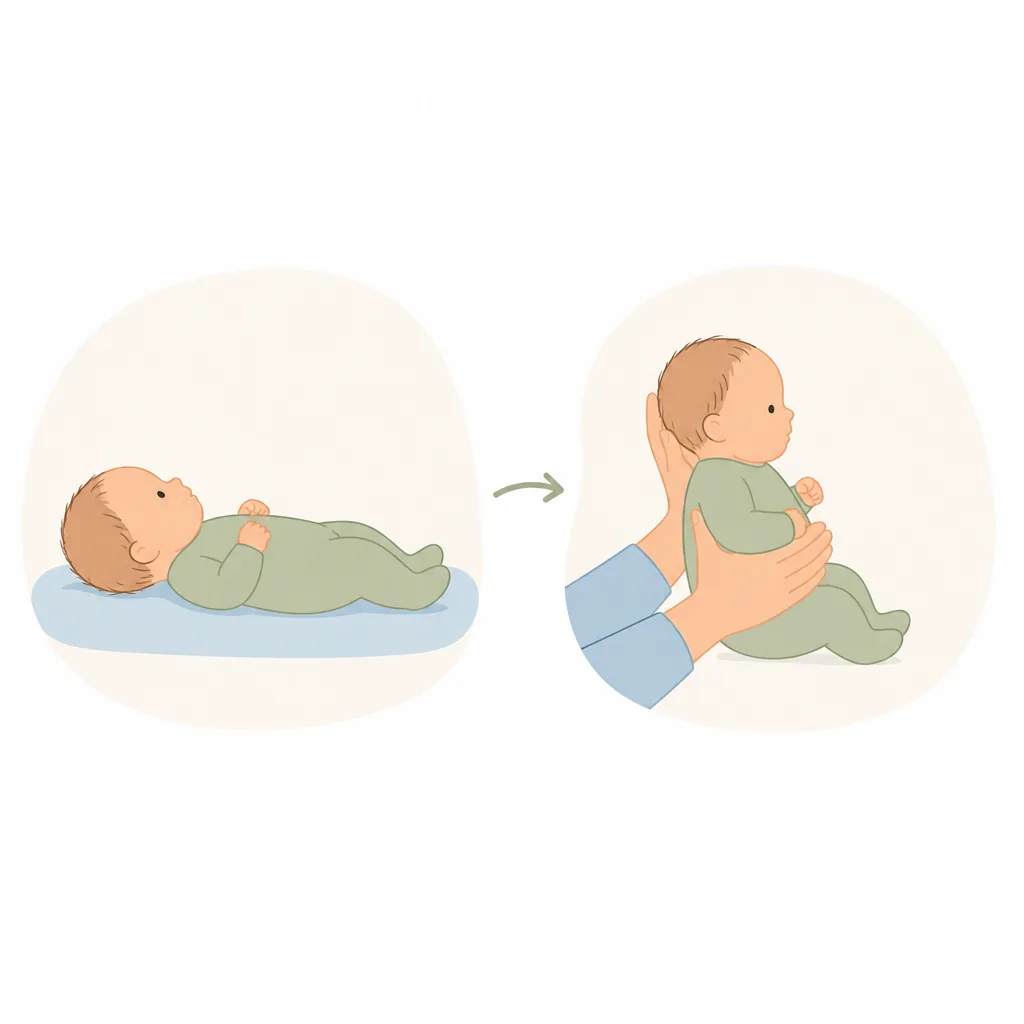
Lay your baby flat on their back on a safe surface for a few seconds, then bring them slowly back up to sitting with their back straight. Many parents find the bubble moves with the change of position, and the burp comes once your baby is upright again. Try it two or three times.
Step 5. Tummy-down across your lap
Lay your baby tummy-down across your knees, head a little higher than their bottom and turned to one side with the face clear. Pat or rub their back. The steady pressure on the tummy helps push the bubble up, and many babies settle in this position even if no burp comes.
Step 6. Walk it out
Hold your baby upright against your chest or in the colic carry, tummy-down along your forearm, and walk slowly around the room. The rhythm and gentle pressure together often shift a bubble that stillness could not.
How to Pat and Rub
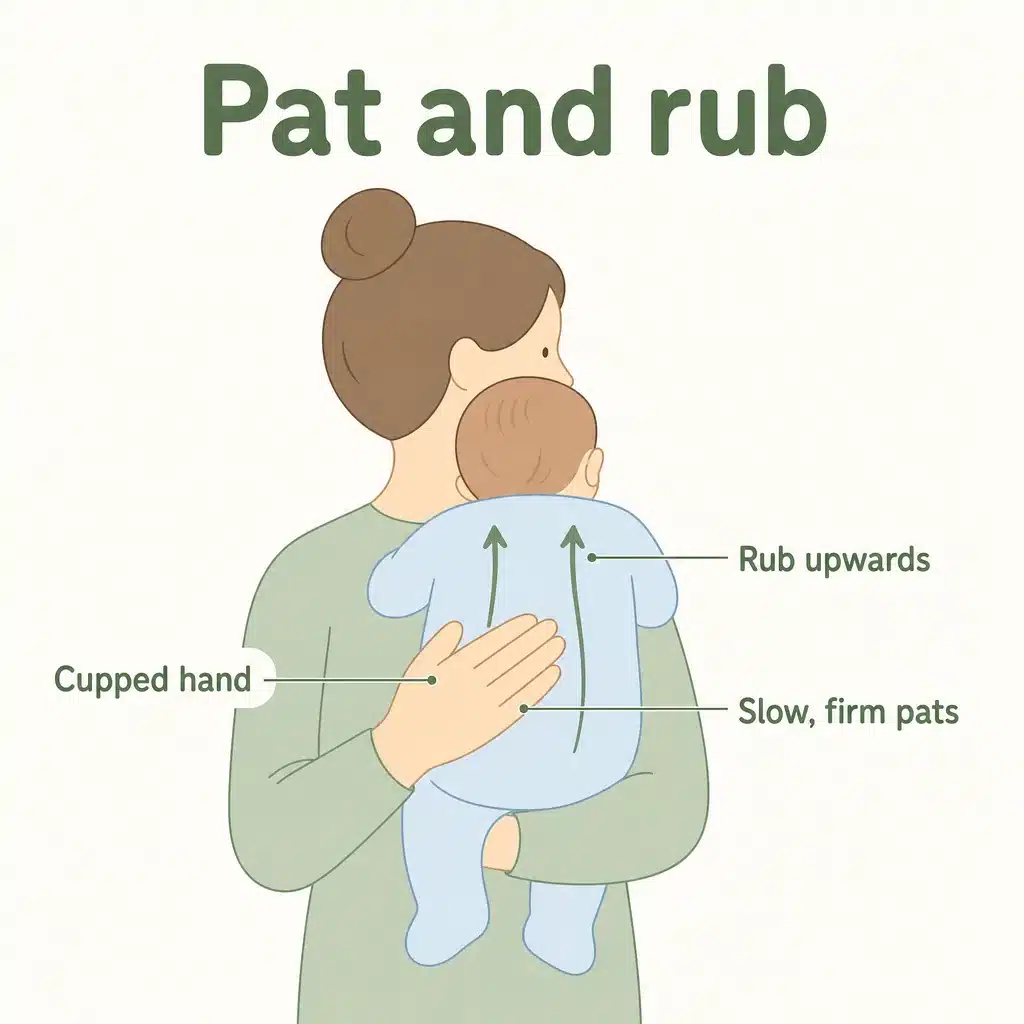
The technique matters as much as the position.
- Cup your hand. A slightly cupped hand makes a softer, deeper pat than a flat palm
- Firm and slow. Steady pats at the pace of a slow heartbeat work better than fast, light taps
- Rub upwards. Long strokes from the lower back up towards the shoulders follow the direction the bubble needs to travel
- Mix them. A few pats, a few rubs, then pats again. Babies often burp when the rhythm changes
- Protect your clothes. Keep a cloth on your shoulder or lap, because a stuck burp often brings a little milk with it
Burping a Sleepy Baby
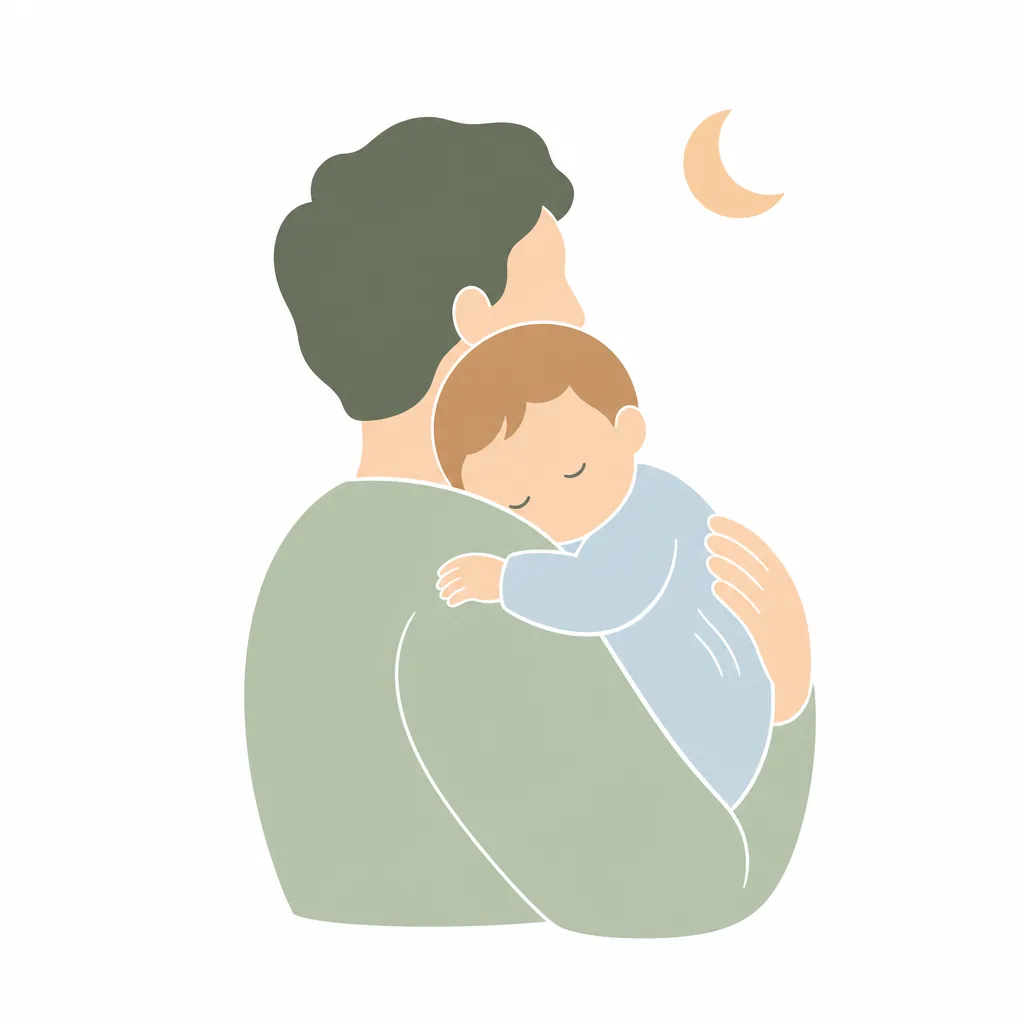
Many babies fall asleep at the breast or bottle with a bubble still inside, then wake crying 20 minutes later. A sleepy baby can still be burped.
Keep them on your shoulder with their body long and straight, and rub rather than pat so you do not wake them fully. Sitting them up gently on your lap for a minute works well too, because the change of position often brings the burp up without much effort. If nothing comes after a couple of minutes, hold them upright on your chest for five to ten minutes before you lay them down on their back.
Stopping the Bubble Getting Stuck Next Time
The easiest burp is the one you catch early.
- Burp partway through the feed. When switching sides, or about halfway down the bottle, before a big bubble forms under a full tummy
- Feed more upright. A baby whose head is higher than their tummy swallows less air, and what they do swallow sits where it can come straight back up
- Feed before the frantic cry. A baby who latches or takes the bottle calmly swallows much less air
- Check the teat. A bottle teat that is too fast or too slow makes babies gulp or suck hard, and both bring in air. Keep the teat full of milk
- Upright after feeds. Twenty to thirty minutes upright after a daytime feed lets any leftover bubbles rise
If you are breastfeeding, our guide on how to reduce wind in breastfed babies covers the latch, positions and fast let-down in more detail.
How Long Should You Keep Trying?
A few minutes, with a change of position or two, is a fair attempt. After that, more patting rarely helps and can leave you both frazzled.
If your baby is comfortable and content, they probably did not need to burp. Not every feed produces one, and breastfed babies in particular often burp less. If your baby is still uncomfortable, hold them upright for 15 to 20 minutes or try a tummy-down hold, and the bubble will often come up on its own a little later.
If the discomfort carries on and the wind seems to have moved lower, our wind relief for babies page covers the next steps. Many families also use Infants’ Friend Colic & Wind alongside these techniques, a traditional herbal remedy given by mouth with feeds. Its ingredients are traditionally used in Western herbal medicine to relieve colic symptoms, wind and gas pain and mild indigestion in infants, and it is alcohol-free and suitable from birth when used as directed.
When to Talk to Your GP or Child Health Nurse
Wind is a normal part of the early months. Have a chat to your GP or maternal child health nurse if your baby vomits often or forcefully, brings up green or bloody vomit, has a fever, refuses feeds, is not gaining weight, has fewer wet nappies, or seems to be in pain that no amount of burping or holding eases. If your baby cries for long stretches every day and seems otherwise well, our guide to colic vs gas explains the difference between wind and colic.
Always read the label and follow the directions for use. If symptoms persist, talk to your health professional.
Infants’ Friend Colic & Wind (AUST L 367810) contains ingredients traditionally used in Western herbal medicine for colic relief (wind/gas pain). Available Australia-wide since 1935.
Frequently Asked Questions
AUST L 367810. Always read the label and follow the directions for use. If symptoms persist, talk to your health professional.