
You have bought the bottle. It is sitting on the change table next to the syringe, and your baby is working up to the evening cry. Now come the practical questions nobody quite answers. Is this the right thing for my baby? How do I actually get it into a newborn who is already upset? Which feeds? How will I know if it is helping?
This page is the hands-on guide. If you want to know what a colic mix is, where the name comes from and what usually goes into one, our page on what colic mix is covers that. Here we stay practical: when a colic mix fits, how to give it, where it sits in your day, and how to judge it fairly.
At a glance
- A colic mix is for the wind and tummy discomfort side of colic. It sits alongside burping, holds and settling, not instead of them
- Check the label for the age it suits. Infants’ Friend Colic & Wind is suitable from birth when used as directed
- Give it slowly into the inside of the cheek with the syringe, with your baby semi-upright
- It is given with feeds, and many parents find just before a feed easiest. The label sets how many doses a day
- Give it a fair trial of at least three or four days before you decide, and keep everything else the same while you do
Is a Colic Mix Right for Your Baby?
Parents usually reach for a colic mix when a pattern has settled in: a baby who feeds and grows well, but who grunts, squirms and pulls their knees up around feeds, has a tight, windy tummy, and is hardest to settle in the late afternoon and evening. That is the picture a colic mix is traditionally used for.
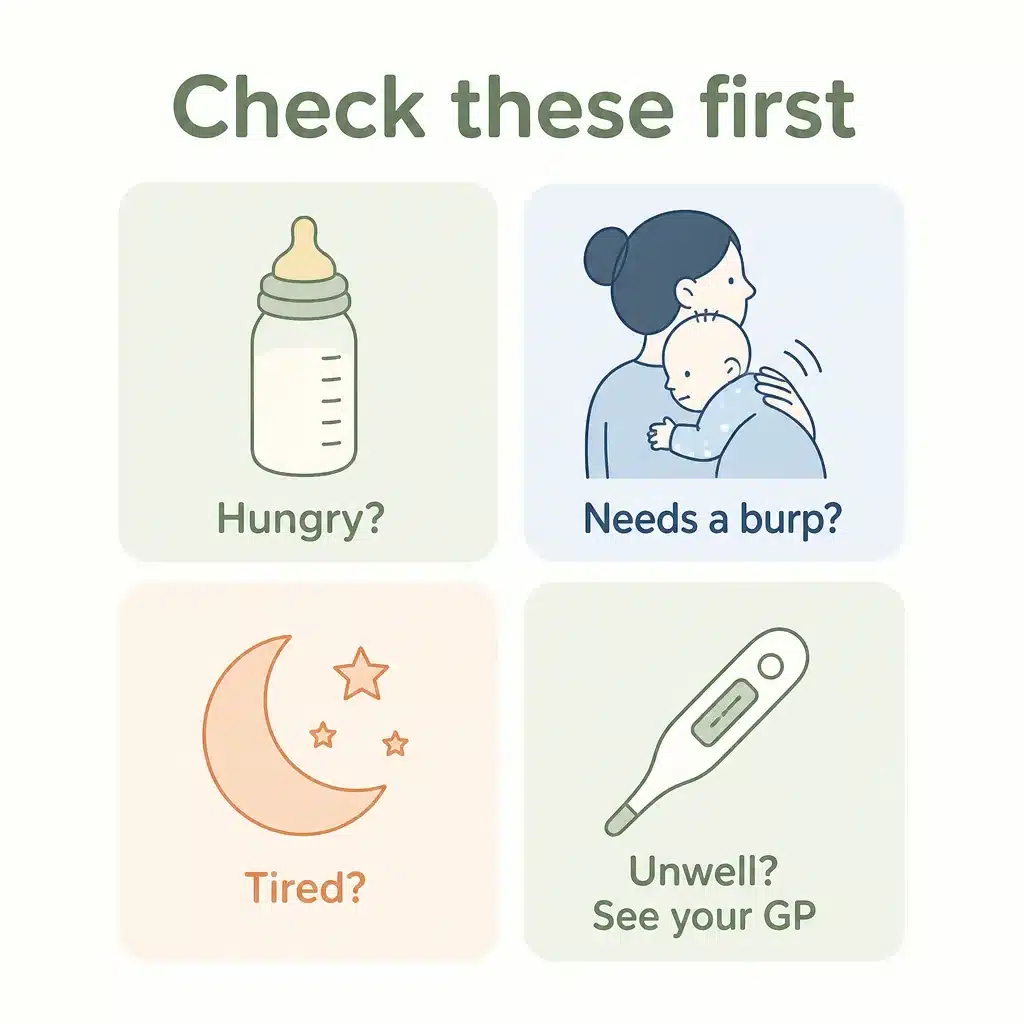
A few things are worth ruling out first, because a colic mix will not help them:
- Hunger. A baby who calms the moment they are fed was probably hungry. Offer a feed before anything else
- A stuck burp. If your baby is squirming in the minutes after a feed, a good burp in a second position may be all they need
- Being tired or overstimulated. A dim room and a calm hold can settle crying that has nothing to do with the tummy
- Being unwell. Fever, vomiting, poor feeding, fewer wet nappies or a baby who seems floppy or unwell need your GP, not a colic remedy
If you are not sure whether you are dealing with wind or colic, our guide to colic vs gas explains the difference, and the colic quiz walks you through the pattern in a couple of minutes. If you are weighing up a colic mix against drops and other products, our infant gas relief guide compares the options.
What Age Can Babies Have Colic Mix?
Age suitability varies between products, so the label of the one you buy is the place to check. Infants’ Friend Colic & Wind is suitable from birth when used as directed, with the dose set by your baby’s age on the label.
If your baby was born early, has a health condition, or is on any other medicine, have a chat to your GP, pharmacist or child health nurse before you start any remedy, herbal ones included.
How to Give Colic Mix to a Baby
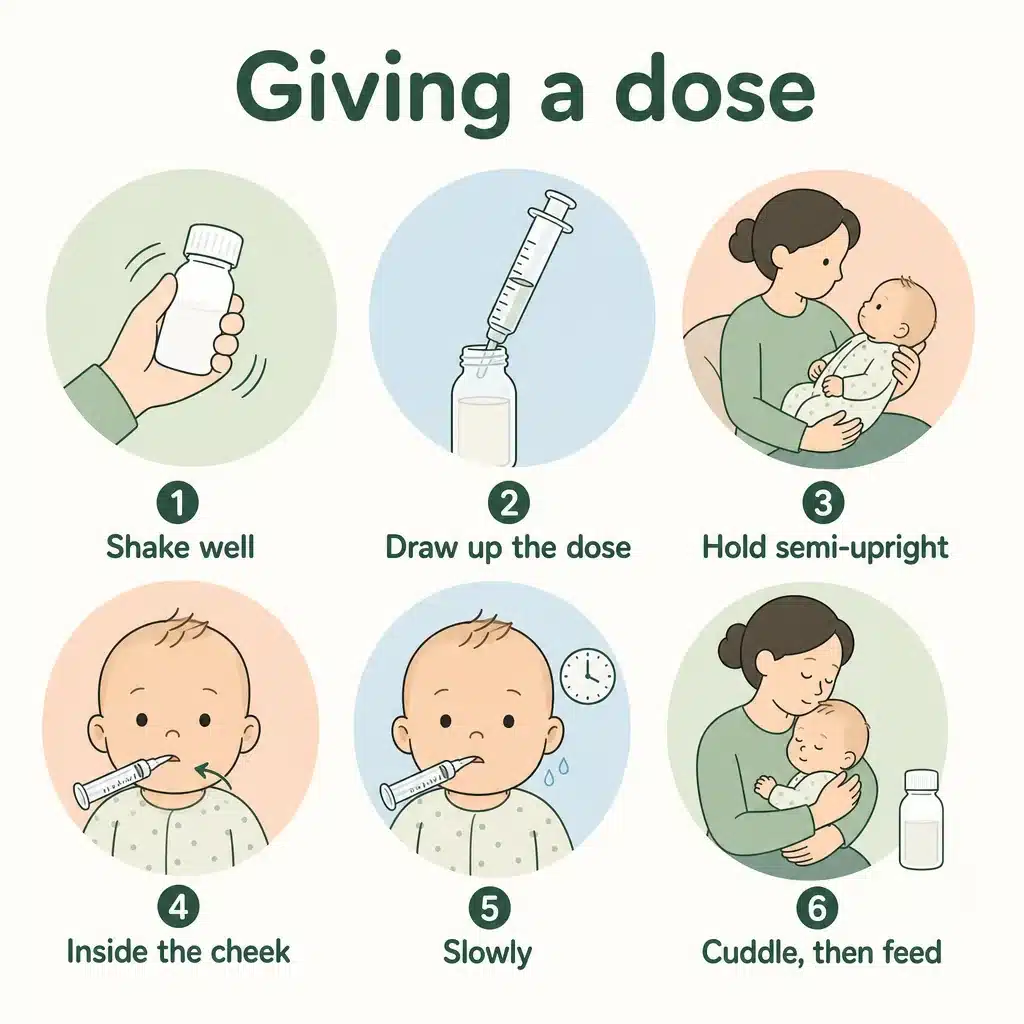
The first few doses are the fiddly ones. After a couple of days it becomes as routine as a nappy check.
Using the syringe, step by step

The basics are simple. Shake the bottle, draw up the dose the label gives for your baby’s age with the syringe supplied, and hold your baby semi-upright. Slip the tip just inside the corner of their mouth, pointing towards the inside of the cheek, and push the plunger slowly so they can swallow a little at a time. Never give a dose to a baby lying flat or asleep. If your baby spits some out, do not give another dose to make up for it.
Our how to use Infants’ Friend guide walks through each step in detail, along with mixing a dose with milk, cleaning the syringe and storing the bottle.
When to Give It: Fitting It Into Your Day

Colic mixes are given with feeds, and the label sets how many doses a day your baby can have. Infants’ Friend Colic & Wind can be given up to six times a day, before, during or after a feed, and many parents find just before a feed easiest because their baby is calm and alert. Some parents give it at every feed. Others give it at the feeds where wind is building. Thinking about the shape of your baby’s day helps you decide.
| Time of day | A simple way to plan it |
|---|---|
| Morning | Often the calmest stretch. If your baby is settled, these feeds may not need a dose |
| Early afternoon | A dose before the feed if wind is starting to build |
| Late afternoon and evening | The feeds to prioritise, because this is when colic and wind usually peak |
| Night feeds | Keep it low-key: dim light, a slow dose, a calm feed, a burp, back to bed. Filling the syringe before bed saves fumbling in the dark |
Building the dose into something you already do, like the nappy change before a feed, makes it much easier to remember when you are running on three hours’ sleep.
Giving It a Fair Trial

Colic comes and goes, so one good or bad evening does not tell you much. The only way to know whether a colic mix is helping your baby is to give it a steady run.
- Give it at least three or four days, at the same feeds each day, as the label directs. Colicky evenings vary on their own, so a longer run tells you more
- Change one thing at a time. If you start a colic mix, a new bottle teat and a new settling routine all on the same day, you will not know which one made the difference
- Keep a simple note. Jot down roughly how long the evening crying lasted and how windy your baby seemed. A few lines in your phone is enough
- Look for the trend, not the miracle. What you are hoping to see is fewer windy, knees-up episodes and evenings that are a little easier to get through
If after a fair trial you are not seeing a difference, talk to your pharmacist or child health nurse. It is also worth mentioning any remedy you are using at your baby’s regular check-ups.
Colic Mix Works Best With the Basics
A colic mix is one part of a settling toolkit, not the whole thing. The families who find the evenings easiest usually pair it with a few hands-on habits:
- Burping during and after feeds, in more than one position. Our guide to the best ways to burp a baby covers the positions
- Tummy-down holds. The colic carry, with your baby along your forearm while you walk, is the classic
- Tummy massage between feeds, never straight after one
- Upright time after feeds so wind can rise
Our wind relief for babies page puts all of these in order, including what to do in the first 60 seconds when the crying starts.
Common Mistakes to Avoid
- Giving extra because it is a bad night. Stick to the dose and the number of doses on the label, however hard the evening is
- Doubling up on remedies. If you are thinking about using more than one product, check with your pharmacist first
- Dosing a sleeping baby. Wait until they are awake and semi-upright
- Squirting towards the throat. Always aim for the inside of the cheek, a little at a time
- Stopping and starting. Giving it one day and not the next makes it very hard to judge
When to Stop

Colic usually eases by three to four months, as your baby’s digestive system matures. Most families find they simply need a colic mix less and less as the evenings get easier, and stop around then. The label covers dosing for older babies too, so there is no need to stop on a particular date if your baby is still windy. Our guide to when colic starts, peaks and stops explains the usual timeline.
About Infants’ Friend Colic & Wind
Infants’ Friend Colic & Wind is a blend of chamomile, lemon balm and dill seed oil, herbs traditionally used in Western herbal medicine to relieve colic symptoms, wind and gas pain and mild indigestion in infants. It is free from alcohol, sugar, and artificial sweeteners, flavours and colours, comes with a dosing syringe, and is suitable from birth when used as directed. Our where to buy page lists current stockists.
When to Talk to Your GP or Child Health Nurse
A colic mix is for a baby who is otherwise well. Have a chat to your GP or maternal child health nurse if your baby has a fever, vomits often or forcefully, refuses feeds, is not gaining weight, has fewer wet nappies, has blood or mucus in their poo, or if the crying changes in a way that worries you. A baby who seems unwell to you, rather than unsettled, is always worth a visit.
Always read the label and follow the directions for use. If symptoms persist, talk to your health professional.
Infants’ Friend Colic & Wind (AUST L 367810) contains ingredients traditionally used in Western herbal medicine for colic relief (wind/gas pain). Available Australia-wide since 1935.
Frequently Asked Questions
AUST L 367810. Always read the label and follow the directions for use. If symptoms persist, talk to your health professional.