
You chose to breastfeed, you are doing everything right, and yet your baby still cries for hours and pulls their knees up in obvious discomfort. It is a confusing and disheartening place to be. Many mums assume colic is something that happens to formula-fed babies, so when it shows up in a breastfed baby it can feel like a sign that something is wrong with your milk or your feeding.
It is not. Breastfed babies get colic just as often as formula-fed babies, and it is rarely about the quality of your milk. This page explains what colic looks like in a breastfed baby, the reasons it can happen, whether your own diet plays a part, and the practical things you can do to help your little one through it.
Can breastfed babies get colic?
Yes. Colic is just as common in breastfed babies as it is in bottle-fed babies. It is the name we give to long, hard-to-settle bouts of crying in a baby who is otherwise healthy, feeding, and growing well, and it does not pick a side based on how a baby is fed.
This catches a lot of mums by surprise, because breast milk is so often described as the gentlest thing for a baby’s tummy. That is true, and it is also true that the things behind colic, like a digestive system that is still maturing and plenty of swallowed air, happen regardless of what is in the bottle or the breast. So if your breastfed baby has colic, it is not a verdict on your milk or your choice to breastfeed.
What colic looks like in a breastfed baby
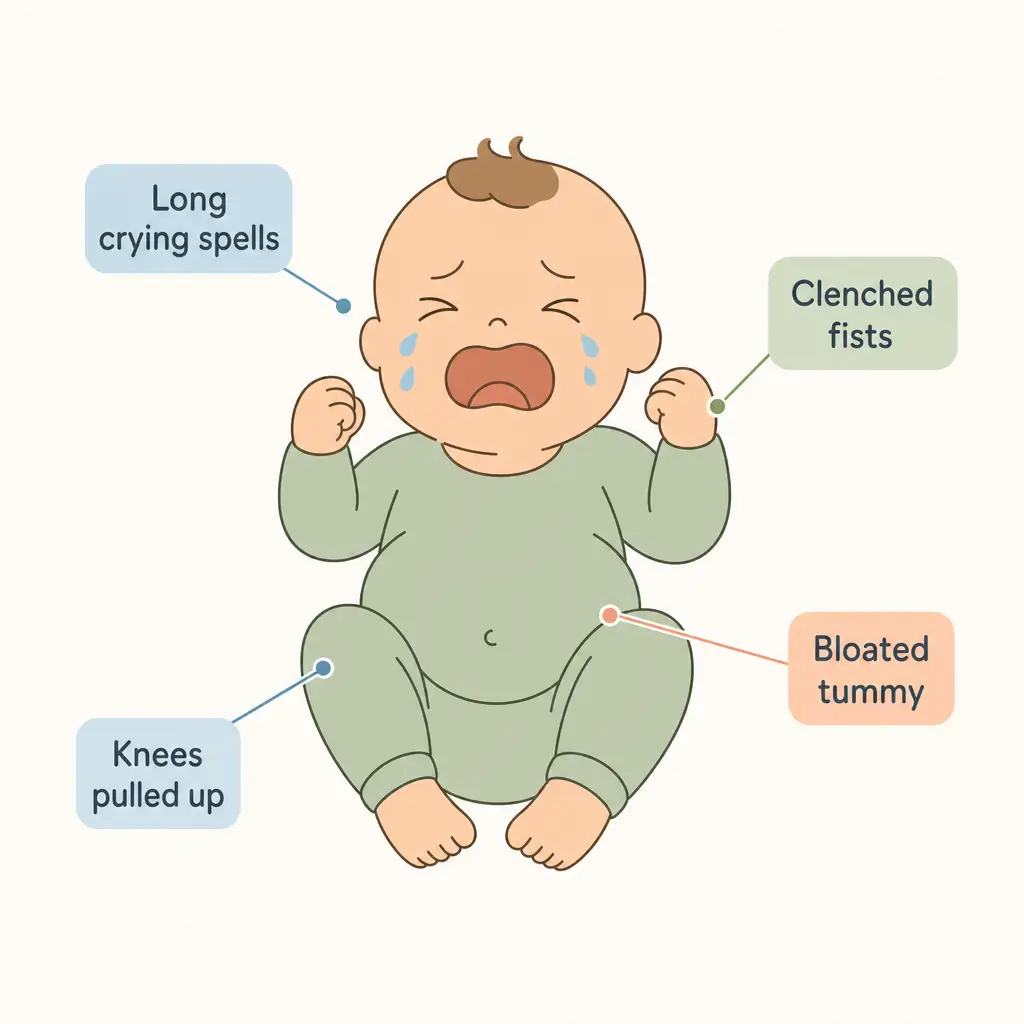
The signs of colic are much the same whatever way a baby is fed. You might recognise some of these in your own little one:
- Long crying spells, often at the same time each day, frequently in the late afternoon or evening
- Crying that sounds more intense or higher-pitched than their usual grizzle, and that is hard to soothe
- Pulling their knees up to their tummy, arching their back, or clenching their fists
- A red or flushed face during the worst of it
- A tense, bloated little tummy and lots of wind
- Seeming uncomfortable soon after a feed, sometimes coming on and off the breast and fussing
A key thing that points to colic rather than something else is that between these episodes your baby feeds, settles, and is generally content, and they are gaining weight and having normal nappies. If you would like a fuller rundown, our guide on the signs your baby might have colic goes through them in detail.
Why breastfed babies get colic

Just like every baby, breastfed babies are running a brand new digestive system and a young nervous system that is still learning to wind down. On top of that, there are a few breastfeeding-specific things that can add to wind and unsettledness. None of them mean you are doing anything wrong.
A fast letdown or oversupply

If you have plenty of milk and a strong, fast letdown, your baby can end up gulping to keep up. That fast gulping brings in extra air, and a tummy that fills very quickly can feel uncomfortable. You might notice your baby spluttering, coming off the breast, or fussing soon after a feed. Feeding in a more upright or laid-back position, and letting the first fast flow ease before latching, can help your baby cope.
The balance of foremilk and hindmilk
When there is a lot of milk and feeds are short or swapped between sides quickly, some babies take in a large volume of the thinner, lactose-rich foremilk without getting as much of the richer hindmilk. For some babies this can mean more wind and a more unsettled tummy. Letting your baby finish one side fully before offering the other gives them a more even feed.
Latch and swallowed air
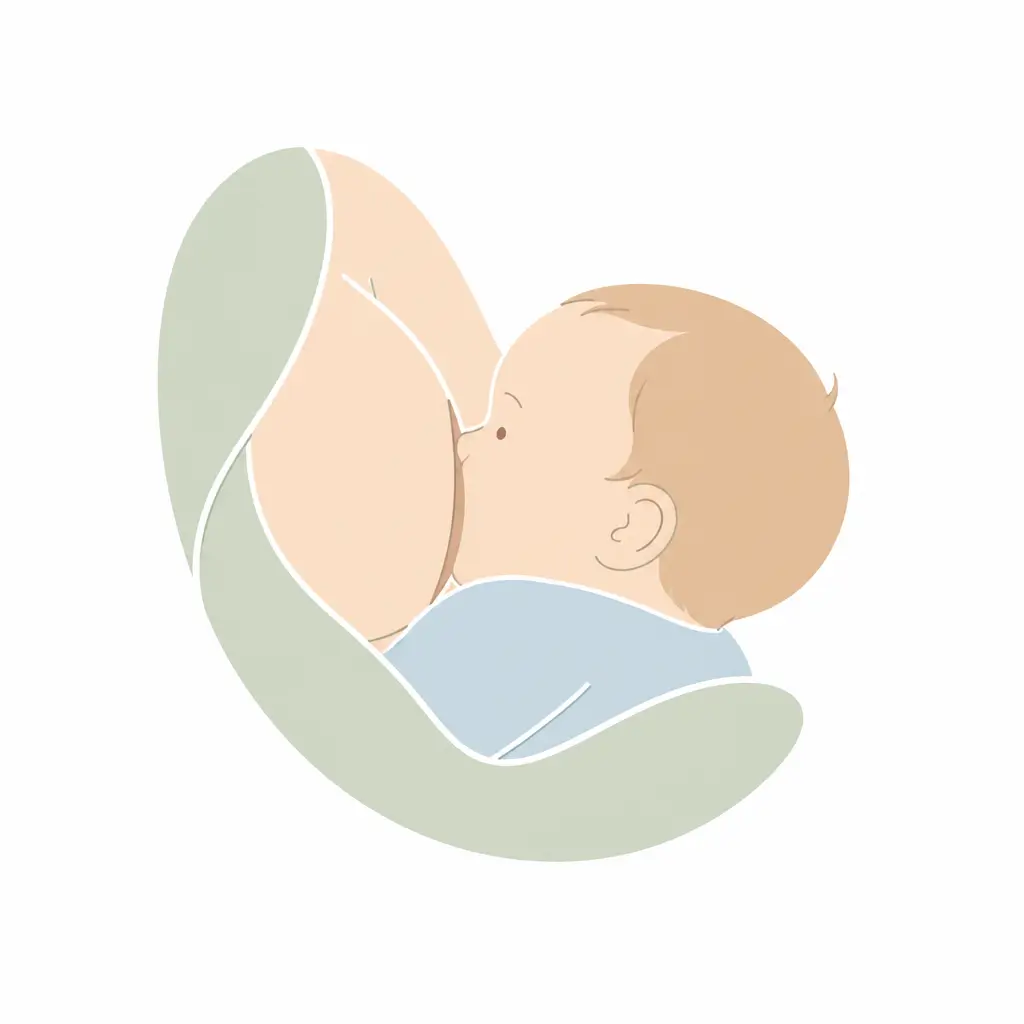
A shallow latch lets air in around the seal, and that swallowed air becomes trapped wind. Getting a deeper latch, where your baby takes in a good mouthful of breast rather than just the nipple, cuts down the air that goes in with each feed. A midwife, child health nurse, or lactation consultant can help you fine-tune this if feeds feel clicky or uncomfortable.
A still-maturing gut
Underneath all of this is the same factor every newborn shares: a digestive system that is only weeks old and still learning its rhythm. This is the part that improves with time, and it is the main reason colic eases for most babies by three to four months.
Is it something in my diet?

This is the question almost every breastfeeding mum asks, and it is an understandable one. For most babies, the answer is no. The food you eat does not usually cause colic, and there is no need to eat a bland or restricted diet just because your baby is unsettled.
A small number of babies are genuinely sensitive to something passing through breast milk, most often cow’s milk protein. This tends to come with other clues beyond crying, such as a rash, a lot of vomiting, mucus or blood in the nappies, or poor weight gain. If that sounds like your baby, it is worth looking into rather than guessing. Our dedicated guides on the breastfeeding diet and colic and on cow’s milk protein intolerance walk through this carefully. The important thing is not to cut major food groups from your own diet without first speaking to your GP or child health nurse, so you stay well nourished and any change is done safely.
How to help a colicky breastfed baby

There is no single fix, but there is a lot you can gently try. Most mums find that a small toolkit, used calmly and consistently, takes the edge off the hardest stretches.
- Bring up wind during and after feeds. Pausing to burp, especially when swapping sides, lets trapped air out before it builds. Our guide on the best ways to burp a baby covers positions that work.
- Check the latch and slow the feed. A deeper latch and a calmer, less rushed feed reduce how much air goes in. If letdown is fast, try leaning back so your baby is working against gravity rather than gulping.
- Hold your baby upright after feeds. Keeping them upright for a little while helps milk settle and wind rise.
- Use gentle motion and sound. Rocking, a walk in the carrier, soft white noise, and a warm bath all help an overstimulated baby wind down.
- Try a tummy or back rub and gentle leg movements. Light massage and bicycling the legs can help move trapped wind along. There are more ideas in our home remedies for colic and how to soothe a crying baby.
Many families also add a gentle settling aid to their routine. Infants’ Friend Oral Liquid has supported Australian parents through the colic window since 1935, using ingredients traditionally used in Western herbal medicine for the relief of wind and gas pain. It works alongside breastfeeding and the soothing steps above, not in place of them.
Looking after yourself

Colic is hard on parents, and it can be especially draining when you are also doing all the night feeds. The crying can leave you feeling worn down, anxious, and like you are failing, none of which is true. Take the breaks you can, hand the baby to someone you trust when you need ten minutes, and remember that a crying baby is safe in their cot while you take a breath if you feel overwhelmed. Looking after yourself is part of looking after your baby, and colic is a phase that ends.
When to see your GP or child health nurse
Colic happens in a baby who is otherwise well and growing, so it is always reasonable to get reassurance, and you should check in if something feels different from the usual crying. Speak with your GP or child health nurse if your baby:
- Has a fever
- Is vomiting often or forcefully
- Has blood or mucus in their nappies
- Is not feeding well or gaining weight
- Seems floppy or hard to wake
- Has crying that changes suddenly in a way that worries you
You know your baby best, and asking for help is always the right call.
Infants’ Friend Oral Liquid (AUST L 367810) contains ingredients traditionally used in Western herbal medicine for colic relief (wind/gas pain). Available Australia-wide since 1935.
Frequently Asked Questions
AUST L 367810. Always read the label and follow the directions for use. If symptoms persist, talk to your health professional.