
It is late, your baby has been crying for hours, and someone has just told you about a tea. Maybe it was your mum, a friend from mothers’ group or a post you found in the middle of the night. Fennel, chamomile, a family recipe that “worked on all of us”. When you are this tired, a warm cup of something simple sounds very reasonable.
The short answer is that colic tea is not a proven fix, and tea is not recommended for babies. This page explains why, and what you can try instead. You are not silly for asking. Herbal teas have been handed down for generations, and they come from people who were trying to help a crying baby, just like you.
At a glance
- Tea is not recommended for babies. A young baby’s fluid comes from breast milk or formula
- The research on colic tea is limited, and it does not show that a cup of tea is a reliable fix for colic
- Home-brewed tea has no measured strength, and it can take the place of a milk feed
- Star anise tea should never be given to a baby
- Burping, holds, massage and feeding changes are safer places to start. If you want a herbal option, choose a product made and labelled for babies
What Is Colic Tea?
Colic tea is a loose name for a herbal tea that is given to a baby, or sometimes drunk by a breastfeeding mum, to ease crying and wind. There is no single recipe. Fennel, chamomile, aniseed, caraway, lemon balm and dill all turn up, and so does star anise in some family and cultural traditions.
Most of these herbs have a long history in traditional use for digestion. That history explains why the advice keeps getting passed on, and it is worth separating the herb from the way it is given. A sprig of dill and a measured product made for babies are very different things, and a mug of tea sits somewhere else again.
Does Colic Tea Work?
Parents often say a warm drink settled their baby, and that may well be what they saw. It is hard to tell what really made the difference, though, because colic comes and goes and fades on its own with time. A baby may also calm down simply from the sucking, the warmth and being held.
The research is small and limited. It does not give parents a tea, a dose or an amount they can rely on. There is also a practical problem: every mouthful of tea is room that milk no longer has.
So the fair answer is that colic tea is not a proven fix, and there are better places to begin.
Why Tea Is Not Recommended for Babies
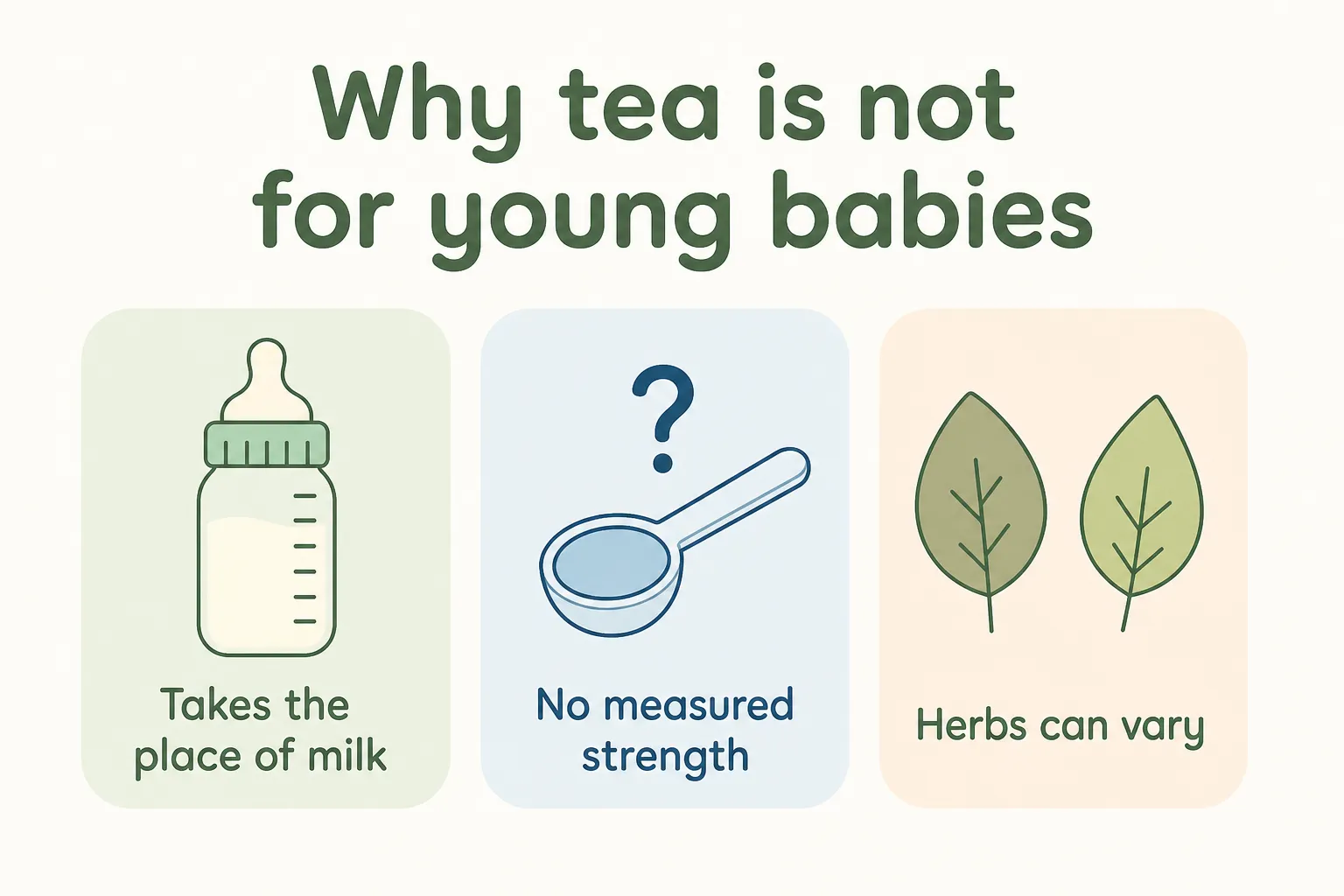
It takes the place of milk
A newborn’s tummy is very small. Breast milk or formula gives your baby all the food and fluid they need in the first six months. A baby who fills up on tea may drink less milk, and milk is what they need to grow.
The strength cannot be measured
The strength of a home-brewed tea depends on the amount of herb, the water, the steeping time and the batch. A strength that seems mild to you is still a large amount for a baby who weighs four kilos. Nobody can tell you what dose is in the cup.
Loose herbs are not all the same
Dried herbs sold for cooking or drinking are not made with babies in mind. They can vary in quality, and they can be mixed up with similar-looking plants. If you ever see a tea blend without a clear list of ingredients, leave it on the shelf.
Added extras can be harmful
Honey is not safe for babies under 12 months. Sugar does nothing for wind. Alcohol, which features in some old family recipes, should never be given to a baby.
Star Anise Tea: A Clear No
Star anise needs its own mention, because it carries a clear safety warning for babies. Babies have become seriously unwell after being given star anise tea, with symptoms such as jitteriness, vomiting, irritability, jerky movements and seizures. Chinese star anise can be contaminated with Japanese star anise, a toxic plant that looks almost the same, and they can be very hard to tell apart by eye.
Do not give star anise tea to your baby, however small the amount. If your baby has had it, call the Poisons Information Centre on 13 11 26 straight away, even if they seem well. It is open 24 hours a day. Call 000 if your baby has a seizure, stops breathing or cannot be woken.
If You Have Already Given Tea
Please do not panic, and you are not alone. Stop giving it and go back to milk feeds, and mention it at your next check-up. If you are not sure what was in the tea, or it may have contained star anise, call the Poisons Information Centre on 13 11 26.
What About Tea for a Breastfeeding Mum?
This is a different question, and it is a common one. Some mums enjoy a cup of fennel or chamomile tea, and sometimes this gets described as “colic tea” too. A warm drink and five quiet minutes can be good for you, and that alone can be worth having.
It is less clear that the tea does anything for your baby’s wind. Most wind in a breastfed baby comes from swallowed air rather than what you ate or drank. Our guide on how to reduce wind in breastfed babies looks at the latch and feeding position instead. Herbal teas vary, and some are not suited to breastfeeding, so check with your GP, pharmacist or lactation consultant if you plan to drink them regularly. If you are wondering about food, our guide to breastfeeding diet and colic explains how to check sensibly.
What to Try Instead of Tea
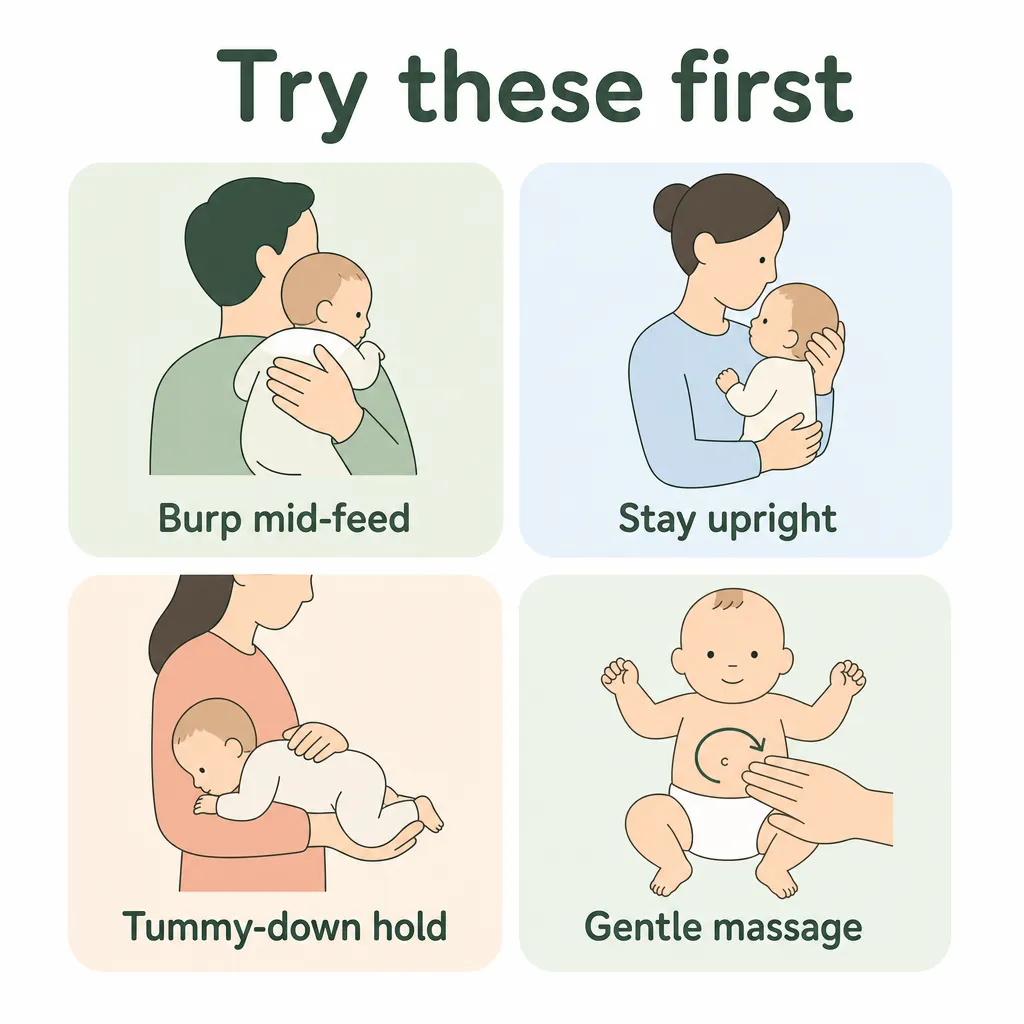
Each of these is free, and you can start tonight.
- Burp during the feed, not only at the end. Our guide to the best ways to burp a baby covers the positions
- Keep your baby upright for 20 to 30 minutes after daytime feeds
- Use a tummy-down hold. The colic carry is a favourite, and it is for awake time only
- Try a slow tummy massage in a clockwise direction between feeds, once the belly button has healed. Our guide to baby massage for colic and wind shows you how
- Slow things down. A dim room, white noise and a slow walk can all help. Our guide on how to soothe a colicky baby puts these together for a long evening
If you are not sure whether you are dealing with colic or wind, the colic quiz can help you think it through.
If You Would Like a Herbal Option
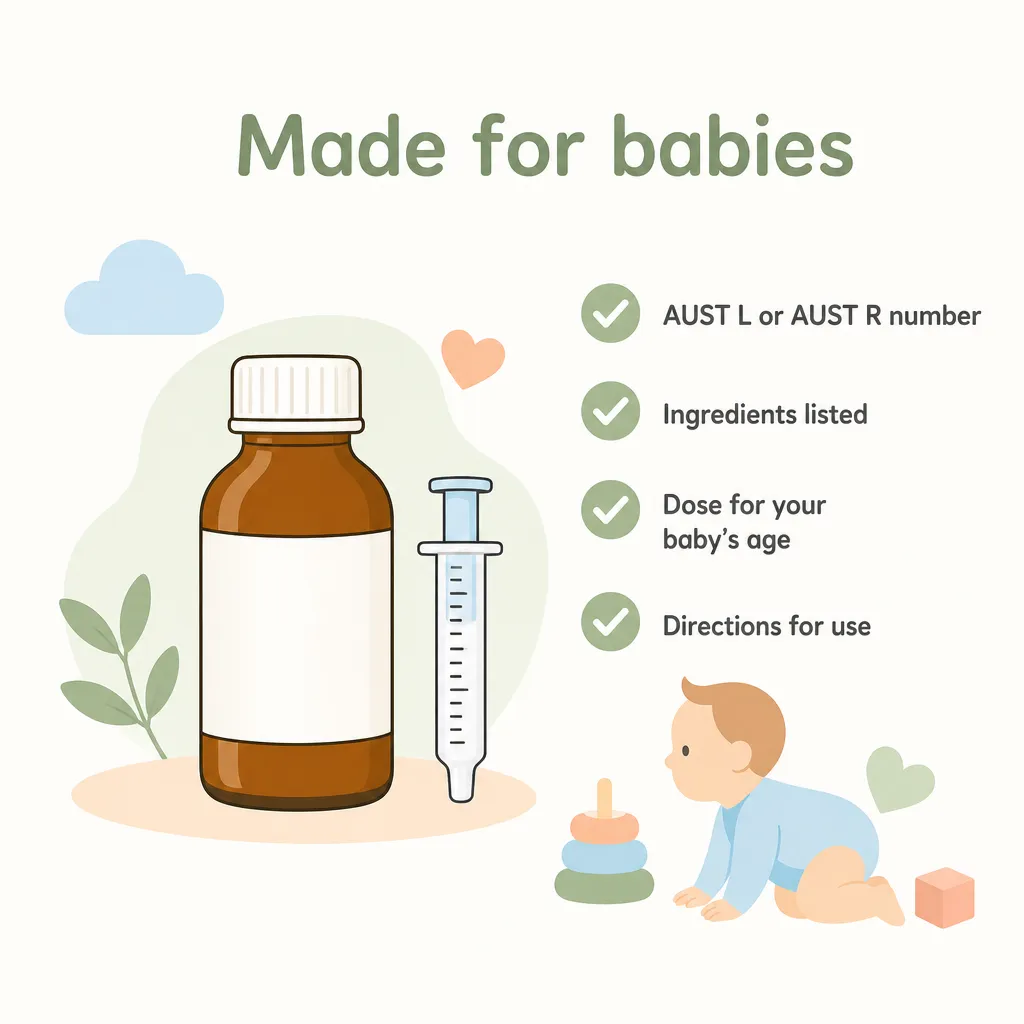
Many parents like the idea behind colic tea: familiar herbs with a long tradition. A product made for babies gives you that idea in a measured form, with directions for your baby’s age on the label. Look for an AUST L or AUST R number, a list of ingredients and clear dosing directions. Our guide to what colic water is explains what to check on a label.
Infants’ Friend Colic & Wind is a blend of chamomile, lemon balm and dill seed oil, herbs traditionally used in Western herbal medicine to relieve colic symptoms, wind and gas pain and mild indigestion in infants. It is given by mouth in a small measured dose using the syringe supplied, rather than as a drink, and it is alcohol-free and suitable from birth when used as directed. Our where to buy page lists current stockists.
When to Talk to Your GP or Child Health Nurse
If your baby is under three months old and has a temperature of 38°C or higher, go straight to the nearest emergency department or call 000, even if they seem otherwise well. Call 000 if your baby of any age is floppy, hard to wake, struggling to breathe or vomiting green fluid.
Colic and wind are common and pass with time. Still, trust your instincts. If your baby is older and has a fever, vomits often or forcefully, refuses feeds, is not gaining weight, has fewer wet nappies, or simply seems unwell to you rather than unsettled, have a chat to your GP or maternal child health nurse. It is also worth mentioning any herbal remedy you have tried, including teas, at your regular check-ups.
Always read the label and follow the directions for use. If symptoms persist, talk to your health professional.
Infants’ Friend Colic & Wind (AUST L 367810) contains ingredients traditionally used in Western herbal medicine for colic relief (wind/gas pain). Available Australia-wide since 1935.
Frequently Asked Questions
AUST L 367810. Always read the label and follow the directions for use. If symptoms persist, talk to your health professional.