
You have probably had plenty of advice by now. Your mum has one answer, the internet has twenty and the mothers’ group has its own favourites. You just want to know what is worth trying for your baby today.
Burping, upright time, gentle tummy pressure, leg moves and slower feeds are what many parents try first. This page is the short list: what can help right now, what helps across a week, what usually does not help, and how to tell whether a change is working.
At a glance
- Right now: a burp, an upright cuddle, a tummy-down hold or slow leg moves can help
- Over a week: calmer, slower feeds, a burp mid-feed and a daily tummy massage can mean less wind building up
- Usually not helpful: water, sugar water, teas, changing formula without advice and cutting foods from your diet without a clear reason
- Change one thing at a time, and give it three or four days
- Most baby wind eases with time, as your baby’s gut matures
Why Babies Get Gas in the First Place
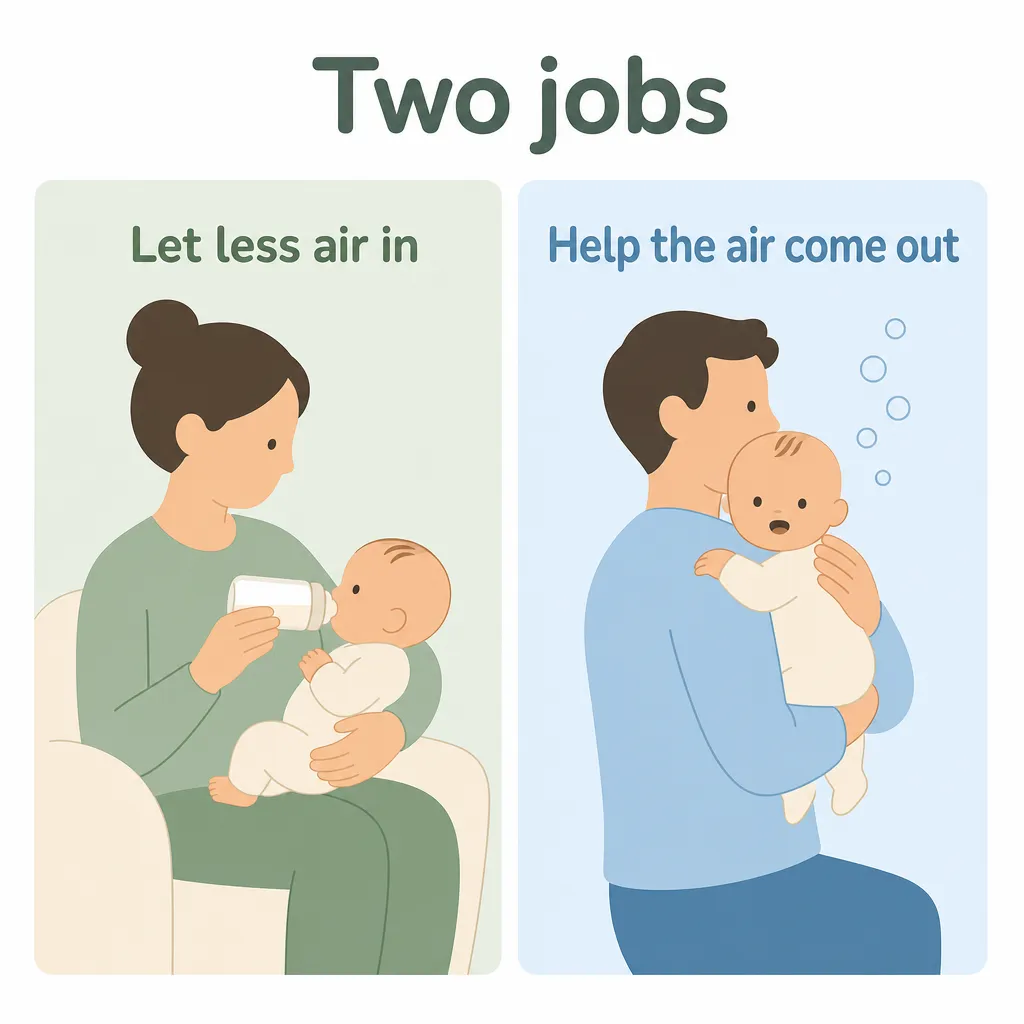
Most baby wind is swallowed air. Babies swallow air when they feed and cry, and a young gut is still learning to move it along. That is why gassiness is so common in the early weeks, and why it usually eases as your baby grows. If you want to look at the causes in more detail, our gassy baby guide walks through them.
So almost everything that helps does one of two things. It lets less air in, or it helps the air that is already there come out.
What Helps Right Now
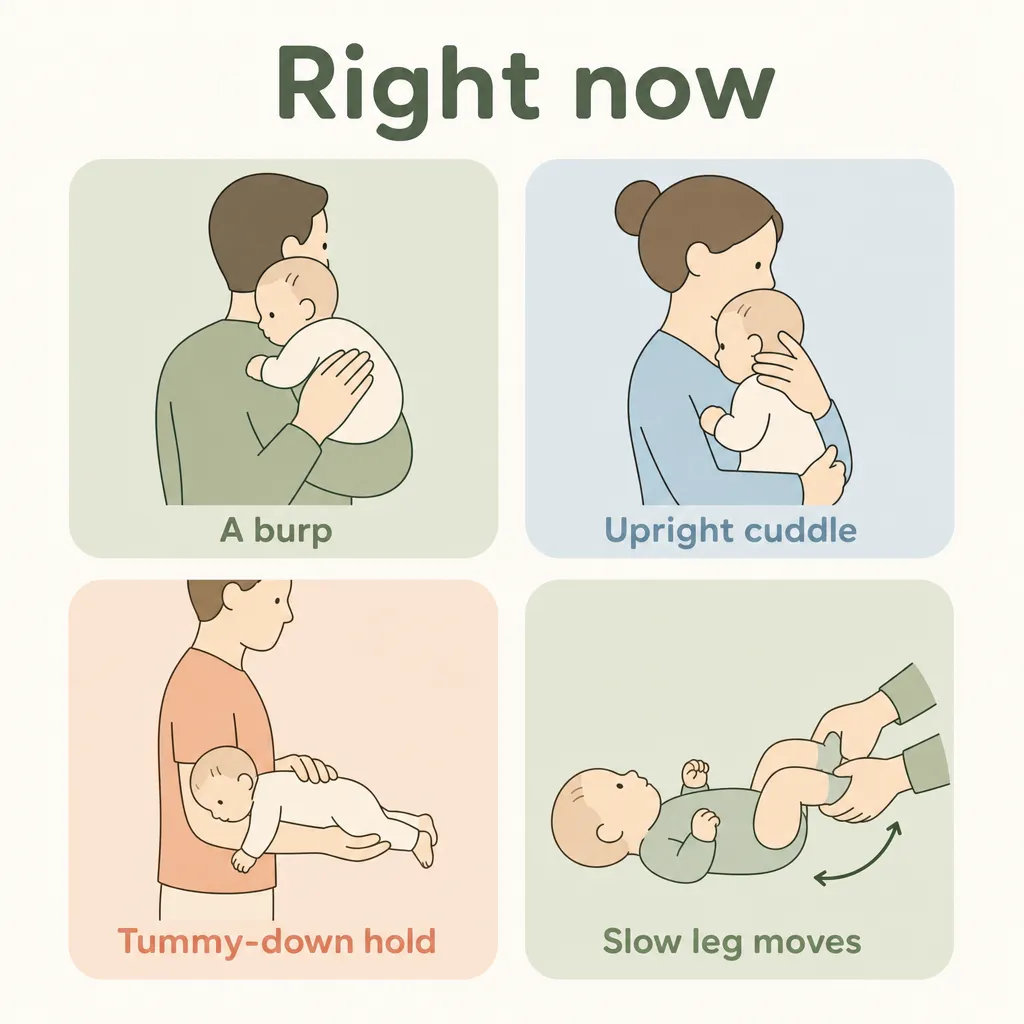
If your baby is uncomfortable at this moment, here is where to begin.
A burp
If your baby has fed in the last half hour, try for a burp first. Our guide to the best ways to burp a baby covers the basics.
An upright cuddle
Hold your baby against your chest with their head supported. It is simple, it is safe on a full tummy, and it gives any high bubbles a chance to rise.
Gentle tummy pressure
Tummy-down holds put light, steady pressure on the tummy, and many babies relax into them. Wait 20 to 30 minutes after a feed, and keep your baby’s face clear. Our guide to gas relief holds for newborns shows you how.
Slow leg moves
If it has been at least half an hour since the feed, lay your baby on their back and cycle their legs slowly, then bring their knees up towards their tummy. This often brings a bottom burp when your baby is grunting and straining.
A warm bath
A warm bath can help an unsettled baby. Check the temperature with your wrist or elbow, and stay with your baby the whole time.
Sucking and calm
Some babies settle with sucking, and a quiet room helps too. A calmer baby swallows less air. If you are thinking of using a dummy, our guide on do dummies help with wind explains how to do it safely.
What Helps Over a Week
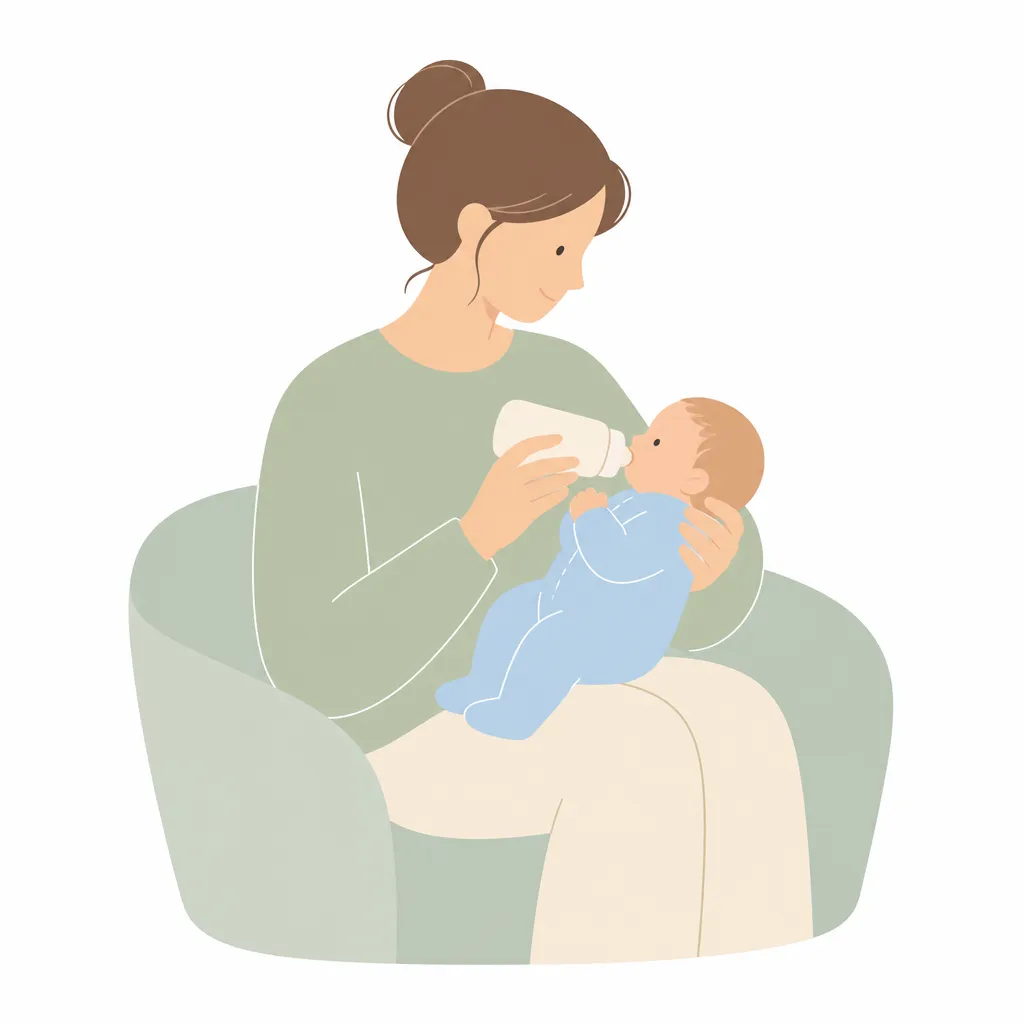
These changes will not fix a bad evening, but they can make the next week easier.
- Feed before the frantic cry. A hungry, crying baby gulps air
- Feed at a more upright angle. Keep your baby’s head higher than their tummy
- Check the latch or teat. Clicking sounds or milk leaking at the corners of the mouth can mean extra air. A teat that flows too fast or too slowly can do the same
- Burp mid-feed. It is easier to bring up a bubble before it moves lower
- Stay upright after daytime feeds. Aim for 20 to 30 minutes where you can
- Build in a daily massage. A short tummy massage between feeds is a calm habit. Our guide to tummy massage for newborn gas shows a short version for very young babies
- Supervised tummy time. A few minutes on the floor, awake and with you beside them, gives gentle pressure and movement. Our guide to tummy time for newborns has ideas to make it easier
If you would like all of this laid out in order, our guide on how to relieve infant gas takes you through each stage of a feed and the whole day.
What Usually Does Not Help

Someone who loves you will probably suggest at least one of these. They mean well, but there are better places to start.
| What you may hear | What to know |
|---|---|
| Cooled boiled water | Under six months, your baby’s fluid comes from milk. Water does not relieve wind, and it takes up room a milk feed needs |
| Sugar water or honey | Sugar water does nothing for wind, and honey is not safe for babies under 12 months |
| Colic tea | Tea can take the place of milk, and a brewed cup has no measured strength. Our guide to colic tea for babies has more detail |
| Switching formula quickly | Frequent changes can make it harder to see what is going on. Talk to your GP or child health nurse before you switch |
| Cutting foods from your own diet | Most wind in a breastfed baby comes from swallowed air. Get advice before you cut out whole food groups |
| Tummy-down sleep | Tummy-down is for awake time with you watching. Sleep is always on the back |
| Sleeping propped up in a rocker, capsule or feeding pillow | These are not safe sleep spaces, even for a windy baby. Sleep is always on the back, in a cot or bassinet |
How to Tell If Something Is Helping
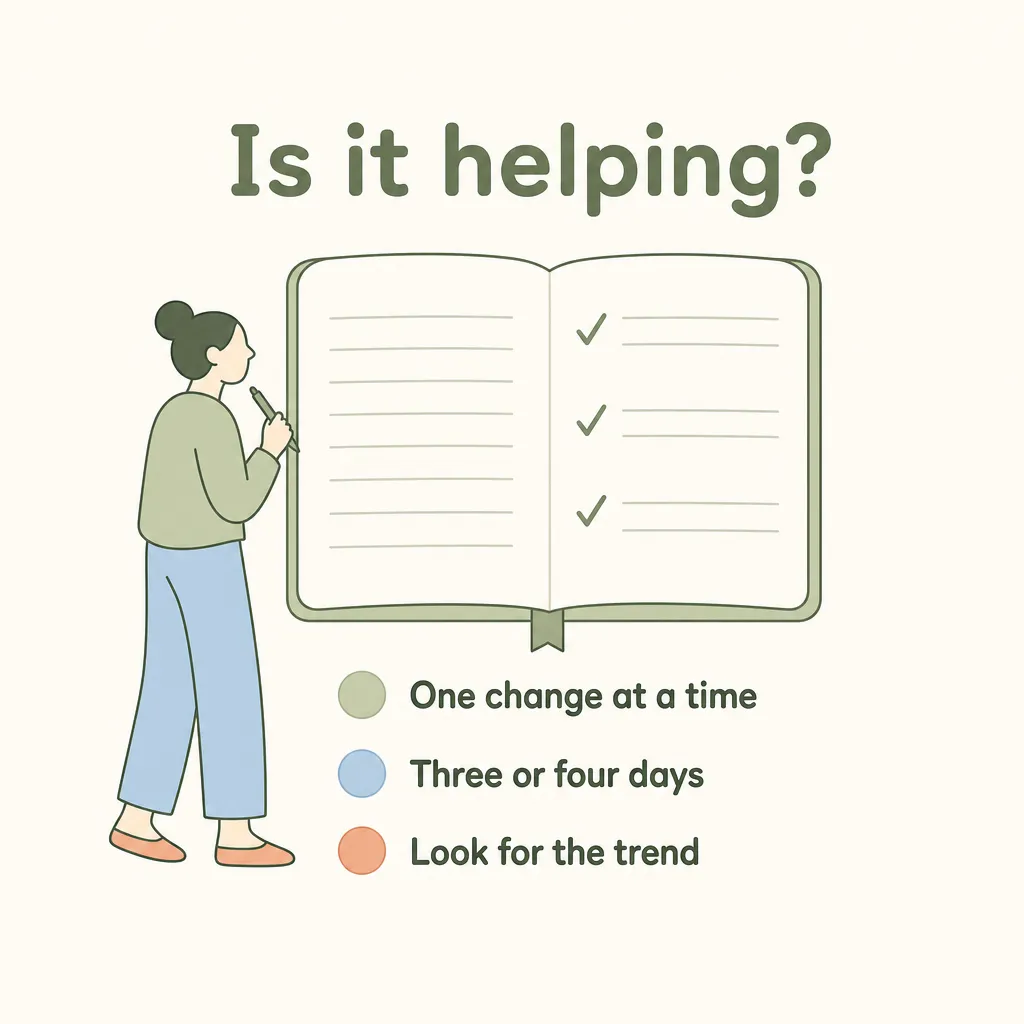
Babies have good days and bad days, so it is easy to give the credit or the blame to the wrong thing. A simple approach makes it much clearer.
- Choose one change. Change only one thing at a time, otherwise you will not know which one made the difference
- Give it three or four days. A single evening does not tell you much
- Write down one or two details. You could note the time of the longest unsettled stretch and how long it lasted
- Look for the trend. Shorter crying, easier burps and a more relaxed tummy all count, even if the wind has not gone completely
If nothing changes, drop that idea and try the next one. If several things help a little, keep them all.
What If It Is Not Just Gas?
Wind and colic can look alike, and they often happen together. If the crying is long, hard to settle and follows the same pattern each day, our guide to colic vs gas explains the difference, and the colic quiz can help you think it through. Frequent spit-ups and discomfort during feeds could point to something else, and our guide to colic vs reflux can help. If gassiness comes with rashes or changed poos, cow’s milk protein intolerance is worth raising with your GP.
Is There Anything I Can Give My Baby?
Many Australian families use a remedy alongside the hands-on methods. Infants’ Friend Colic & Wind is a traditional herbal remedy given by mouth with feeds. Its ingredients are traditionally used in Western herbal medicine to relieve colic symptoms, wind and gas pain and mild indigestion in infants, and it is alcohol-free and suitable from birth when used as directed. Our infant gas relief guide explains the types of products on the shelf and how to read a label, and our where to buy page lists current stockists.
When to Talk to Your GP or Child Health Nurse
If your baby is under three months old and has a temperature of 38°C or higher, go straight to the nearest emergency department or call 000, even if they seem otherwise well. Call 000 if your baby of any age is floppy, hard to wake, struggling to breathe or vomiting green fluid.
Wind is common and usually eases as your baby grows. Still, trust your instincts. If your baby is older and has a fever, vomits often or forcefully, refuses feeds, is not gaining weight, has fewer wet nappies, has blood or mucus in their poo, has a swollen tummy that stays hard and tender, or simply seems unwell to you rather than uncomfortable, have a chat to your GP or maternal child health nurse.
Always read the label and follow the directions for use. If symptoms persist, talk to your health professional.
Infants’ Friend Colic & Wind (AUST L 367810) contains ingredients traditionally used in Western herbal medicine for colic relief (wind/gas pain). Available Australia-wide since 1935.
Frequently Asked Questions
AUST L 367810. Always read the label and follow the directions for use. If symptoms persist, talk to your health professional.