
Your newborn is stiff and squirming in your arms, and you keep shifting them from one shoulder to the other. Someone told you about a hold that works like magic, but your baby weighs barely four kilos and has no head control, and you are nervous about getting it wrong.
That is a very sensible thing to be nervous about. This page shows you five holds that suit a newborn, how to do each one and when to use it. Your hands will soon know what to do. Practise when your baby is calm, sitting down and close to a soft surface, so the first try does not happen in the middle of a crying fit.
At a glance
- A newborn cannot hold up their own head, so one of your hands or your arm supports the head and neck in every hold
- Upright holds help air come up as a burp. Tummy-down holds help when wind has moved lower
- Soon after a feed, choose an upright hold. Wait 20 to 30 minutes before a tummy-down hold
- Keep your baby’s nose and mouth clear, and check them every time you change position
- These holds are for awake time. Sleep is always on the back, in a cot
Which Hold, and When?
| What is happening | Hold to try | Why it suits |
|---|---|---|
| Just finished a feed | High on the chest | It keeps air high, where a burp can reach it |
| A burp seems stuck | High over the shoulder | It straightens your baby out and helps air rise |
| Grunting, knees up, later after a feed | Forearm hold | Gentle pressure and movement help wind along |
| Your arms have had enough | Across the lap | It gives the same tummy pressure while you sit |
| Winding down, or a baby who dislikes tummy-down | Frog on the chest | It gives a gentle bend at the hips and lots of closeness |
Names vary a lot from family to family. You may hear the colic carry, tiger in the tree, the football hold or the magic hold used for holds that look very similar. Worry less about the name and more about how your baby is supported.
Hold 1: High on the Chest
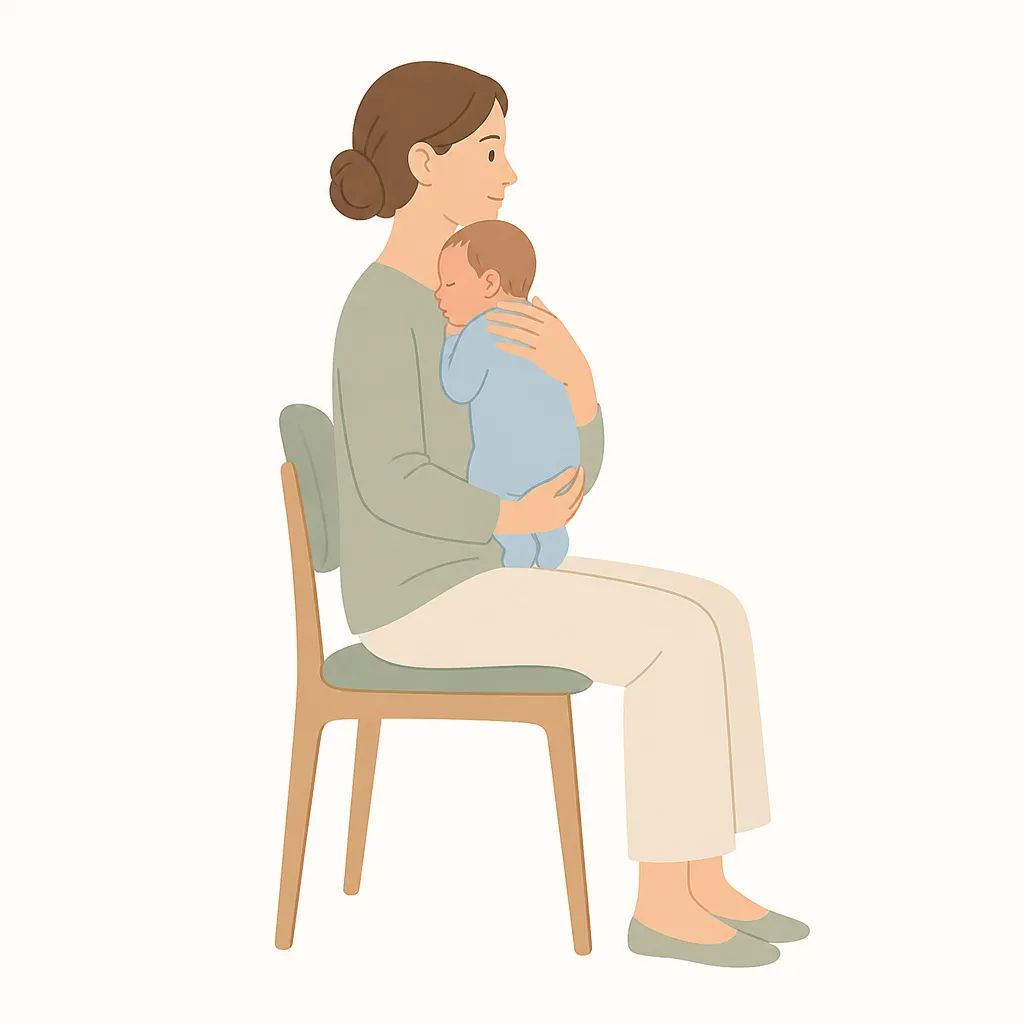
This is the first hold to use after a feed, and it is the simplest of the five.
- Hold your baby upright against your chest, with their head just below your chin
- Put one hand under their bottom
- Spread your other hand across their upper back, with your fingers reaching up behind their head and neck
- Sit or stand tall, and rest here for 20 to 30 minutes after daytime feeds if you can
This hold has very little tummy pressure, so it is gentle enough for a full tummy.
Hold 2: High Over the Shoulder
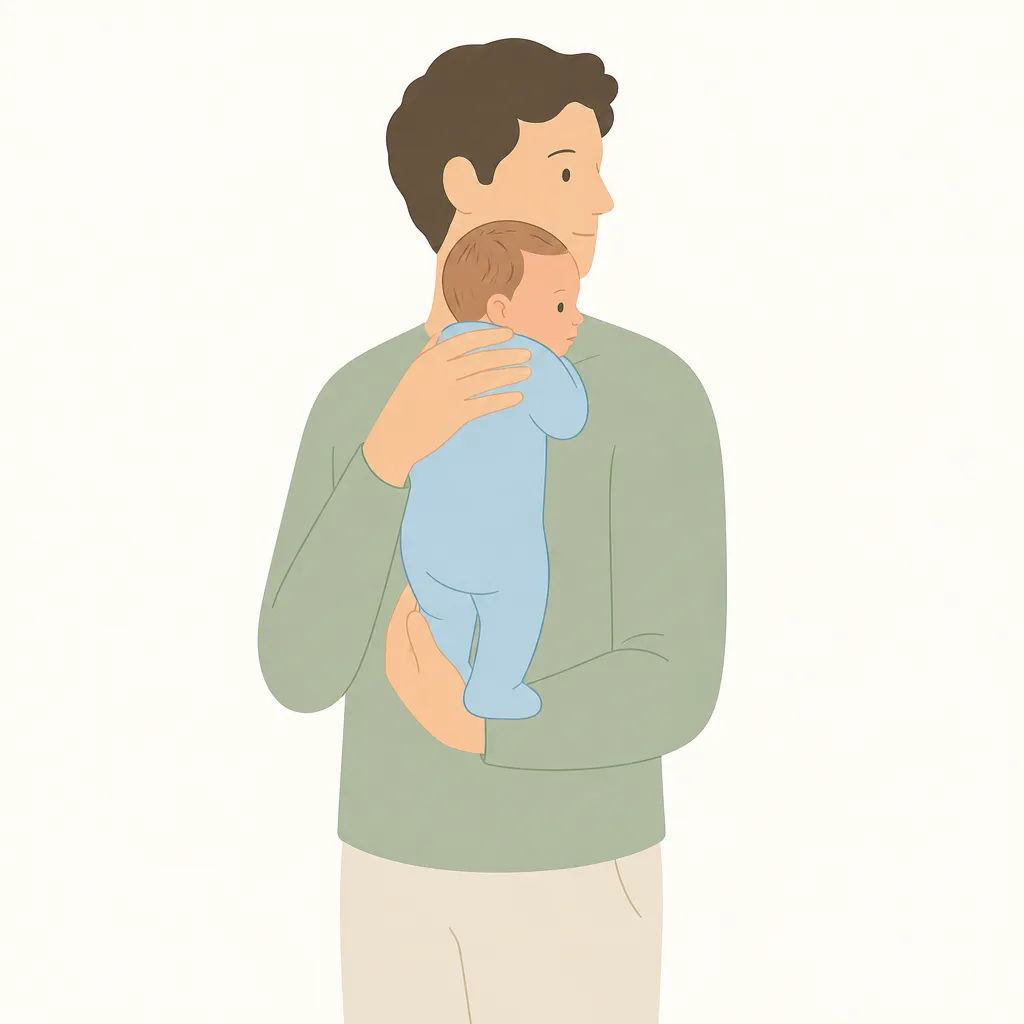
When the burp will not come, move your baby a little higher.
- Lift your baby so their chest rests at the top of your shoulder and their chin sits on or just over it, with their body long and straight
- Keep one hand under their bottom and legs
- Spread your other hand across their upper back, with your fingers behind their head and neck, and keep it there
- Rub upwards or pat slowly, and walk if that helps
Because your baby is higher up in this hold, check their face more often. Use a mirror or turn your head to check that their nose and mouth are clear. If you cannot see their face, bring them lower. Our guide on how to burp a baby with trapped gas has more on bringing up a stuck burp.
Hold 3: The Forearm Hold
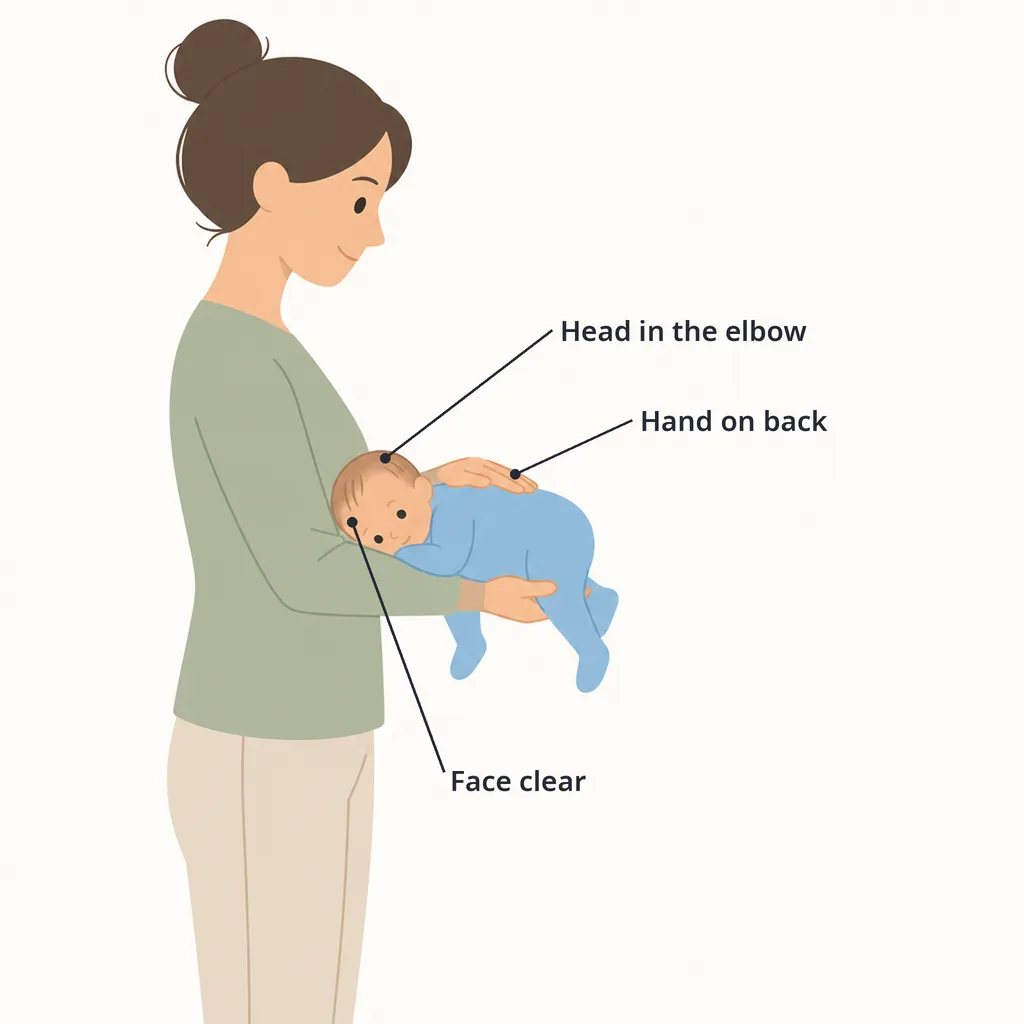
This is the hold most people mean when they talk about a colic hold, the magic baby hold or tiger in the tree. Your baby lies tummy-down along your forearm while you walk.
- Start with your baby upright against your chest, with one hand behind their head and neck
- Slide your other forearm under their body, with your hand coming through between their legs
- Lower your baby slowly so they lie along your arm, with their head in the crook of your elbow and turned to one side
- Keep your elbow slightly higher than your hand, so their head stays a little above their tummy
- Rest your free hand on their back and leave it there
- Walk slowly or sway from foot to foot
Newborns are small, so their body may be shorter than your forearm. Keep them right up in the crook of your elbow, not sliding towards your hand. Our guide to the colic carry goes through this hold in more detail, along with its variations.
Hold 4: Across the Lap
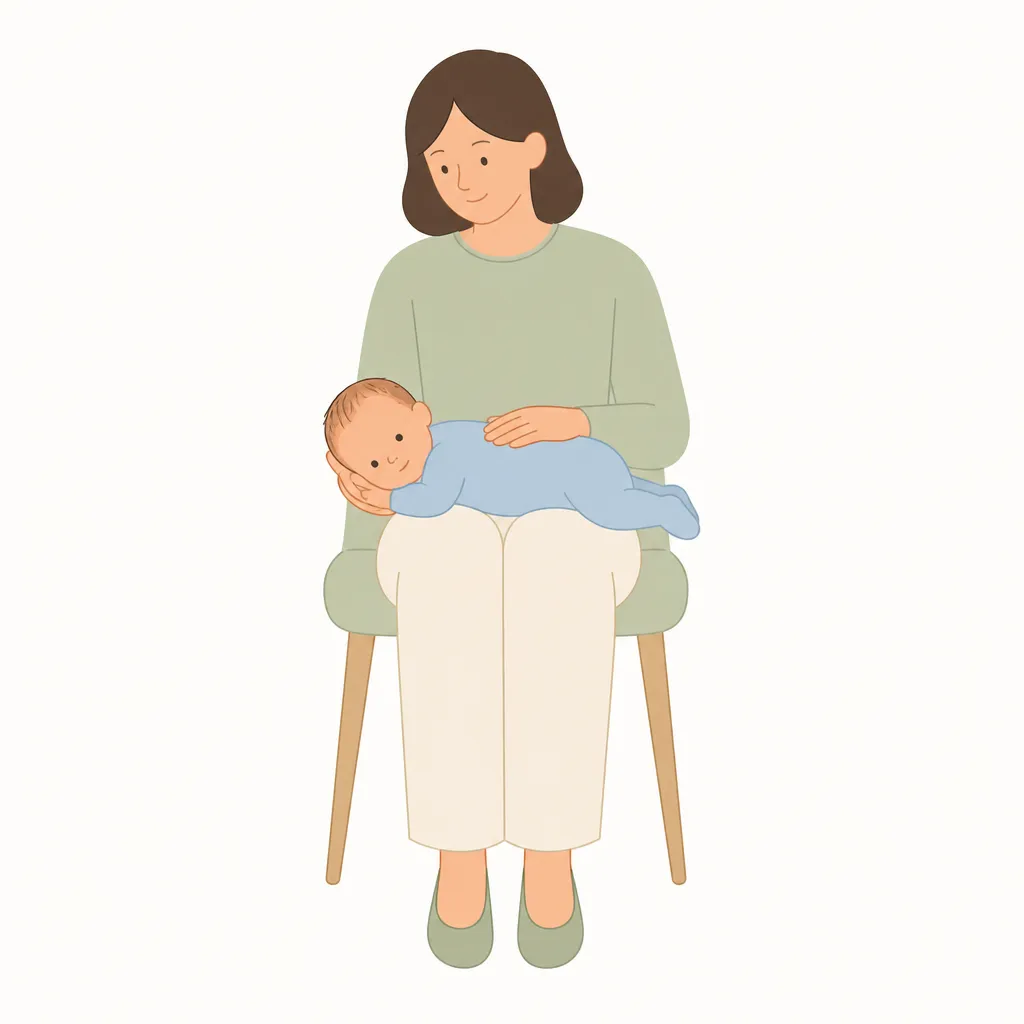
This is the seated version, and it is a good choice for tired arms or for a nervous first attempt.
- Sit down with your feet flat and your knees together
- Lay your baby tummy-down across your thighs, with one hand supporting their head and neck, and their head turned to the side
- Keep their head a little higher than their tummy. A small lift of one heel raises that knee
- Use your other hand to rub or pat their back slowly
Keep a hand on your baby the whole time, because a newborn on a lap has nothing else holding them there.
Hold 5: Frog on the Chest
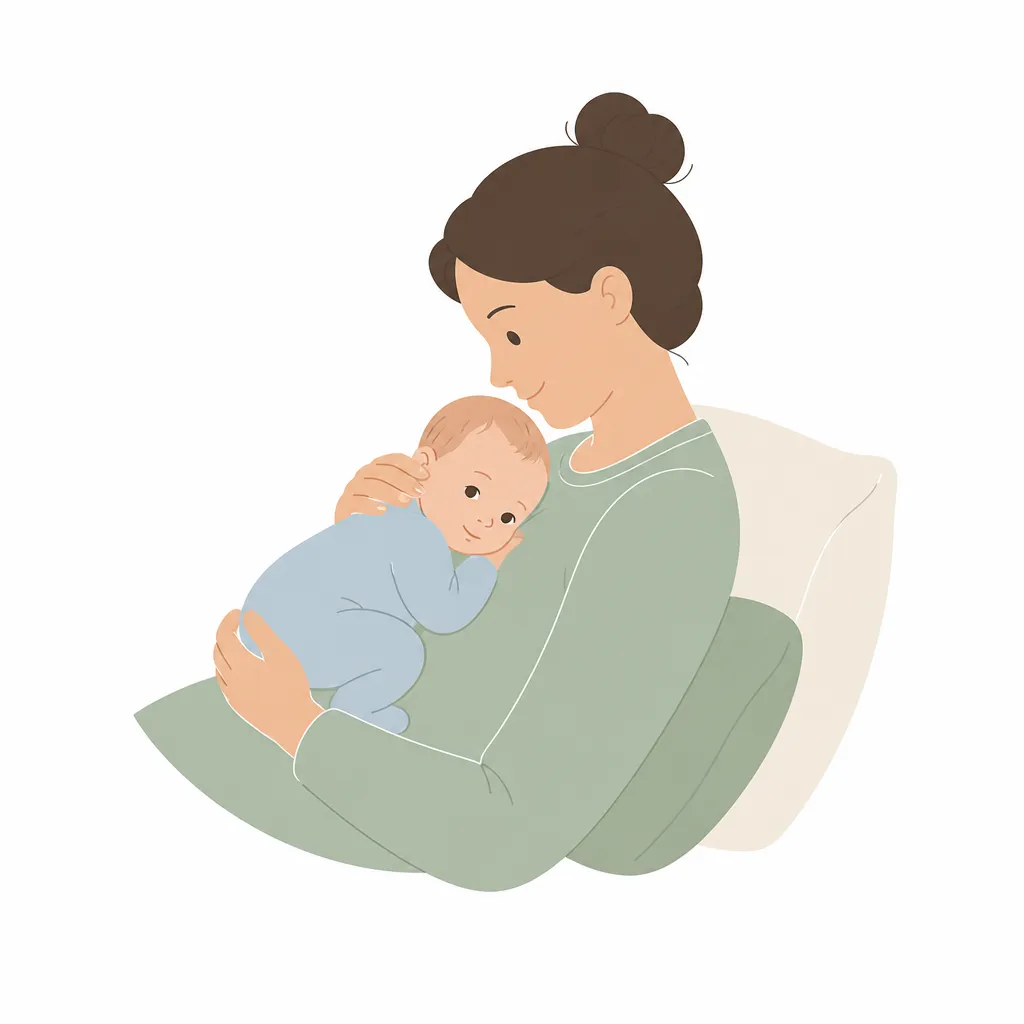
Some newborns do not like being tummy-down. This hold is a gentle alternative.
- Sit reclined but awake, with your back well supported
- Rest your baby upright on your chest with their knees tucked up under them, like a little frog
- Put one hand under their bottom and the other across their upper back and neck
- Sway gently, or simply breathe slowly, so that your baby can feel the movement
The slight bend at the hips and the warmth of your chest often help a baby relax. If you feel sleepy, move your baby to their cot and lie them on their back.
Keeping Every Hold Safe
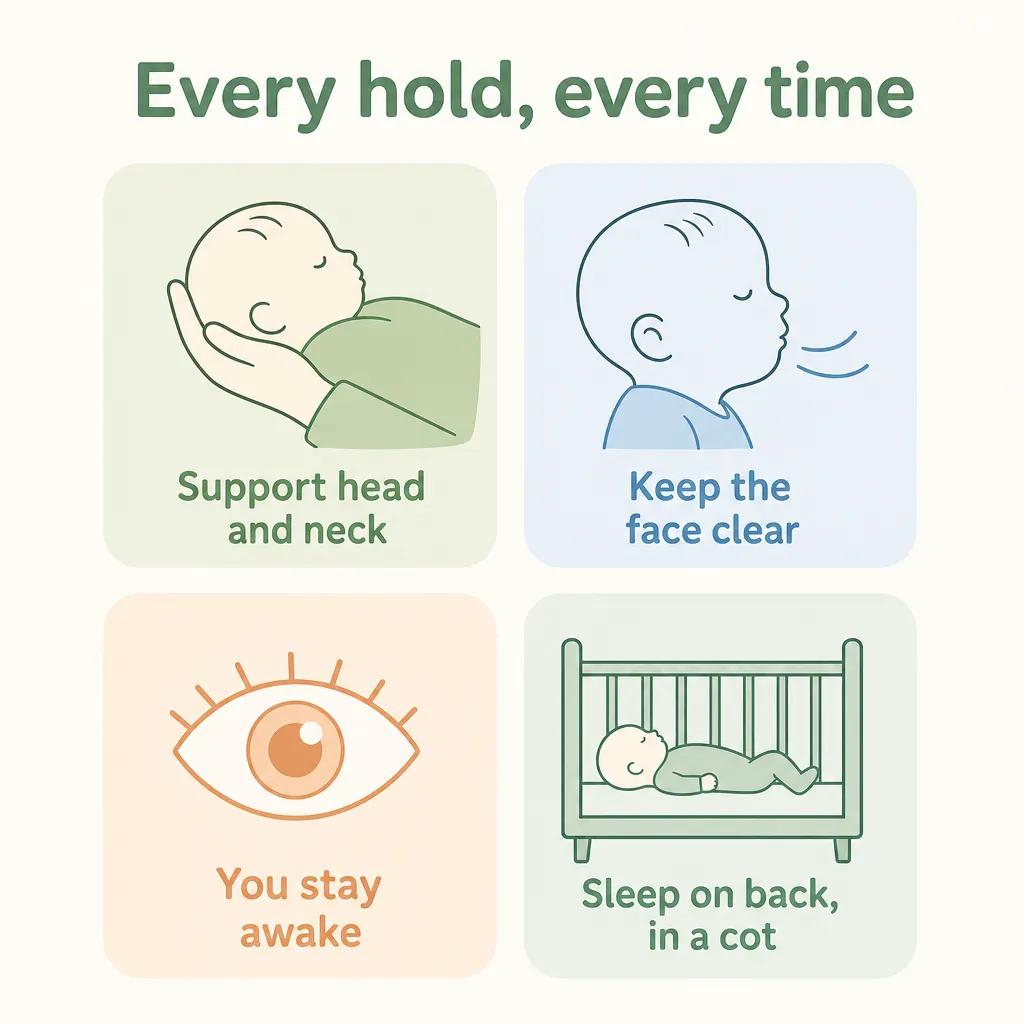
Whichever hold you choose, these rules apply.
- Head and neck. Support them at all times. A newborn’s head is heavy and their neck muscles are still weak
- Clear face. Check that their nose and mouth are clear and turned to the side, with nothing pressing against them
- Chin up. Your baby’s chin should not be pressed down onto their chest, because that can narrow the airway
- Stay awake. Never lie down or drift off with your baby in a hold. If you are that tired, put your baby down on their back in their cot and take a moment
- No sleep positions. If your baby falls asleep in a hold, move them onto their back in their cot
- Gentle movement only. Sway or walk slowly. Never shake a baby, even when you are at the end of your tether. If you feel overwhelmed, it is always okay to put your baby in their cot and walk away for a few minutes
- Take care after feeds. Tummy pressure on a full tummy can bring milk back up, so wait 20 to 30 minutes and use Hold 1 first. If your baby brings up a lot of milk, stay with upright holds
If your baby was premature, has low muscle tone or has a health condition, ask your child health nurse to show you which holds suit them.
In the First Two Weeks
If the cord stump is still attached, use the chest, shoulder or frog hold, and leave out holds that press on it. If your baby brings up a lot of milk, stay upright. Ask your midwife or child health nurse to watch you try the first one.
How Long to Try Each Hold
A few minutes is usually enough to tell whether your baby likes a hold. If they settle, a burp or a bottom burp comes, or their legs relax, you have found a good one. If they become more upset, try a different hold rather than the same one for longer.
Holds work best as part of a small routine. Our guide on how to relieve infant gas shows you what to do at each stage of a feed, and our guide to tummy massage for newborn gas adds a short routine for quiet moments between feeds. If the crying is long, hard to settle and follows the same pattern each day, the colic quiz can help you think through what might be going on.
Where a Herbal Remedy Fits
Alongside these holds, many Australian families use Infants’ Friend Colic & Wind, a traditional herbal remedy given by mouth with feeds. Its ingredients are traditionally used in Western herbal medicine to relieve colic symptoms, wind and gas pain and mild indigestion in infants, and it is alcohol-free and suitable from birth when used as directed.
When to Talk to Your GP or Child Health Nurse
If your baby is under three months old and has a temperature of 38°C or higher, go straight to the nearest emergency department or call 000, even if they seem otherwise well. Call 000 if your baby of any age is floppy, hard to wake, struggling to breathe or vomiting green fluid.
Wind is common and usually eases as your baby grows. Still, trust your instincts. If your baby is older and has a fever, vomits often or forcefully, refuses feeds, is not gaining weight, has fewer wet nappies, or simply seems unwell to you rather than uncomfortable, have a chat to your GP or maternal child health nurse. Your nurse can also watch you try a hold and give you confidence with it.
Always read the label and follow the directions for use. If symptoms persist, talk to your health professional.
Infants’ Friend Colic & Wind (AUST L 367810) contains ingredients traditionally used in Western herbal medicine for colic relief (wind/gas pain). Available Australia-wide since 1935.
Frequently Asked Questions
AUST L 367810. Always read the label and follow the directions for use. If symptoms persist, talk to your health professional.