
The feed started well. Halfway through, your baby pulled off, squirmed and started to fuss. Now the feed is over, you have patted their back for ten minutes, and you are wondering what you should actually be doing next.
Relieving infant gas is mostly about timing. The same air needs a different move depending on where it is, and that depends on how long ago your baby fed. This page takes you through a feed from start to finish, tells you what to do at each stage, and ends with a simple plan for the whole day. A quick note on words: Australians usually say wind, most of the internet says gas, and they mean the same thing.
At a glance
- During a feed, the aim is to let less air in and to burp halfway
- For the first half hour after a feed, keep your baby upright and bring the air up as a burp
- From about half an hour after a feed, the air has often moved lower, so legs, massage and tummy-down holds take over
- Overnight, keep everything small, dark and quiet
- A small daily routine is often easier than a big rescue effort at 6pm
Stage 1: During the Feed
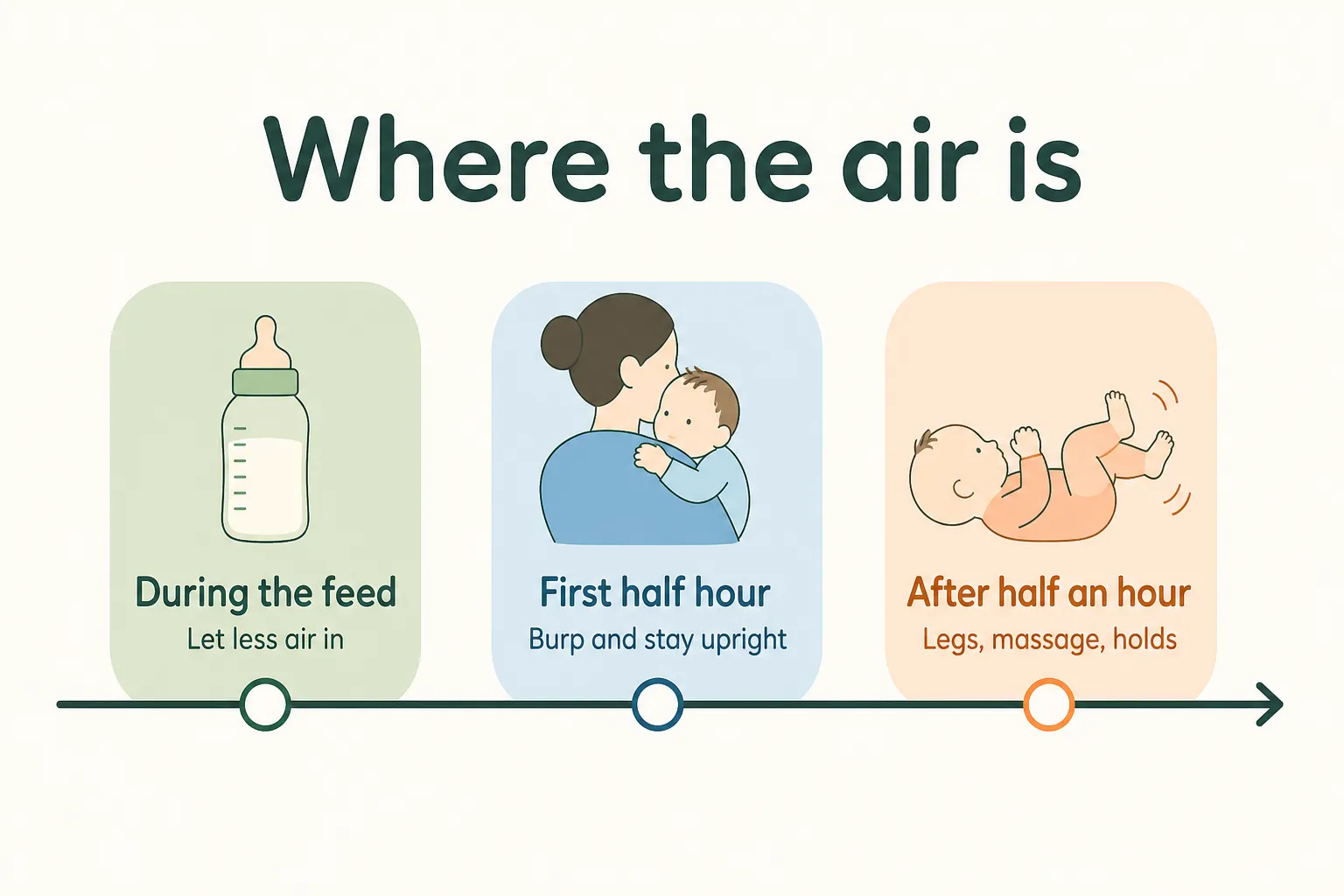
The easiest wind to relieve is the air your baby never swallows. Three small habits are worth trying.
Feed early. A baby who is already crying gulps air before the feed has begun. Offer the feed at the first signs of hunger, such as rooting or a hand moving to the mouth.
Feed more upright. Keep your baby’s head higher than their tummy, whether you are feeding from the breast or a bottle. If you are breastfeeding, our guide on how to reduce wind in breastfed babies covers the latch and positions. If you are using a bottle, keep the bottle close to level with the teat full of milk, and let your baby set the pace.
Burp halfway. Pause partway through the feed, at a natural break or when you swap sides. This is worth trying because a bubble is much easier to bring up while it is still high.
Stage 2: The First Half Hour After a Feed
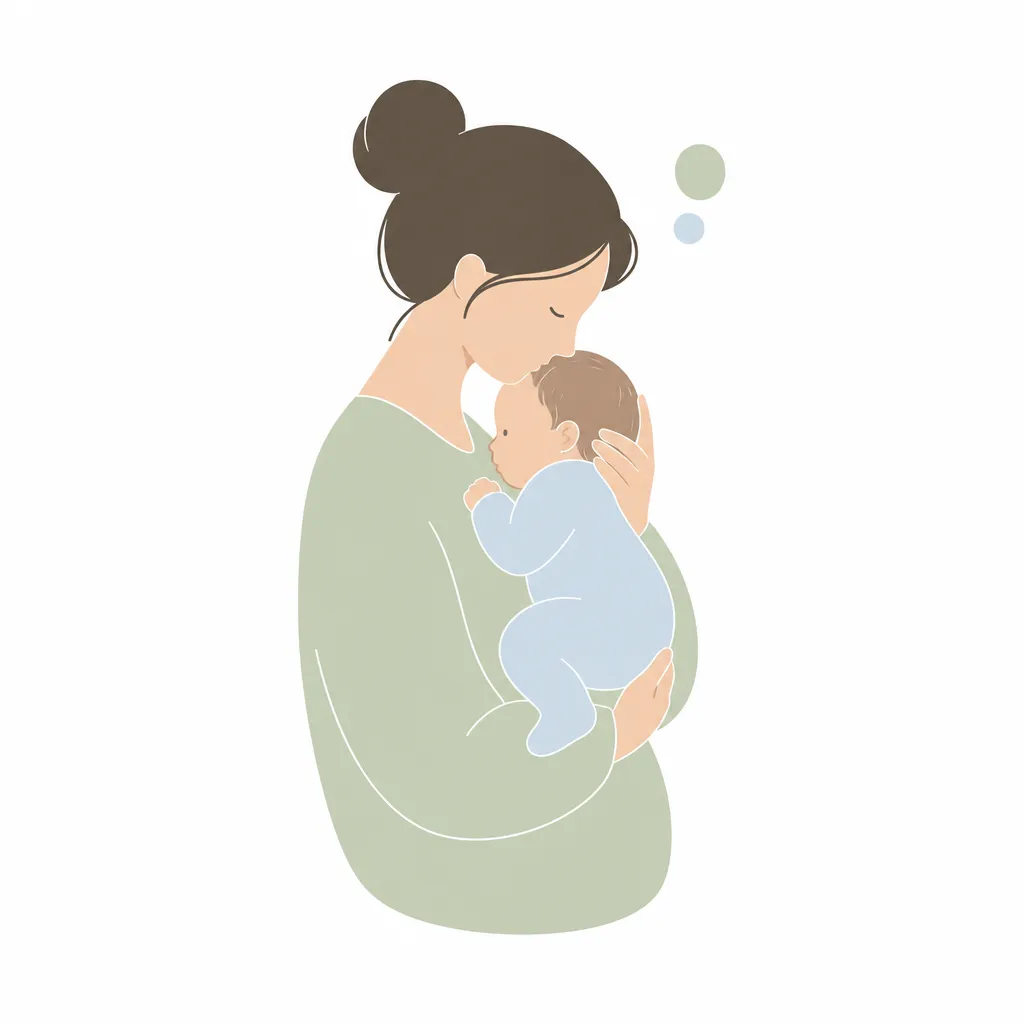
At this stage most of the air is still high in the tummy. The job is to keep it high and bring it up.
- Burp in more than one position. Try two or three minutes over your shoulder, then sit your baby on your lap with their chin supported. Our guide to the best ways to burp a baby covers the basics
- If a burp seems stuck, straighten your baby out. A curled baby holds on to a bubble, and a long, straight back helps it rise. Our guide on how to burp a baby with trapped gas goes through this step by step
- Stay upright for 20 to 30 minutes. Hold your baby against your chest, or sit together with their head well supported. Gravity keeps the bubble where a burp can reach it. Twenty to thirty minutes after every feed adds up, so if you are on your own or have a toddler, do what you can. Your baby needs to be awake if they are sitting up in a rocker or capsule, because those are not safe places to sleep
Try to avoid tummy pressure and leg moves in this window, because pressing on a full tummy can bring milk back up.
Stage 3: From About Half an Hour After a Feed
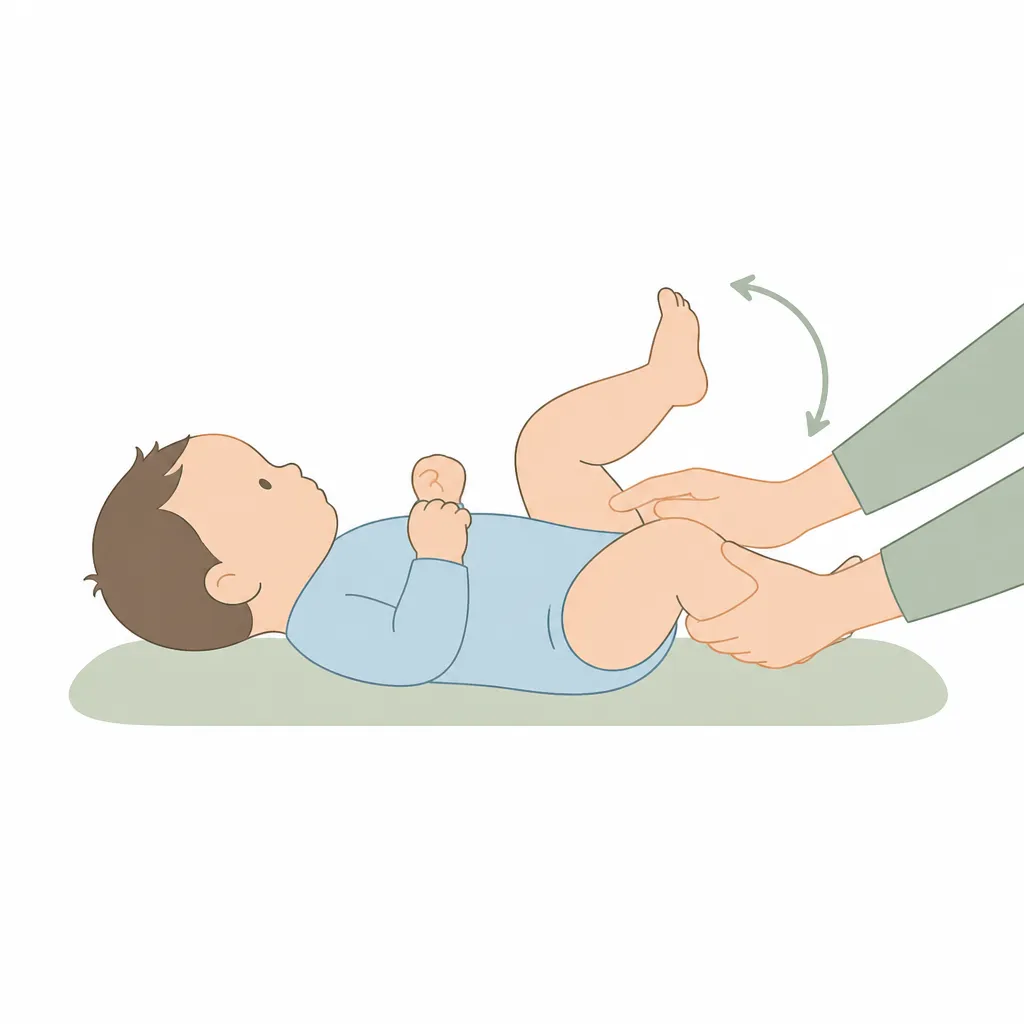
If your baby is now grunting, straining, drawing up their knees or going red in the face, the wind has often moved further along. A burp will not reach it, so the job changes to helping it move down and out.
- Bicycle legs and knees to tummy. Lay your baby on their back on a firm, safe surface and move their legs slowly. Our guide on how to release trapped wind in babies turns this into a ten-minute routine
- Tummy massage. Once the belly button has healed, make slow, clockwise circles around the belly button, using very light pressure. Our guide to tummy massage for newborn gas shows a short version made for very young babies
- A tummy-down hold. Lay your baby along your forearm or across your lap, awake and with their face clear. Our guide to gas relief holds for newborns will help you choose one
- A warm bath. Warm water helps a tense tummy relax, and many babies pass wind in the bath or soon after. Stay with your baby the whole time
Choose one or two of these and do them slowly. A baby who is handled too much can become more upset, and that means more gulping and more air at the next feed.
Stage 4: When the Crying Has Already Started
Your baby will not enjoy being laid on their back in the middle of a big cry, so start by settling them.
Pick your baby up first. Use a hold they already like, walk slowly and keep the room calm. Once the crying eases, try for a burp if the feed was recent, or try the leg moves if it was a while ago. If the crying is long, hard to settle and follows the same pattern each day, it may be more than wind. Our guide to colic vs gas explains the difference, and the colic quiz can help you think it through.
Stage 5: Overnight

Night feeds are usually smaller and calmer, so they tend to bring in less air. The plan is short.
- Keep the lights low and your voice quiet
- Burp once, gently, over your shoulder in the dark
- Hold your baby upright for five to ten minutes, then settle them on their back in their cot
- If your baby wakes squirming soon after a feed and shows no hunger signs, try a quiet round of bicycle legs on the change mat. If they seem hungry, feed them
If the wind is keeping everyone awake most nights, our wind relief for babies page has a fuller night-time plan.
A Simple Plan for the Whole Day
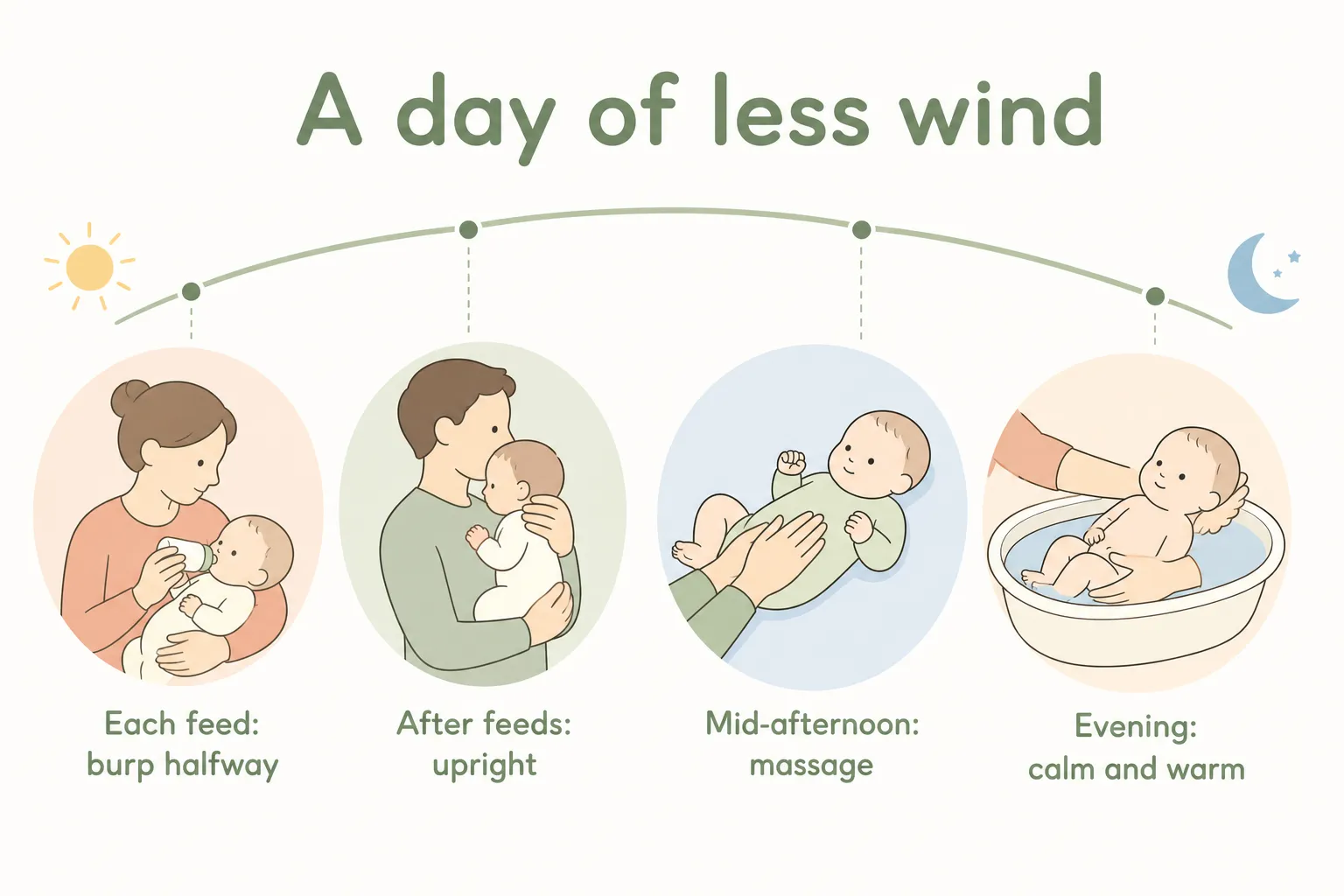
Doing a little at each stage usually works better than trying everything once the evening crying has begun.
| When | What to do | Time it takes |
|---|---|---|
| Before each feed | Feed at the first hunger signs, in a calm spot | No extra time |
| During each feed | Stay upright, and burp at the halfway point | 2 to 3 minutes |
| After each daytime feed | Burp, then stay upright | 20 to 30 minutes |
| Mid-afternoon | Tummy massage and bicycle legs, between feeds | 5 minutes |
| Evening | A hold your baby likes, plus a warm bath if it suits | 10 to 20 minutes |
| Overnight | One quiet burp, then a short upright hold | 5 to 10 minutes |
Give any change you make three or four days before you judge it. Windy days and calm days come and go, so the trend across a few days tells you more than a single evening.
Where a Herbal Remedy Fits
Hands-on methods come first, and some families also like to have a remedy on hand. Many Australian families use Infants’ Friend Colic & Wind, a traditional herbal remedy given by mouth with feeds. Its ingredients are traditionally used in Western herbal medicine to relieve colic symptoms, wind and gas pain and mild indigestion in infants, and it is alcohol-free and suitable from birth when used as directed. Our page on how to use Infants’ Friend explains how it fits around a feed, and our where to buy page lists current stockists.
When to Talk to Your GP or Child Health Nurse
If your baby is under three months old and has a temperature of 38°C or higher, go straight to the nearest emergency department or call 000, even if they seem otherwise well. Call 000 if your baby of any age is floppy, hard to wake, struggling to breathe or vomiting green fluid.
Wind is common and usually eases as your baby grows. Still, trust your instincts. If your baby is older and has a fever, vomits often or forcefully, refuses feeds, is not gaining weight, has fewer wet nappies, has blood in their poo, or simply seems unwell to you rather than uncomfortable, have a chat to your GP or maternal child health nurse.
Always read the label and follow the directions for use. If symptoms persist, talk to your health professional.
Infants’ Friend Colic & Wind (AUST L 367810) contains ingredients traditionally used in Western herbal medicine for colic relief (wind/gas pain). Available Australia-wide since 1935.
Frequently Asked Questions
AUST L 367810. Always read the label and follow the directions for use. If symptoms persist, talk to your health professional.