
Your baby has fed, burped and been changed, and they are still grizzling and wriggling. Someone hands you a dummy and your baby latches on to it like it is the best thing that has ever happened. The crying stops. So did the dummy fix the wind, or just the crying?
It is a fair question, and the honest answer is a bit of both and neither. This page explains what a dummy can and cannot do for a windy baby, when it helps, when it might add to the problem, and how to use one safely.
At a glance
- A dummy does not release wind. It soothes, and a calm baby swallows less air and copes better with wind that is already there
- Sucking is one of the most calming things for a young baby, which is why a dummy can settle a windy grizzle
- A dummy can add a little swallowed air, especially if your baby sucks frantically on it
- Burp first, then offer the dummy. Never use it to delay a feed your baby needs
- If you are breastfeeding, wait until feeding is well established before introducing a dummy
The Short Answer
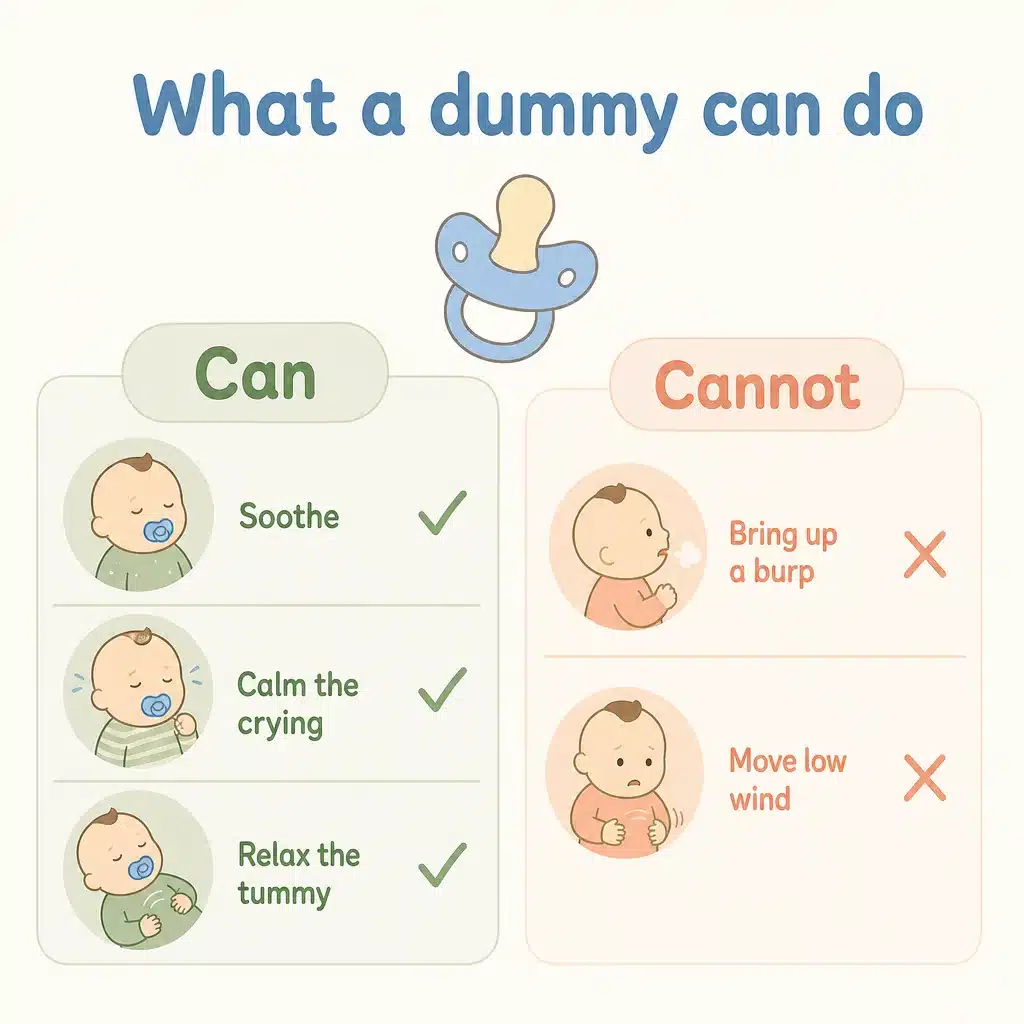
A dummy does not remove wind. It does not bring up a burp, and it does not move low wind along. What it does is soothe. For many babies, sucking is deeply calming, and a calmer baby is easier to wind, swallows less air, and is better able to ride out a bit of tummy discomfort.
So a dummy is best thought of as a settling tool that can help a windy baby, not a wind remedy. Used at the right moment, it can be a real help. Used instead of burping or feeding, it can hide the problem.
Why Sucking Calms a Windy Baby
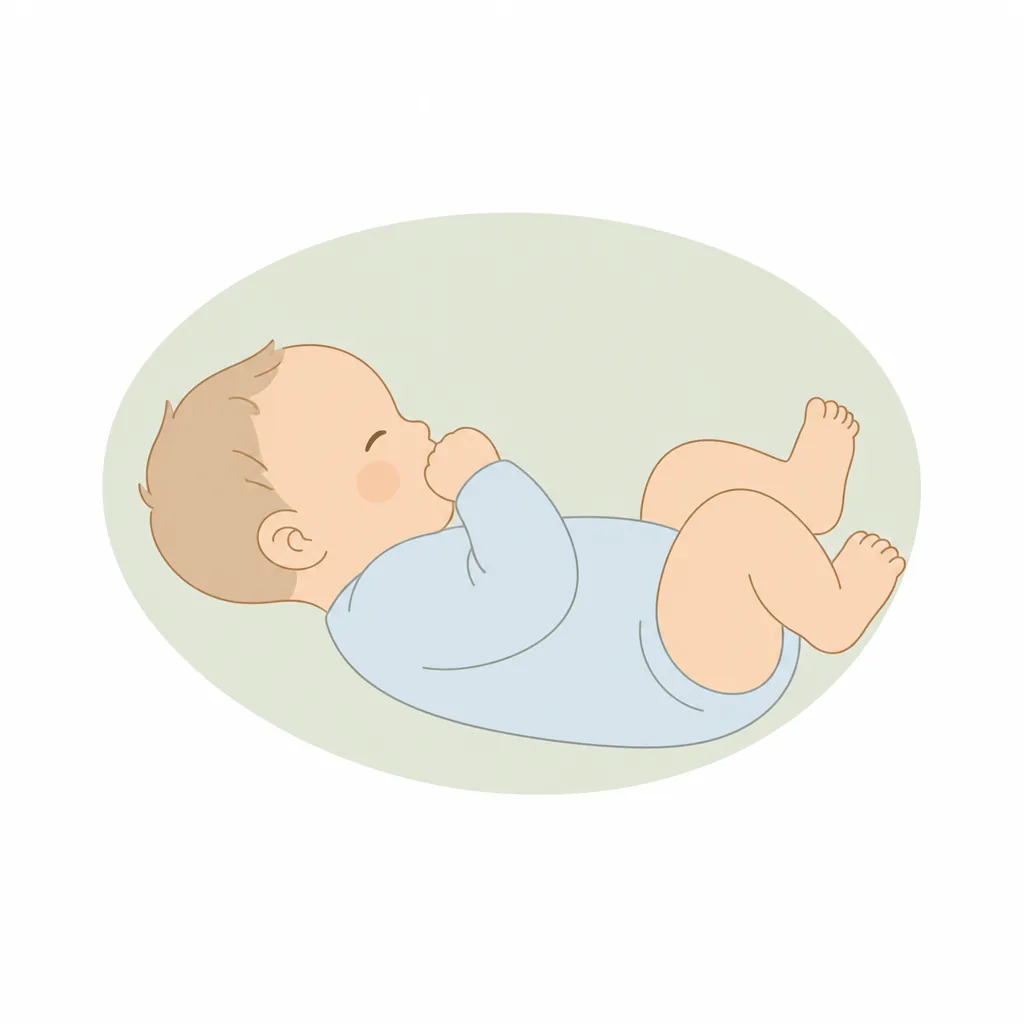
Babies are born with a strong urge to suck, and it is not only about food. Sucking without feeding is one of the ways young babies calm themselves. You will see it when your baby sucks on their fist, your finger or the breast long after the milk has stopped.
For a windy baby, that calm matters in two ways:
- Less crying means less air. A baby who is crying hard gulps air with every breath, which adds to the wind. A dummy that stops the crying stops that cycle
- A relaxed body. When a baby settles, their tummy muscles relax too. A relaxed tummy often lets a burp come up or low wind pass more easily than a tense one
This is also why so many parents notice their baby passes wind soon after they settle. The dummy did not release it, but the calm helped.
Can a Dummy Make Wind Worse?
It can, a little. Babies swallow some air whenever they suck, and a dummy is no exception. For most babies the amount is small, and the calming effect outweighs it, because a calm baby swallows far less air than a crying one.
Watch for these signs that the dummy may be adding to the wind:
- Your baby sucks on it hard and fast, with a lot of noise, rather than in slow, relaxed sucks
- They seem windier on days they have the dummy a lot
- They settle on the dummy but wake uncomfortable soon after
If that sounds like your baby, try burping before you offer the dummy, and use it for shorter stretches.
When a Dummy Helps, and When It Does Not
| A dummy can help | A dummy will not help |
|---|---|
| After a feed and a good burp, when your baby still wants to suck | When your baby is hungry. Feed them instead |
| During a settling hold, like the colic carry or on your shoulder | When a burp is stuck. Change their position first |
| At sleep time, to help your baby drift off | When wind has moved low. Try leg and tummy movements |
| In the car or pram, when you cannot pick your baby up | When your baby spits it out. Do not force it |
| During a nappy change or bath for a baby who fusses | As a way to skip or stretch out feeds |
The key is to offer the dummy after you have done the basics, not instead of them.
How to Use a Dummy for a Windy Baby
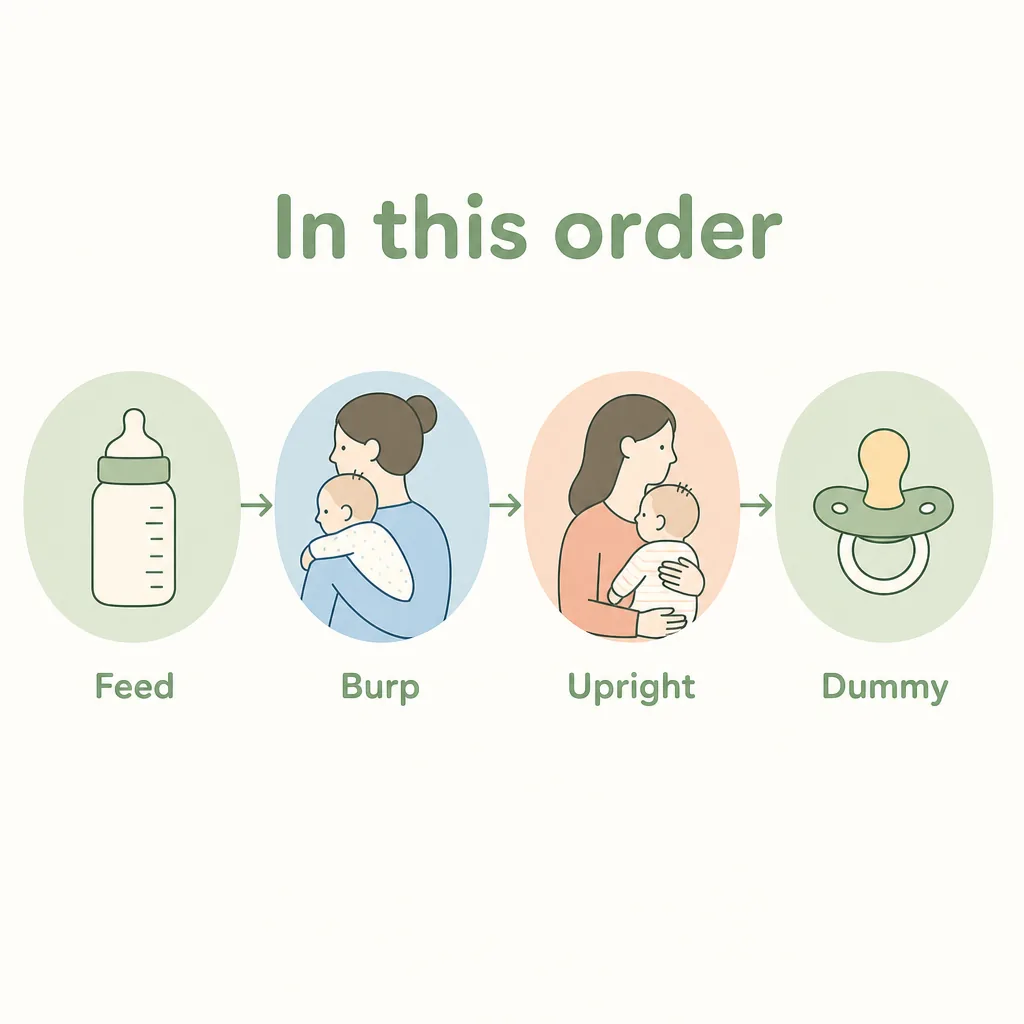
- Check for hunger first. Rooting, hands to mouth and sucking noises often mean your baby wants a feed. A dummy should not replace a feed your baby needs
- Burp before the dummy. Bring up what you can first, in more than one position if needed. Our guide on how to burp a baby with trapped gas covers the stubborn ones
- Offer it once your baby is upright or in a hold. Against your chest, on your shoulder or in the colic carry, so any remaining air can still rise
- Let your baby take it. Touch the dummy to their lips and let them draw it in. If they turn away or spit it out, leave it
- Watch the sucking. Slow, rhythmic sucking is settling. Fast, frantic sucking may mean hunger, or that the dummy is not what they need right now
Dummies and Breastfeeding
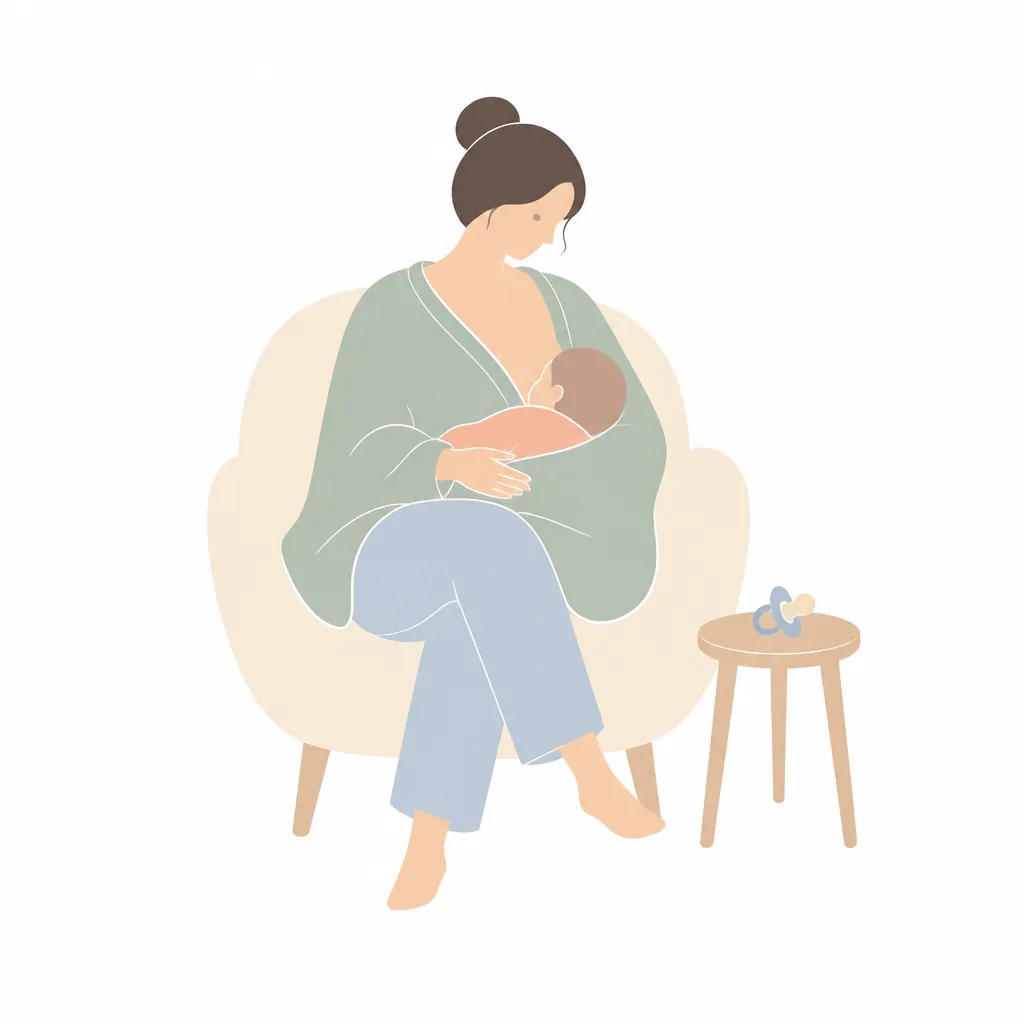
If you are breastfeeding, it is best to wait until breastfeeding is well established before you introduce a dummy. For most mums that is somewhere between three and six weeks after birth. Early on, your baby’s sucking at the breast is what builds your milk supply, and a dummy can take some of that sucking away.
Once feeding is going well, a dummy is unlikely to cause a problem. Keep an eye on whether your baby is still feeding often enough, and offer the breast first if you are not sure whether they are hungry or just want to suck. Bottle-fed babies can be offered a dummy from birth.
If your breastfed baby is windy, the cause is usually at the breast rather than the dummy. Our guide on how to reduce wind in breastfed babies covers the latch, feeding positions and a fast let-down.
Using a Dummy Safely
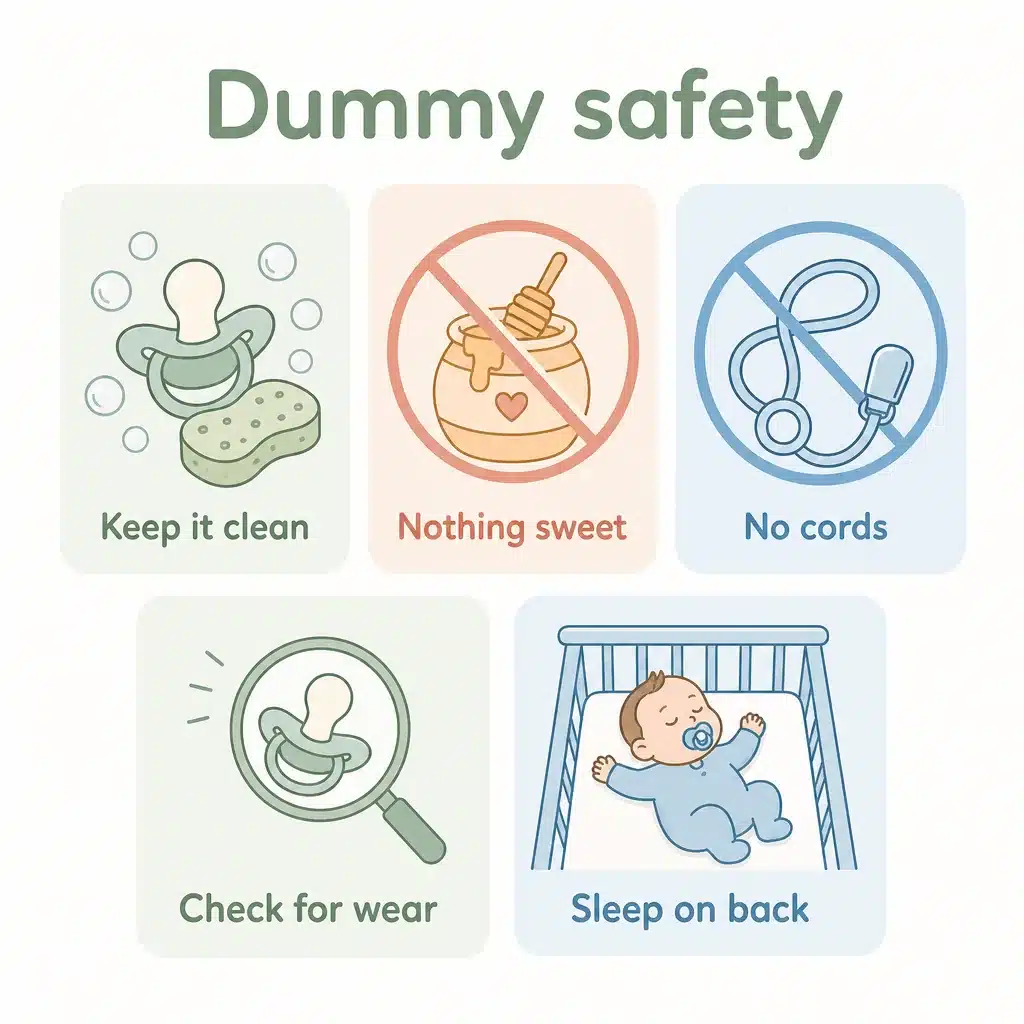
- Keep it clean. Wash dummies in warm, soapy water. For babies under 12 months, sterilise them too. Do not “clean” a dummy by putting it in your own mouth
- Never coat it in anything sweet. No honey, sugar, syrup or anything else, ever
- No strings or cords. Never tie a dummy around your baby’s neck, to their hand, or to the cot
- Check it often. Replace any dummy that is cracked, sticky, torn or worn
- At sleep time, offer the dummy when you settle your baby, and always put your baby to sleep on their back. If it falls out once they are asleep, there is no need to put it back in
- Do not force it. Some babies never take a dummy, and that is fine
Other Ways to Settle a Windy Baby
A dummy is one tool. Our guide to 10 ways to relieve trapped wind covers the full range, and most windy babies do best with a few working together:
- Burping during and after every feed
- Upright time for 20 to 30 minutes after daytime feeds
- Tummy-down holds, like the colic carry
- Leg movements and tummy massage between feeds for low wind. Our guide on how to release trapped wind in babies has a step-by-step routine
Our wind relief for babies page puts all of these in order. Alongside them, many Australian families use Infants’ Friend Colic & Wind, a traditional herbal remedy given by mouth with feeds. Its ingredients are traditionally used in Western herbal medicine to relieve colic symptoms, wind and gas pain and mild indigestion in infants, and it is alcohol-free and suitable from birth when used as directed.
When to Talk to Your GP or Child Health Nurse
If your baby cries for long stretches that neither a dummy, a feed nor a cuddle can settle, or if the crying comes with fever, vomiting, poor feeding, fewer wet nappies or slow weight gain, have a chat to your GP or maternal child health nurse. If your baby gets a lot of ear infections, mention the dummy too, as your GP may suggest using it less. If long, hard-to-settle crying spells happen at the same time most days, our guide to colic vs gas explains what might be going on.
Always read the label and follow the directions for use. If symptoms persist, talk to your health professional.
Infants’ Friend Colic & Wind (AUST L 367810) contains ingredients traditionally used in Western herbal medicine for colic relief (wind/gas pain). Available Australia-wide since 1935.
Frequently Asked Questions
AUST L 367810. Always read the label and follow the directions for use. If symptoms persist, talk to your health professional.