
It is 6pm, your baby has just fed, and the grunting has started. Knees up, back arching, that first sharp cry. You have about a minute before it builds into the kind of crying that swallows more air and makes everything worse, and you need to know what to do with your hands right now. This page is the list, written down and put in order, so you do not have to build it by trial and error tonight.
It starts with the first 60 seconds, because that is when the decisions get made. Then the night-time plan, because that is when you are least able to think. Then every method, ranked, with when to use it and a pointer to a deeper guide where one exists.
At a glance
- Upright, burp, change angle, tummy-down, legs: that is the first 60 seconds, in order
- Most overnight wind is from lying flat, not new air. Burp twice and hold upright before laying down
- Burping and tummy pressure are for the episode. Massage and feeding habits stop wind building up. Natural relief sits alongside them
- If a burp or a bottom burp ends the crying, it was wind. If hours of crying carry on regardless, read about colic instead
The First 60 Seconds
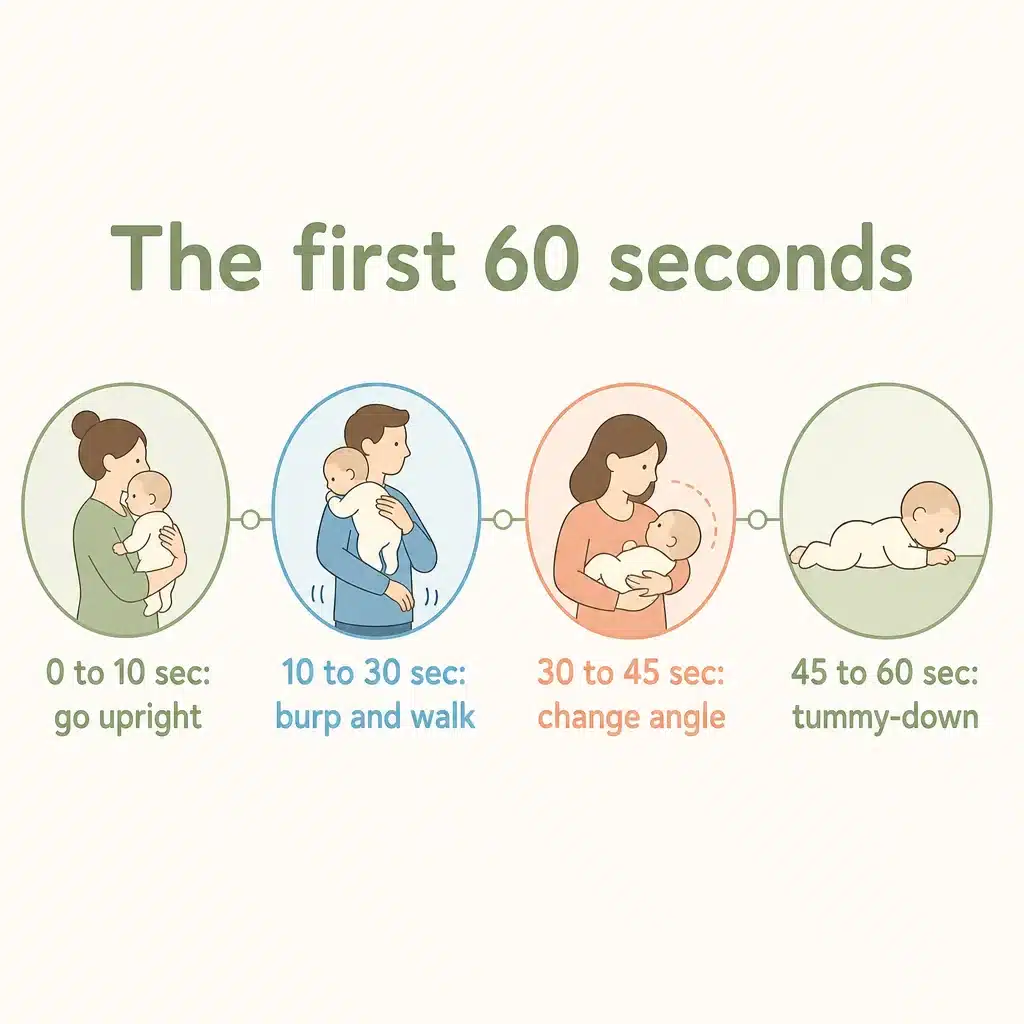
Your baby has started to fuss, the knees are coming up, and you have a minute before it builds into a full cry that swallows more air. Do this, in this order.
- 0 to 10 seconds: pick up and go upright. Baby against your chest, head on your shoulder, your hand on their back. Upright alone settles a surprising amount of wind, because it lets the bubble rise
- 10 to 30 seconds: burp over the shoulder while walking. Firm pats and slow rubs up the back. Walk while you do it; movement helps the bubble shift
- 30 to 45 seconds: change the angle. If nothing has come, sit your baby upright on your lap, one hand supporting the chin and chest, lean them slightly forward and rub. A different angle reaches a bubble the first one did not
- 45 to 60 seconds: go tummy-down. Lay your baby along your forearm in the colic carry, head in the crook of your elbow, and walk slowly. Tummy pressure plus movement is the most reliable settler once crying has started
- Then: legs. If the wind seems low and a burp is not the answer, lay your baby on their back and do bicycle legs and knees to tummy on a firm surface
Most windy episodes end somewhere in that sequence. If your baby is still crying hard after five minutes and settling barely dents it, you may be looking at more than wind. Our guide to colic vs gas explains the difference, and the colic quiz walks you through the pattern in a couple of minutes.
The Night-Time Wind Plan
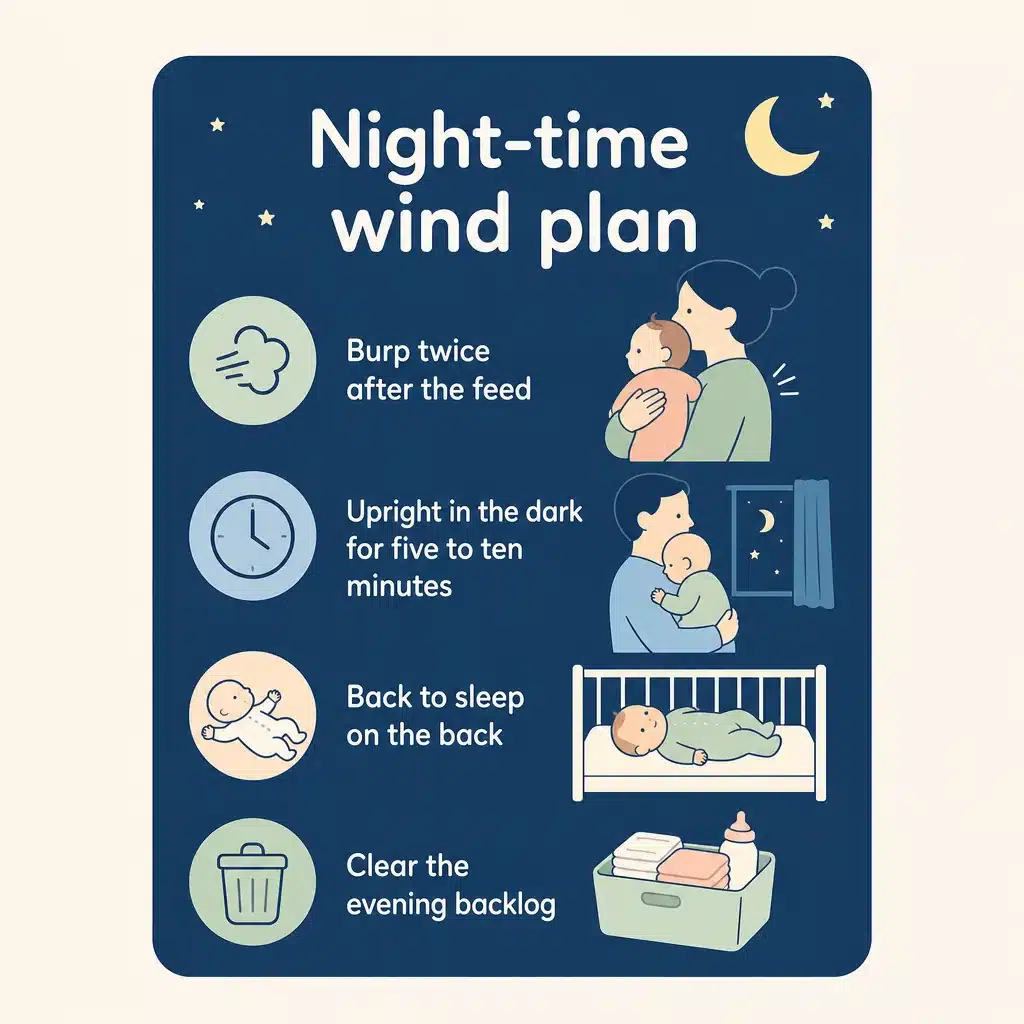
Night wind is different. Very little new air goes in overnight. What wakes your baby is the day’s leftover wind shifting when they lie flat, and a feed followed by a quick return to the cot. A few habits fix most of it.
- Burp twice after every night feed. Once over the shoulder, once sitting upright on your lap. Dim light, no talking, so the burp does not become a wake-up
- Hold upright for a few minutes before laying down. Five to ten minutes on your shoulder in the dark is usually enough. Twenty is better if your baby is very windy. That is shorter than the daytime 20 to 30 minutes on purpose: a night feed is smaller and calmer, and a long hold wakes everyone up
- Keep the feed itself calm. A half-asleep feed swallows less air than a frantic one, so go to your baby at the first stirring rather than the full cry
- Lay down on the back, every time. Tummy-down is for awake settling only. If your baby wakes 15 to 20 minutes after being laid down, pick up, burp once more, and try again
- Clear the afternoon backlog. Most night wind was swallowed in the evening. A thorough burp after each evening feed and some upright time before the bedtime feed means less to deal with at 2am
If nights are your hardest stretch, our guide to trapped wind in infants explains how wind changes through the day and how to spot the quiet signs before they become a wake-up.
Every Method, Ranked
Roughly in the order most families reach for them, with when to use each one.
1. Burping, during and after feeds
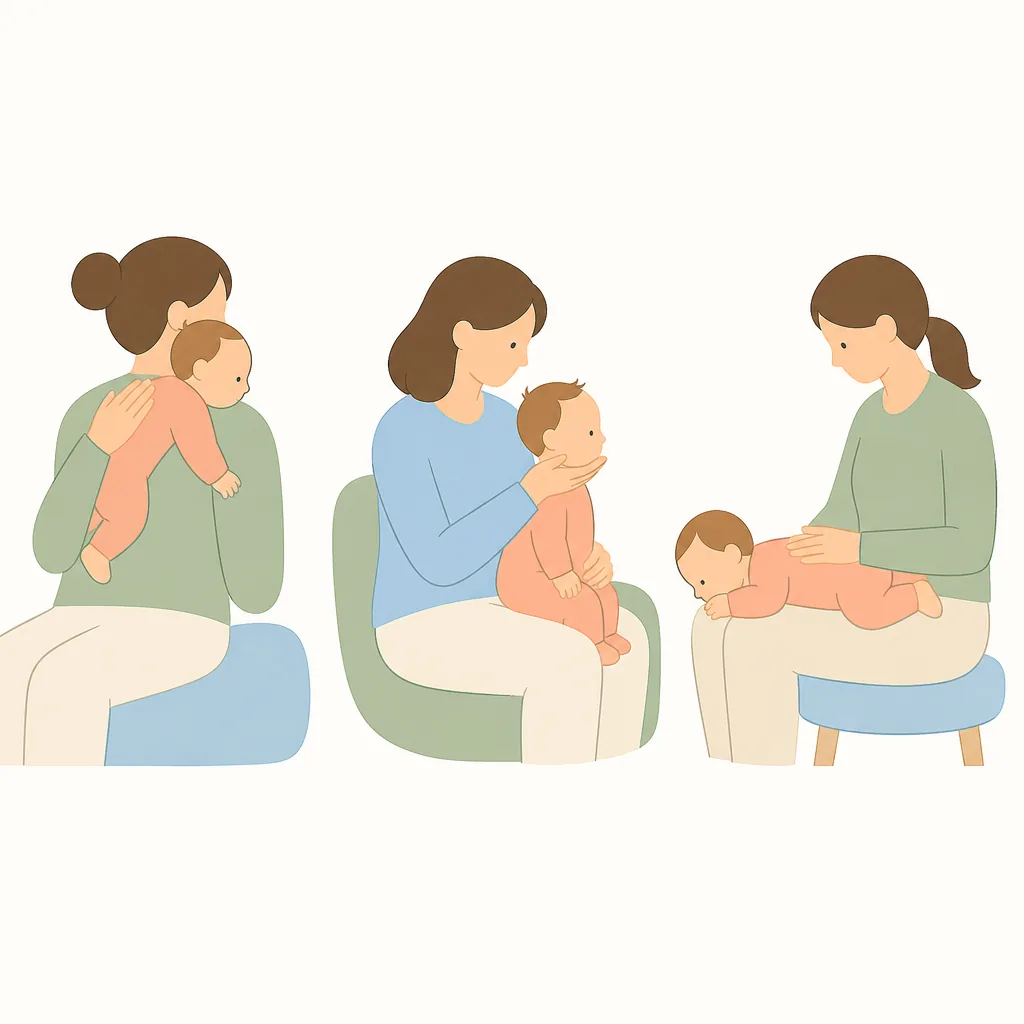
Most swallowed air is best dealt with at the top, soon after it goes in. Pause halfway through each feed, when switching sides or about halfway down the bottle, and again at the end. Use more than one position: over the shoulder, sitting upright with the chin supported, face-down across your knees. Give a stubborn burp a few minutes of walking and rubbing rather than thirty seconds of patting. Our guide to the best ways to burp a baby covers each position and what to do when the burp will not come.
2. Tummy-down holds
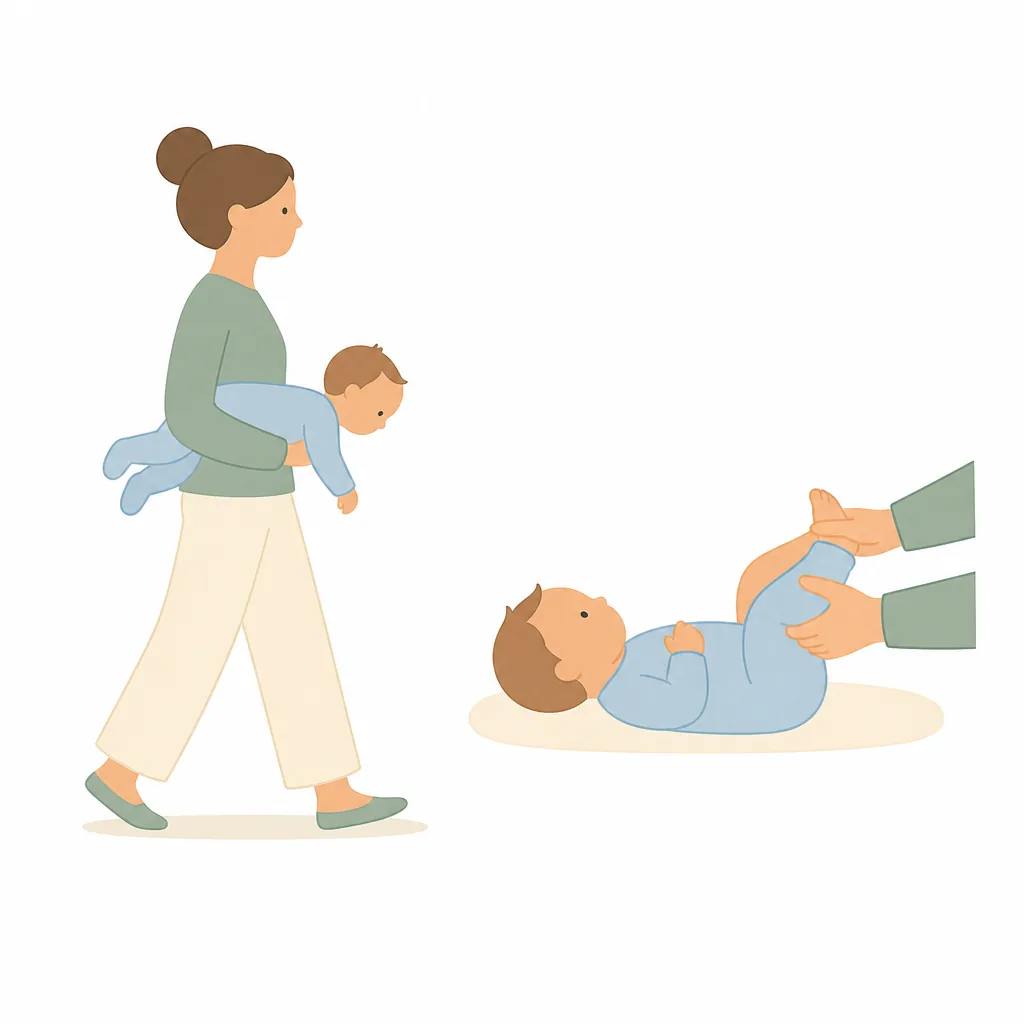
Gentle, steady pressure across the tummy is the most reliable settler for a baby who has already started crying. The colic carry, baby lying along your forearm while you walk, is the classic. Across your lap while you rub their back is the sit-down version. Both need a supported head and a clear face, and both are for awake time only. Our step-by-step guide to the colic carry covers the hold, its variations and how to keep it safe.
3. Bicycle legs and knees to tummy
Lay your baby on their back, slowly cycle their legs, then bring both knees gently up to the tummy, hold for a slow count of three and release. After a nappy change is the natural moment. This is the move that most often produces the bottom burp.
4. Keeping your baby upright after feeds
Twenty to thirty minutes upright after each feed lets swallowed air rise to the top of the tummy, where it can be burped out, instead of travelling further along where it is harder to shift. Against your chest, in a carrier, or on your shoulder while you finish your own dinner all count.
5. Tummy massage
Massage is for the calm moments between episodes, not the middle of one. Warm hands, warm room, half an hour or more after a feed. Slow clockwise circles around the belly button, following the direction wind travels through the gut, then knees to tummy to finish. Done daily, mid-afternoon or after the bath, it takes the edge off the evening build-up. Our step-by-step guide to baby massage for colic and wind has the full routine.
6. Feeding habits that swallow less air
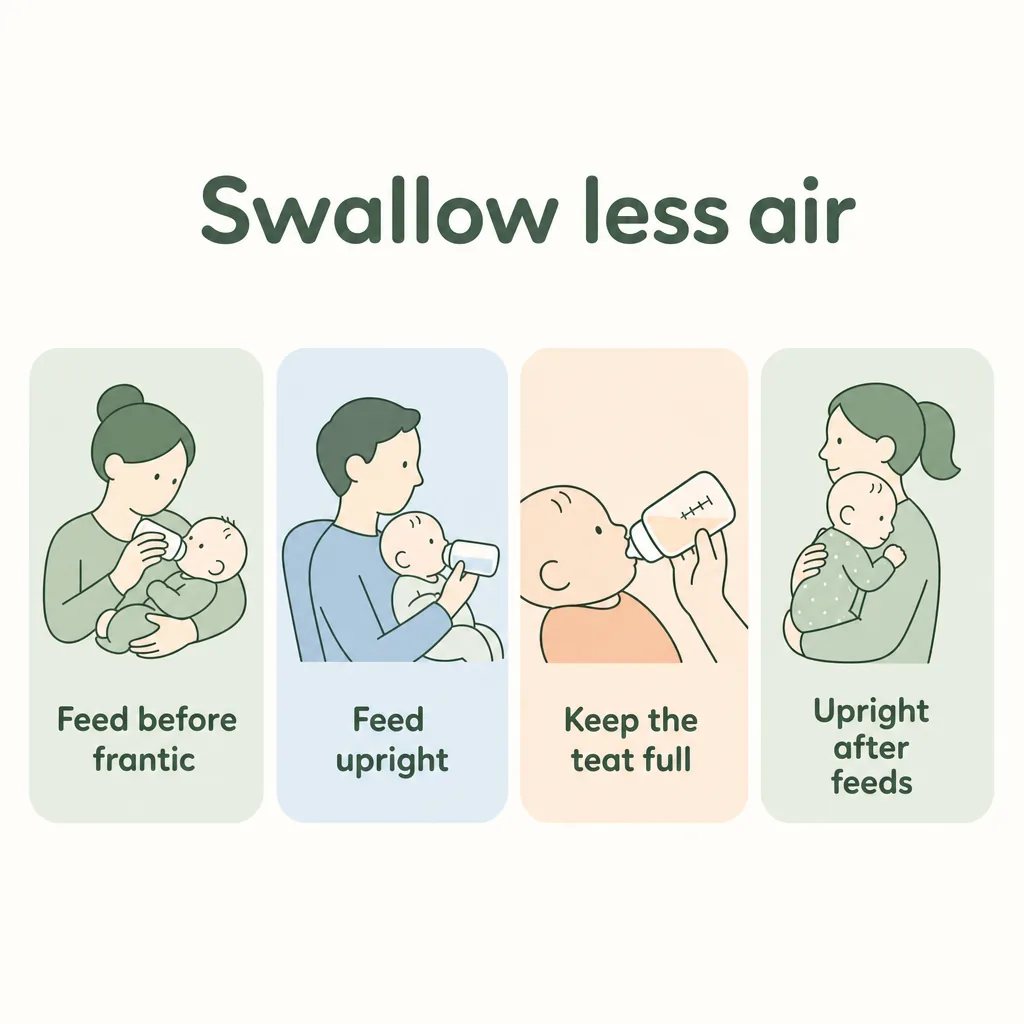
Relieving wind is good. Swallowing less of it is better. Feed before your baby is frantic. Keep them at an angle rather than flat. Bottle feeding: keep the teat full of milk and check the flow suits your baby. Breastfeeding: a deeper latch means less air, and a noisy, clicking feed is worth a look from a child health nurse or lactation consultant. Our gassy baby guide explains which feeding causes apply to your baby and includes a wind diary to work it out.
7. Supervised tummy time
A few minutes on the floor on their tummy, awake and watched, gives the same pressure as a hold and doubles as development practice. Short and often beats long and rare.
Alongside the methods: natural wind relief
Alongside the hands-on methods, many Australian families use a traditional herbal remedy for wind and gas pain. Infants’ Friend Colic & Wind is a blend of chamomile, lemon balm and dill seed oil, herbs traditionally used in Western herbal medicine to relieve wind and gas pain, colic symptoms and mild indigestion in infants. It is alcohol-free and suitable from birth when used as directed, given by mouth before feeds. Our infant gas relief guide explains how it fits into the feed routine and what to look for on any remedy’s label. Always read the label and follow the directions for use.
Which Method When?
| Moment | Best options |
|---|---|
| During a feed | Mid-feed burp, upright position, check teat flow or latch |
| Straight after a feed | Burp in two positions, then 20 to 30 minutes upright |
| Squirming and grunting an hour later | Bicycle legs, knees to tummy, across-the-lap hold |
| Full crying with knees up | The first 60 seconds sequence above |
| Calm stretch in the afternoon | Clockwise tummy massage, supervised tummy time |
| Before the evening feeds | Natural wind relief as directed, a calm feed before frantic hunger |
| Night feeds | Burp twice, upright in the dark for five to ten minutes, back to sleep on the back |
You will not need all of these every day. Most families find two or three become second nature and the rest sit in reserve for hard evenings.
When to Talk to Your GP or Child Health Nurse
None of the methods on this page should be needed for hours at a stretch. If you are working through the whole list every evening and the crying carries on regardless, or if the wind comes with fever, repeated vomiting, diarrhoea, blood or mucus in the poo, a swollen tummy that stays hard and tender, feed refusal, poor weight gain or fewer wet nappies, have a chat to your GP or maternal child health nurse. A baby who seems unwell to you, rather than uncomfortable, is always worth a visit.
Always read the label and follow the directions for use. If symptoms persist, talk to your health professional.
Infants’ Friend Colic & Wind (AUST L 367810) contains ingredients traditionally used in Western herbal medicine for colic relief (wind/gas pain). Available Australia-wide since 1935.
Frequently Asked Questions
AUST L 367810. Always read the label and follow the directions for use. If symptoms persist, talk to your health professional.