
Trapped wind is the great impostor of the first few months. It looks like hunger, so you feed, and it gets worse. It looks like tiredness, so you try to settle, and your baby fights you. It looks like colic, so you brace for hours of it, and then a single burp ends the whole thing. Learning to spot it saves you a lot of guesswork, and a lot of milk.
This page is about the spotting. It covers the obvious signs and the quiet ones, a 60-second check you can run at the change table, how the picture changes with age and time of day, how to tell wind from the things it imitates, and when babies stop getting wind pain. For the relief techniques themselves, our wind relief for babies guide has every method explained.
At a glance
- The obvious signs are knees up, a firm tummy, a red face and short bursts of crying within an hour of a feed
- The quiet signs are grunting, hiccups, refusing to lie flat and waking 15 to 20 minutes into a sleep
- The clincher: a burp or a bottom burp ends the crying
- Wind is worst from around 2 to 8 weeks and eases noticeably by 3 to 4 months as the gut matures
What Trapped Wind Is
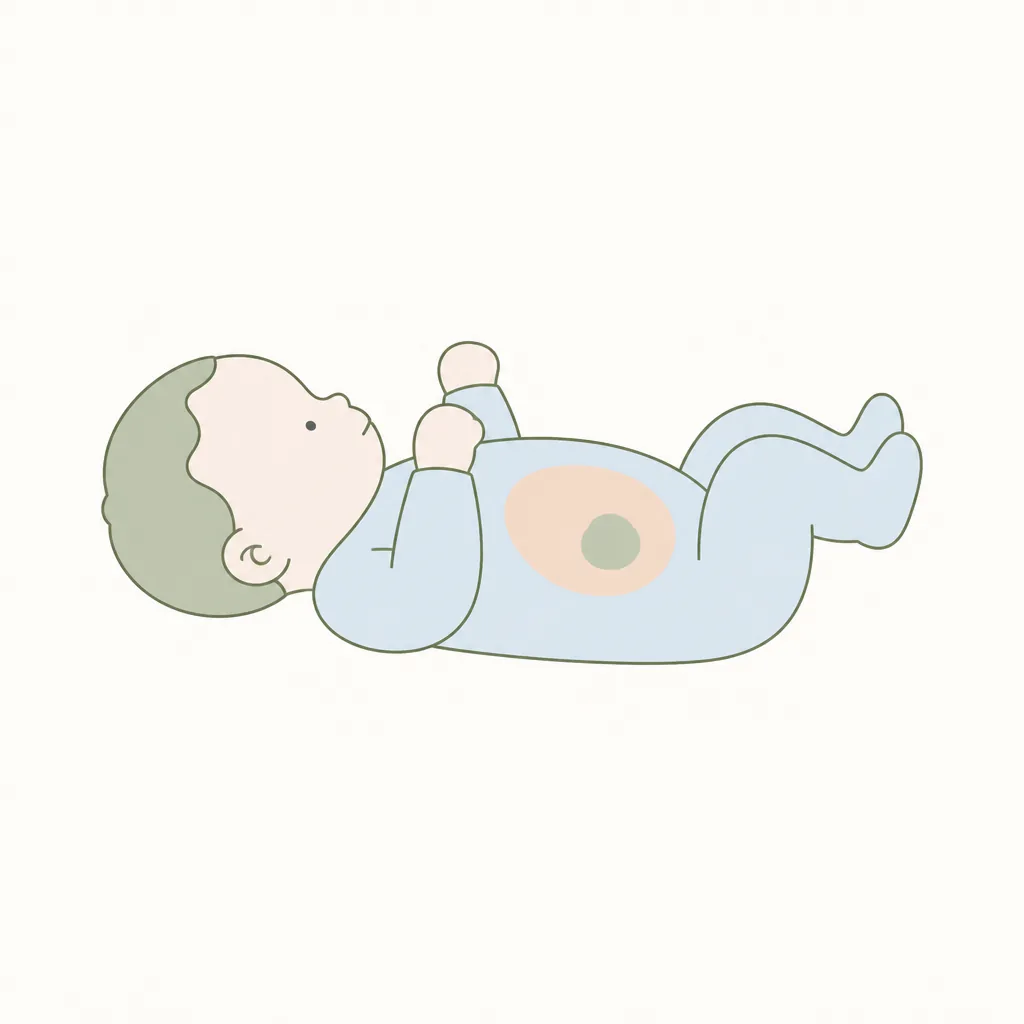
Wind is air in the gut. Babies swallow it with every feed and every cry, and a little more is produced as the gut gets used to digesting milk. In an older child that air passes through without comment. In a baby, the gut muscles are weak, the tummy is tiny, and most of the day is spent lying flat, so a small bubble can sit in one spot and stretch the gut wall. That stretch is what hurts, and the discomfort is what you see.
The important word is trapped. The air itself is harmless. The problem is that it is stuck somewhere it can be felt, and the fix is helping it move. If you want the causes in detail, our gassy baby guide walks through the eight everyday ones.
The Obvious Signs
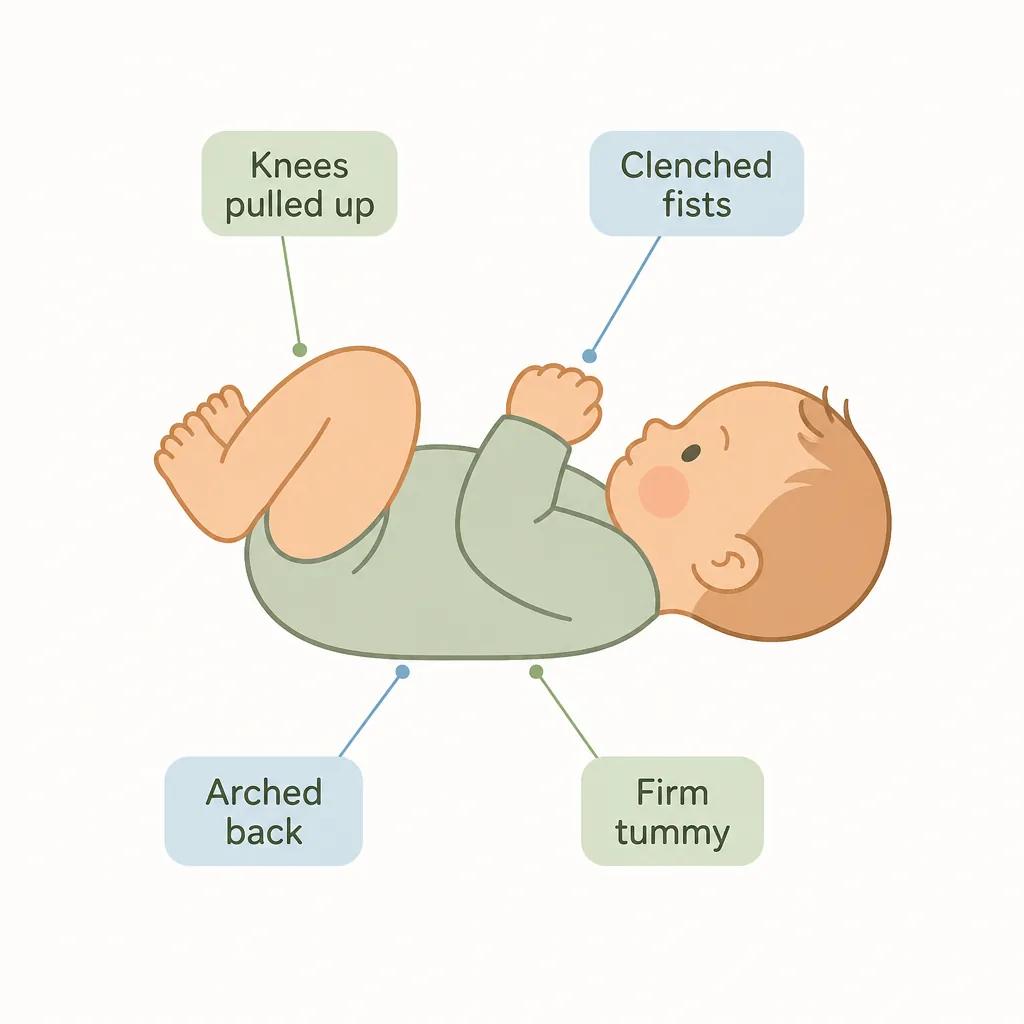
These are the ones every parent learns in the first fortnight:
- Squirming, wriggling and grunting, especially after feeds
- Pulling the knees up to the chest, then kicking them straight, over and over
- Stiffening the body or arching the back
- A tummy that feels firm to the touch or looks a little rounder than usual
- Short, sharp bursts of crying that build and ease, rather than one long wail
- A red face and clenched fists while straining
- Relief, sometimes instant, after a burp or passing wind
The Quiet Signs
These are the ones that get missed, because they do not look like pain:
- Grunting and straining in their sleep, without waking properly
- Hiccups after most feeds. Hiccups themselves are harmless, but frequent hiccups mean plenty of air is going down
- Refusing to lie flat. A baby who is happy upright on your shoulder and unhappy the moment they are laid down often has a bubble that shifts when they go horizontal
- Waking 15 to 20 minutes into a sleep, especially after a feed, then settling once picked up upright
- Fussing at the breast or bottle mid-feed, pulling off and coming back, which can be a bubble getting in the way of a full tummy
- Lots of bottom burps with a happier baby afterwards
A baby who shows two or three quiet signs but never looks distressed is still a windy baby, and a mid-feed burp and some upright time will make their day easier.
The 60-Second Wind Check
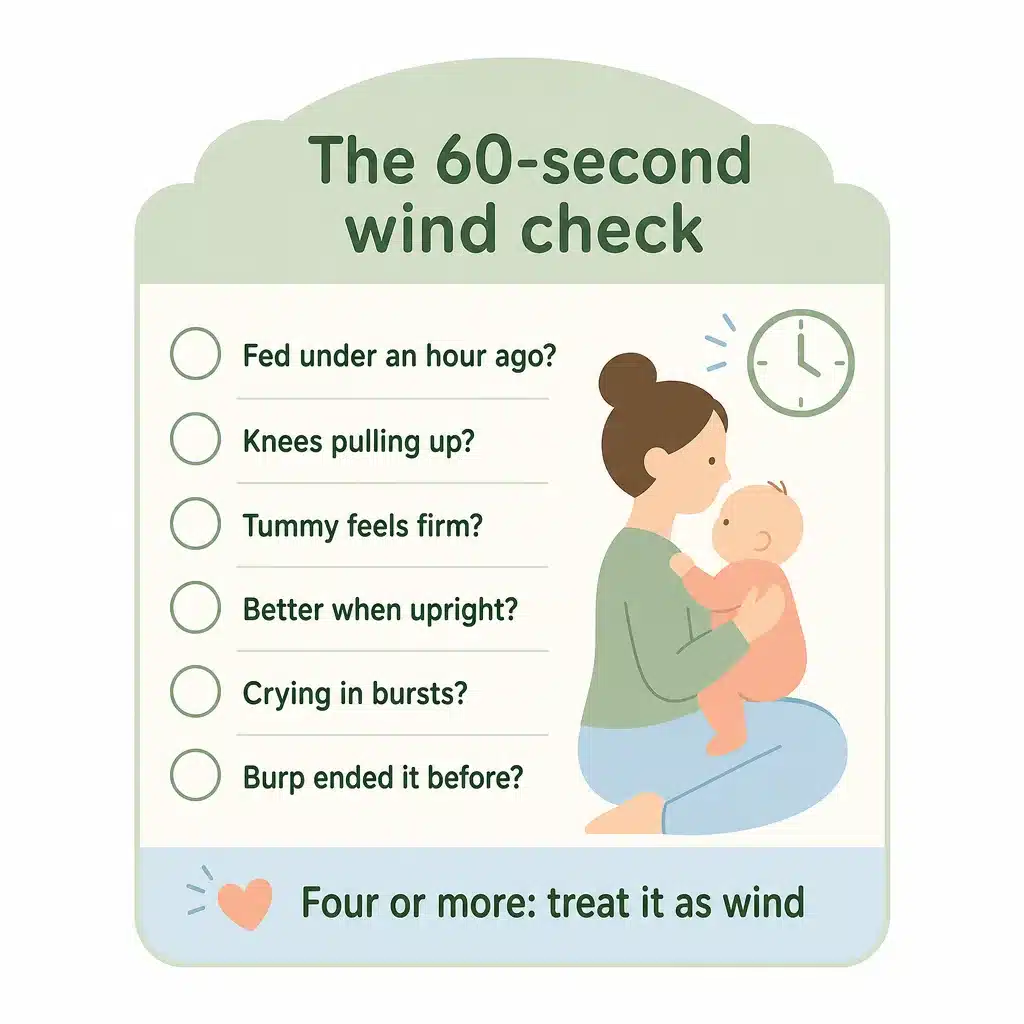
Run this at the change table when your baby is fussing and you are not sure why. Tick what applies.
| Question | Tick if yes |
|---|---|
| Was the last feed less than an hour ago? | |
| Are the knees pulling up or the back arching? | |
| Does the tummy feel firm under your palm? | |
| Does the fussing ease when you hold them upright or tummy-down? | |
| Is the crying in bursts rather than continuous? | |
| Has a burp or bottom burp ended a similar episode before? |
Four or more ticks: treat it as wind and go to the relief steps below. Two or three: try a burp and upright time first, then look at hunger, tiredness and nappy. Fewer than two: wind is probably not the main problem today. If the crying is intense, runs for hours and lands at the same time most evenings, our colic quiz will walk you through the colic pattern in a couple of minutes.
How the Signs Change With Age
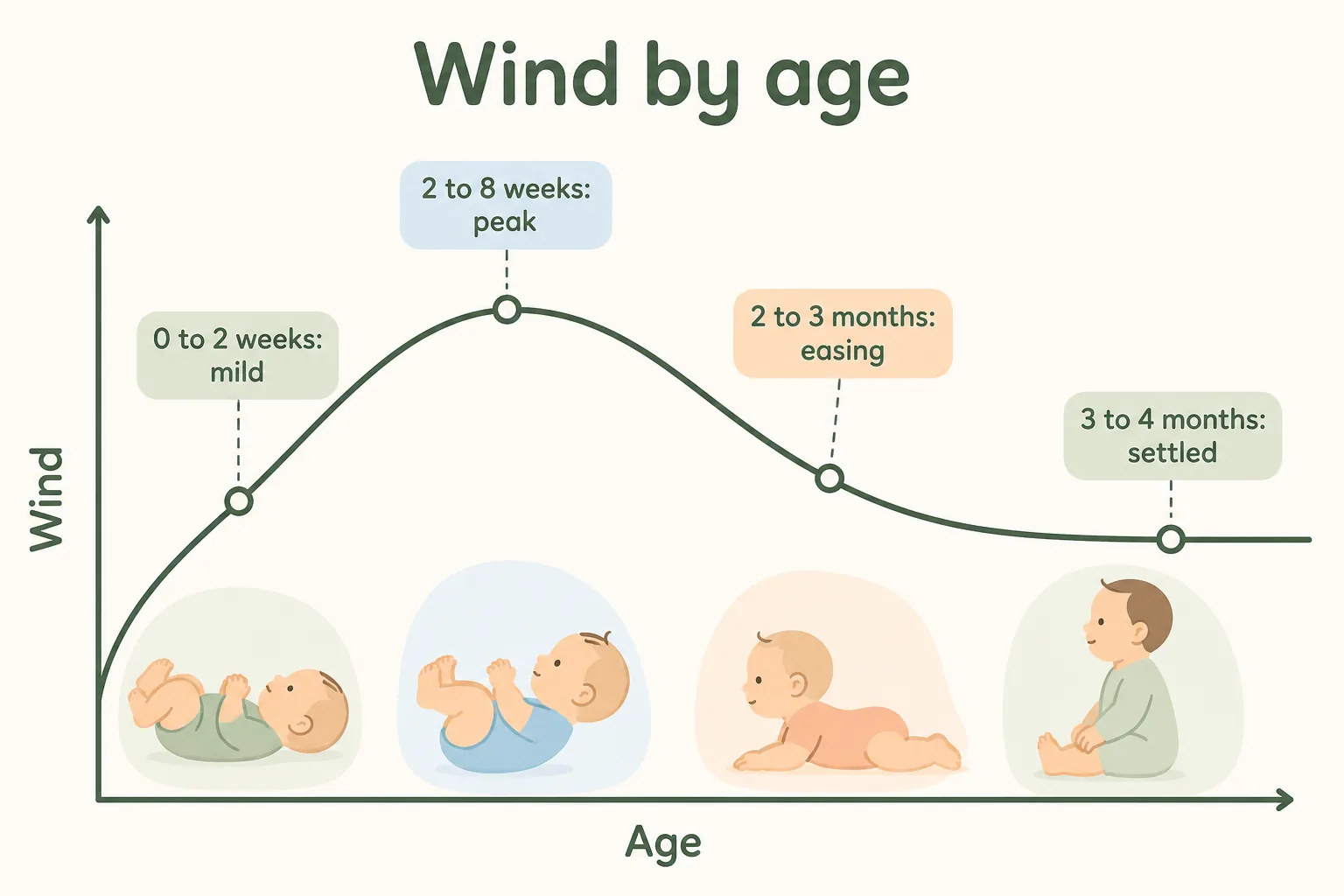
The same wind looks different at two weeks and at three months, which is one reason parents second-guess themselves.
| Age | What trapped wind usually looks like |
|---|---|
| 0 to 2 weeks | Grunting and squirming during and after feeds, lots of hiccups, a baby who seems uncomfortable rather than distressed |
| 2 to 8 weeks | The peak. Knees up, tight tummy, red-faced straining, crying that builds after feeds and can tip into evening fussiness |
| 8 weeks to 3 months | Fewer episodes, more obvious bottom burps, a baby who can sometimes shift wind on their own by kicking |
| 3 to 4 months and beyond | Occasional wind after a big or fast feed, easily relieved. Most babies handle it themselves |
How the Signs Change Through the Day
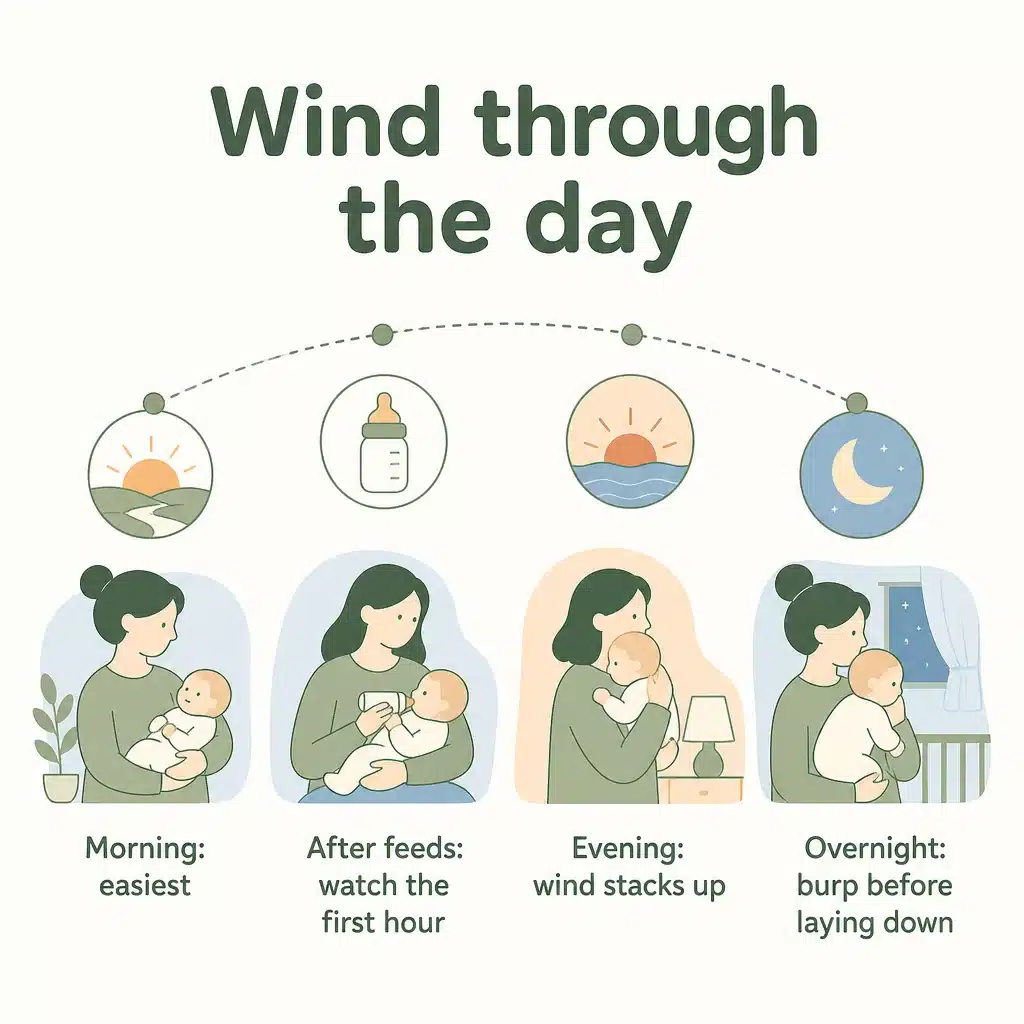
Wind also has a daily rhythm, and knowing it helps you predict trouble rather than react to it.
- Mornings are usually easiest. A night of lying still has let some wind pass, feeds are calm, and your baby is rested
- After each feed is the most likely time for an episode, typically within the first hour, as swallowed air settles into the tummy
- Late afternoon and evening is where wind stacks up. Feeds are closer together, your baby is tired and swallows more air while fussing, and the day’s accumulated wind is still sitting there. This is the hour when a windy baby is easiest to mistake for a colicky one
- Overnight wind is less about new air and more about lying flat. A thorough burp after each night feed and a few minutes upright before laying down makes a real difference
If most of your baby’s fussing falls into the evening block, read our guide to the witching hour, which explains why evenings are hard even for babies without much wind.
Wind, Colic, Reflux or Hunger?
Trapped wind imitates other things. A quick comparison:
| What you see | Most likely |
|---|---|
| Crying soon after a feed, knees up, tight tummy, eases after a burp | Trapped wind |
| Intense crying for hours, same time each evening, most days, settling barely dents it | Colic |
| Arching away during feeds, bringing up a lot of milk, unhappy after most feeds | Reflux |
| Rooting, sucking hands, turning towards the breast or bottle, calm once fed | Hunger |
| Mucus or blood in the poo, rashes, poor weight gain alongside the wind | Talk to your GP, possibly a milk sensitivity |
Wind and colic overlap a great deal, and wind is often part of a colicky picture, so do not be surprised if your baby ticks boxes in both rows. Our guides to colic vs gas and colic vs reflux go deeper.
When Do Babies Stop Getting Wind Pain?
It fades rather than stops. Three things improve together and each one takes the edge off:
- The gut matures. By around three months the muscles that move air along are stronger and better coordinated, so a bubble passes rather than sits
- Your baby spends more time upright. Head control, time in a carrier, sitting supported on your lap: all of it gives wind a way up and out
- Feeding gets calmer. A more skilled feeder, on both sides, swallows less air per feed
Most families notice a clear change between three and four months. A few babies stay windy a little longer, especially fast, hungry feeders, and that is still within normal. If wind pain is getting worse rather than better after four months, or comes with other symptoms, mention it to your child health nurse.
Relieving It: What to Do Next
Once you are fairly sure it is wind, the fix is mechanical: help the bubble move up and out, or down and out. The short version:
- Within an hour of a feed: burp in a second position, then keep your baby upright for 20 to 30 minutes
- Knees up and straining: the colic carry or an across-the-lap hold, then bicycle legs and knees to tummy on a firm surface
- Calm stretch in the afternoon: five minutes of clockwise baby massage for colic and wind before the evening build-up
- At every feed: feed before frantic, keep the teat full or the latch deep, and pause for a mid-feed burp
Every one of these is explained step by step, with the first 60 seconds sequence for a crying baby, on our wind relief for babies page. Alongside the techniques, many Australian families use Infants’ Friend Colic & Wind, a traditional herbal remedy with ingredients traditionally used in Western herbal medicine to relieve wind and gas pain in infants. It is alcohol-free and suitable from birth when used as directed. Always read the label and follow the directions for use.
When to Talk to Your GP or Child Health Nurse
The 60-second check is for telling wind from hunger and tiredness. It is not for telling wind from illness, and that is the one thing to keep an eye on. See your GP or maternal child health nurse if the wind comes with fever, repeated vomiting, diarrhoea, blood or mucus in the poo, a swollen tummy that stays hard and tender, feed refusal, poor weight gain, fewer wet nappies, or a baby who cannot be settled at all and seems unwell to you rather than uncomfortable.
Always read the label and follow the directions for use. If symptoms persist, talk to your health professional.
Infants’ Friend Colic & Wind (AUST L 367810) contains ingredients traditionally used in Western herbal medicine for colic relief (wind/gas pain). Available Australia-wide since 1935.
Frequently Asked Questions
AUST L 367810. Always read the label and follow the directions for use. If symptoms persist, talk to your health professional.