
If your baby cries for hours at a time and nothing you try seems to help, one question tends to play on a loop in your head: why is this happening? You have fed them, changed them, cuddled them, walked the hallway a hundred times, and still the crying comes. It can be exhausting, isolating, and a bit frightening, and wanting a reason is completely natural.
Here is the honest starting point. Colic is the name we give to long bouts of crying in an otherwise healthy, well-fed baby, and there is no single proven cause. What we do have is a handful of well-recognised explanations that very likely work together, and understanding them can take some of the fear out of those long evenings. This page walks through the most common reasons babies get colic, the things that do not cause it, and what you can gently do to help.
The honest answer about what causes colic
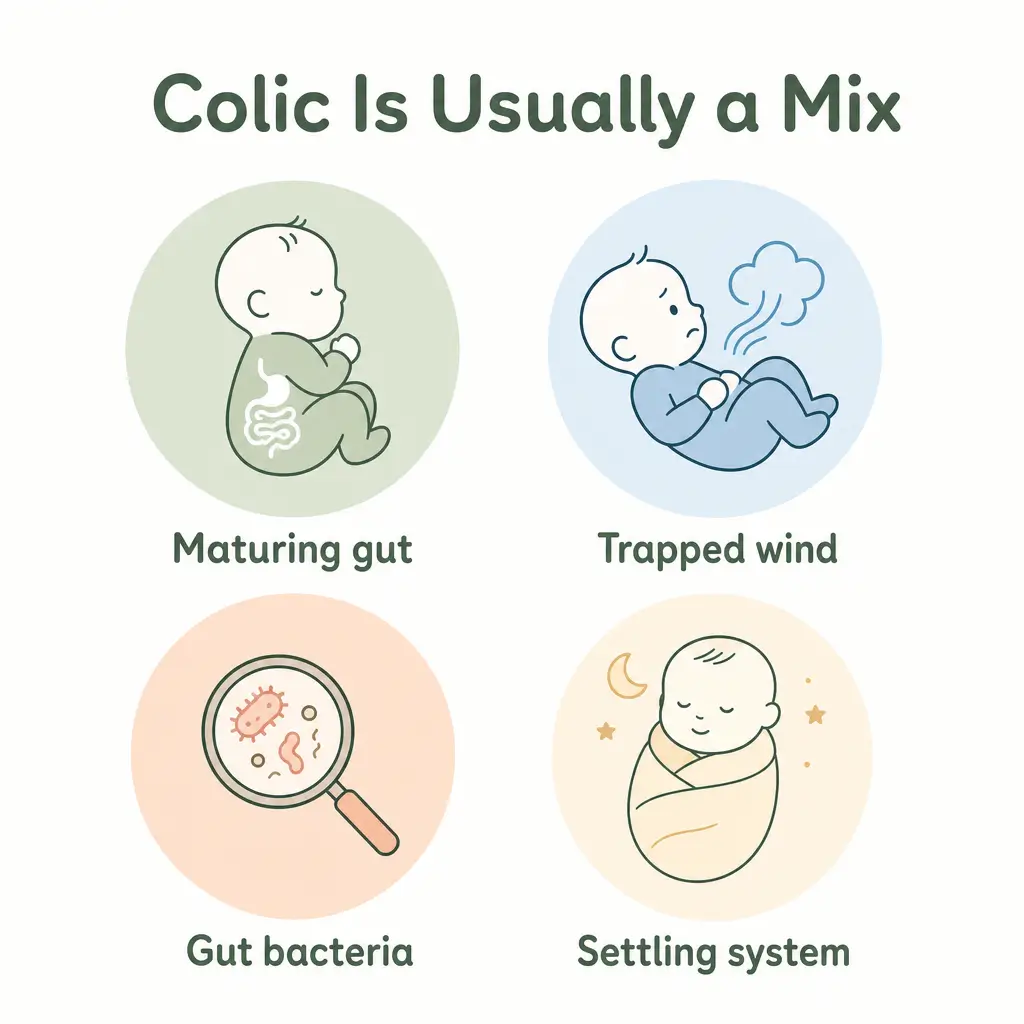
Colic is best thought of as a phase rather than a disease. It usually starts in the first few weeks, tends to peak around six weeks, and most babies have grown out of it by three to four months. Because it passes on its own and the babies are otherwise thriving, it has been very hard to pin down one cause.
Most likely, colic is not one thing at all. It is a small pile-up of normal newborn factors that arrive at the same time: a digestive system that is still finding its feet, a nervous system taking in a noisy new world, plenty of swallowed air, and a baby who has not yet learned how to wind down at the end of the day. For one baby, trapped wind might be the bigger piece. For another, it is overstimulation by evening. That is part of why colic looks slightly different from family to family.
An immature, still-learning digestive system
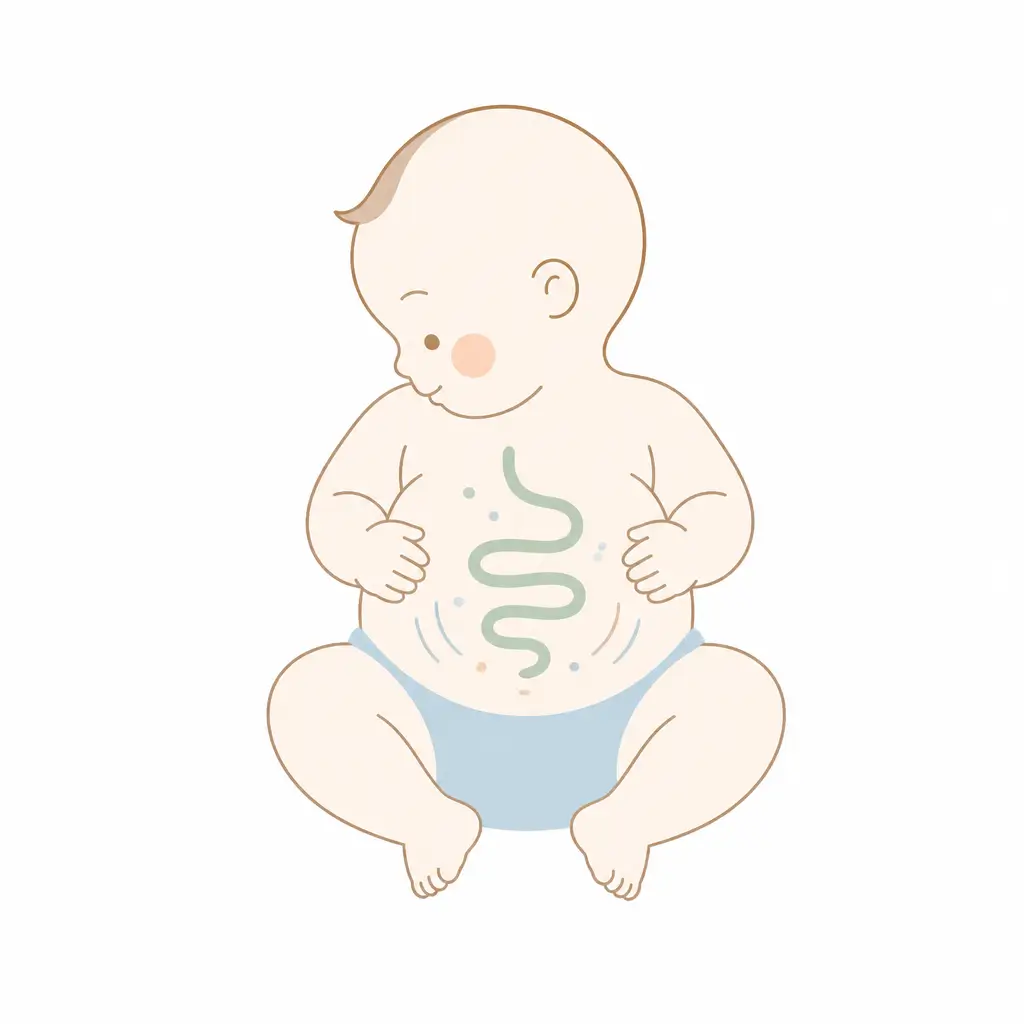
Your baby’s gut is brand new. Before birth they were fed entirely through the cord, so feeding, digesting, and moving milk through the system is a skill their body is learning from scratch. In those early weeks the muscles of the tummy and bowel are still getting the rhythm right, and that can mean cramping, pressure, and discomfort as milk moves through.
This is one of the most widely accepted pieces of the colic picture. It also helps explain the timing. As the digestive system matures over the first few months, the discomfort tends to ease, which lines up neatly with colic fading around the three to four month mark.
Swallowed air and trapped wind
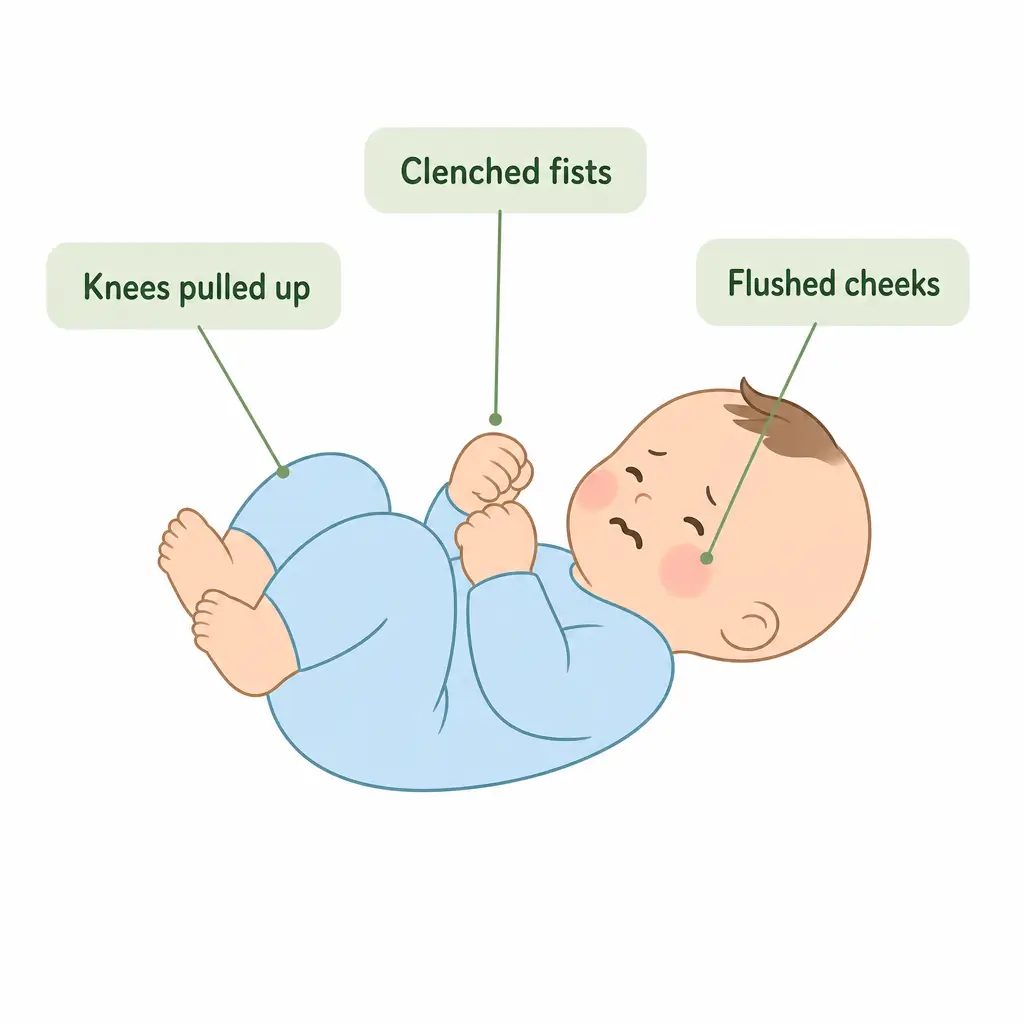
Babies swallow air. They do it while feeding, and they do it even more while crying, which can turn into a frustrating loop: discomfort leads to crying, crying brings in more air, and that air adds to the discomfort. Air that gets caught in the tummy creates pressure and that tight, bloated feeling we would all recognise as wind pain.
You may notice your baby pulling their knees up, going red in the face, clenching their fists, or seeming to strain. Bringing wind up during and after feeds gives that trapped air an exit. Our guide on the best ways to burp a baby and these 10 ways to relieve trapped wind walk through simple techniques that can make a real difference.
A developing gut and its balance of bacteria

A baby’s gut is also busy building up its community of friendly bacteria, sometimes called the gut microbiome. This community helps with digestion, and in the early weeks it is still settling into balance. Researchers have noticed that the make-up of gut bacteria can look a little different in babies who have colic, which has become one of the more interesting threads in trying to understand why some babies are more unsettled than others.
It is early days for this part of the picture, and it is not something parents need to fix or measure. It is simply another sign that a young gut is a work in progress, and that the discomfort you are seeing is part of normal development rather than anything you have done wrong.
A sensitive, fast-developing nervous system

Newborns go from the quiet, cushioned world of the womb to a bright, loud, busy one, and that is a lot to take in. A young nervous system is still learning how to handle all of this input and, just as importantly, how to switch off at the end of the day.
This is why so many babies have their hardest stretch in the late afternoon and evening, a window many parents know as the witching hour. By that point the day has piled up, the baby is overtired and overstimulated, and they have not yet learned how to settle themselves. The crying is not a sign that something is wrong. It is often an overloaded little system letting off steam.
Feeding factors that can play a part

How feeds go can add to a baby’s wind and discomfort. None of these mean you are doing anything wrong, and small adjustments are often all it takes.
A fast letdown or oversupply
If milk arrives quickly, a baby can gulp to keep up and swallow extra air along the way. They may come off the breast or bottle, fuss, and seem uncomfortable soon after. Slowing feeds down and keeping baby more upright can help them cope with the flow.
Latch and bottle technique
A shallow latch at the breast, or a bottle teat with a flow that does not suit your baby, can both let in more air than necessary. Getting a deeper latch, or trying a slower-flow teat, can cut down the amount of air swallowed at each feed.
Overfeeding or feeding very quickly
A tummy that is filled faster than it can comfortably manage can feel stretched and uncomfortable. Offering feeds in a calm, unhurried way, with pauses to bring up wind, gives the digestive system a chance to keep up.
Possible food sensitivities
For a small number of babies, a sensitivity to something in their milk plays a part. The most common is a sensitivity to cow’s milk protein, which can come through formula or, less often, through the mother’s diet while breastfeeding. This is not the cause of most colic, but it is worth knowing about, especially if the crying comes with other symptoms such as a lot of vomiting, a rash, mucus or blood in the nappy, or poor weight gain.
If you are breastfeeding and wondering whether your own diet is involved, our guide on colic in breastfed babies and the more detailed look at cow’s milk protein intolerance explain what to watch for. If you suspect a genuine sensitivity, have a chat with your GP or child health nurse before cutting anything out, so any change is done safely.
What does not cause colic
When the crying will not stop, it is very easy to turn the blame on yourself. So it is worth saying clearly what colic is not.
Colic is not caused by anything you have done wrong. It is not a sign of bad parenting, and it does not mean you are missing something obvious. Holding and comforting your crying baby does not spoil them or make the colic worse, so follow your instinct to soothe. Colic is also not a reflection of your baby’s personality or a sign of how they will be as they grow. It is a passing phase that the great majority of babies move through and leave behind.
So what can you do about it?

Because colic does not have one cause, there is no single switch to flip. What helps is a calm, steady toolkit you can lean on through the hardest stretches. Bringing up wind during and after feeds, holding your baby upright, gentle motion and white noise, a warm bath, and a tummy or back rub can all take the edge off. Our pages on home remedies for colic and how to soothe a crying baby gather these together in one place.
Many parents also reach for a gentle settling aid at this stage. Infants’ Friend Oral Liquid has been helping Australian families through the colic window since 1935, using ingredients traditionally used in Western herbal medicine for the relief of wind and gas pain. It can sit comfortably alongside the soothing techniques above as part of your evening routine.
When to have a chat with your GP or child health nurse
Colic, by definition, happens in a baby who is otherwise well, feeding, and growing. It is always fine to get reassurance, and it is a good idea to check in if anything feels off rather than like the usual pattern of crying.
Reach out to your GP or child health nurse if your baby:
- Has a fever
- Is vomiting forcefully or often
- Has blood or mucus in their nappies
- Is not feeding well or not gaining weight
- Seems floppy or unusually difficult to rouse
- Has crying that suddenly changes in a way that worries you
Trusting your gut here is exactly the right thing to do.
Infants’ Friend Oral Liquid (AUST L 367810) contains ingredients traditionally used in Western herbal medicine for colic relief (wind/gas pain). Available Australia-wide since 1935.
Frequently asked questions
AUST L 367810. Always read the label and follow the directions for use. If symptoms persist, talk to your health professional.