
The quick difference: the Period of PURPLE Crying is a normal developmental stage where a healthy baby cries more than you’d expect, then grows out of it. Colic is a way of describing a pattern of intense, hard-to-soothe crying. They overlap a lot, and a baby can fit both at once.
At a glance: PURPLE crying and colic both peak in the early weeks and ease with time. PURPLE crying is about a phase, colic is about a crying pattern, and the witching hour is about the time of day (usually the evening).
Even in a healthy, well-fed baby, the early weeks can come with long stretches of crying that don’t respond to the usual fixes. It’s stressful, and it can leave you second-guessing everything.
This guide explains the Period of PURPLE Crying and colic, how they’re different, when each tends to peak, and what you can try at home. You’ll also find a short list of “when to get checked” signs, just in case.
What Is the Period of PURPLE Crying?
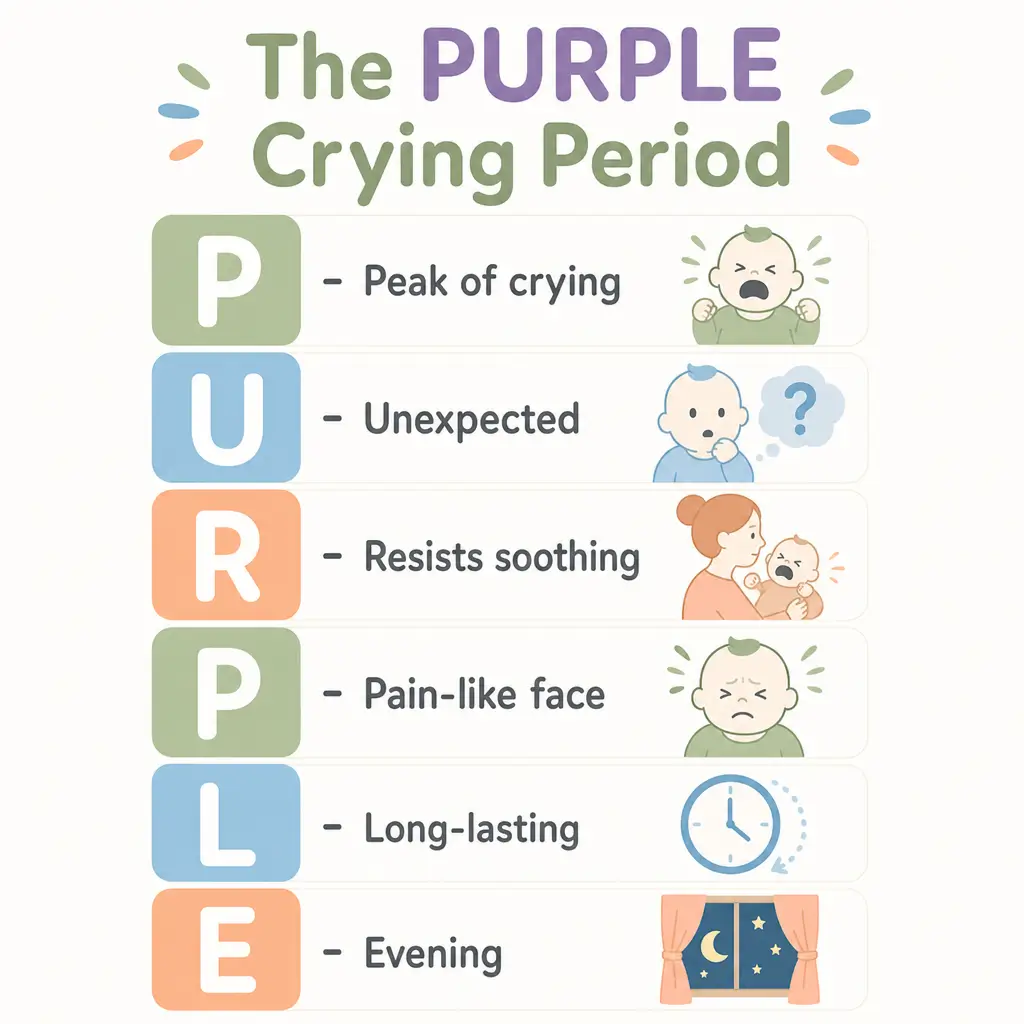
The Period of PURPLE Crying is a normal developmental phase where babies cry more than you might expect. It can happen even when your baby is warm, fed, and otherwise perfectly tended to.
“PURPLE” is a helpful way to describe what this phase often looks like:
- Peak of crying: crying increases, then eases over time
- Unexpected: it can start and stop without a clear reason
- Resists soothing: you may try everything and still get tears
- Pain-like face: baby may look uncomfortable even if they aren’t in pain
- Long-lasting: it can feel like it goes on forever
- Evening: it often clusters later in the day (but not always)
In Australia, parents often call this “the witching hour”, although PURPLE crying can be broader than an evening-only pattern. If evenings are the hardest part for you, the witching hour guide may help.
When does PURPLE crying start, peak, and stop?
Every baby is different, but PURPLE crying is generally an early-infancy phase. Many parents notice it building over the first weeks, reaching a peak, then easing again. Some babies breeze through. Others have a rough patch.
If you’re wondering whether purple crying can start at 3 months, it’s possible for babies to have unsettled periods at that age, but PURPLE crying is usually talked about as an earlier developmental stage. If crying suddenly changes or ramps up later, it’s worth discussing with your GP or child health nurse.
What Is Colic?
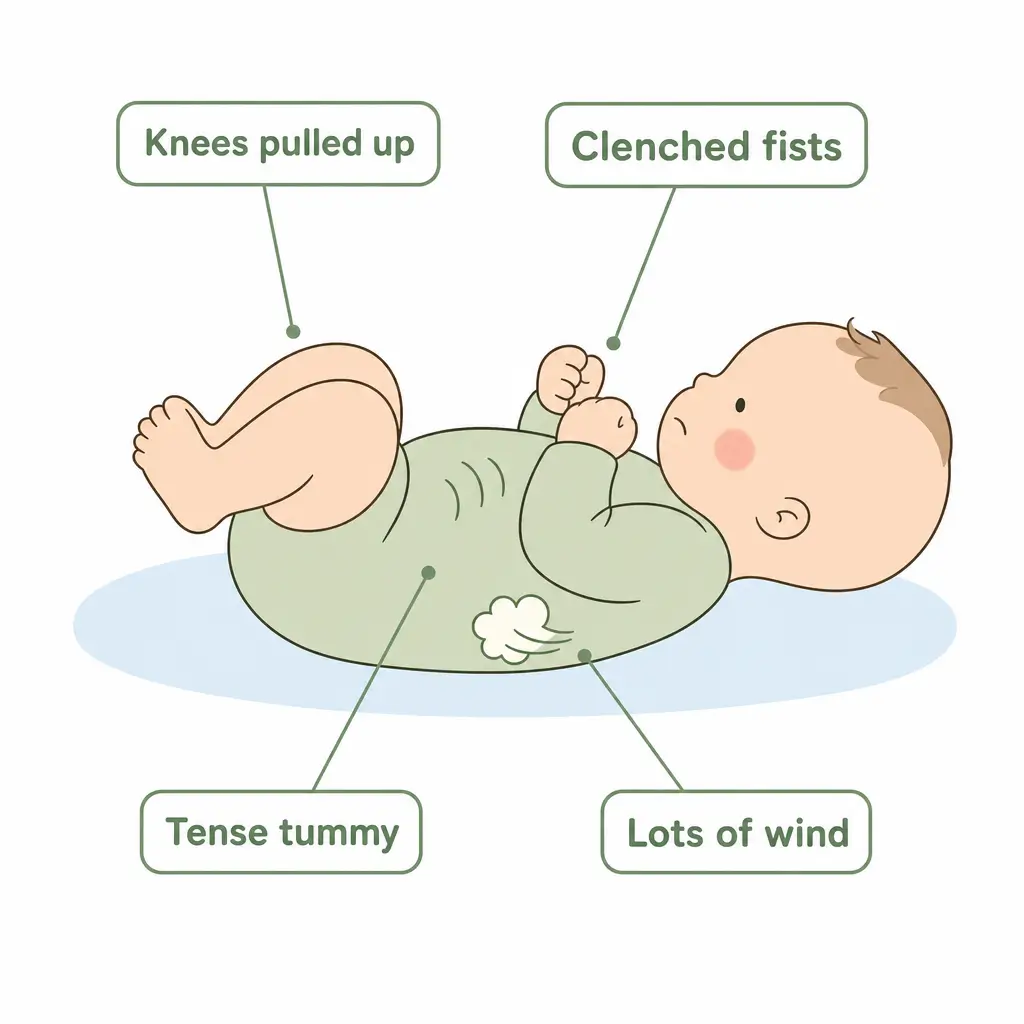
Colic is usually described as a pattern of intense, hard-to-settle crying in an otherwise well baby. It’s not a disease in itself. It’s a label used when crying is frequent, prolonged, and difficult to soothe.
Parents often describe colic as:
- crying that lasts for long stretches
- a baby who seems tense or uncomfortable
- lots of wind, burps, or a tight tummy
- evenings being worse (though it can happen at other times too)
If you want a clearer checklist of what colic can look like, see signs your baby might have colic.
When does colic start and peak?
Colic often shows up in the early weeks, can peak around the 6 to 8 week mark for many babies, and then gradually improves over the following months. The timeline varies, and it can feel slow when you’re in the thick of it.
Purple Crying vs Colic (and the Witching Hour): What’s the Difference?
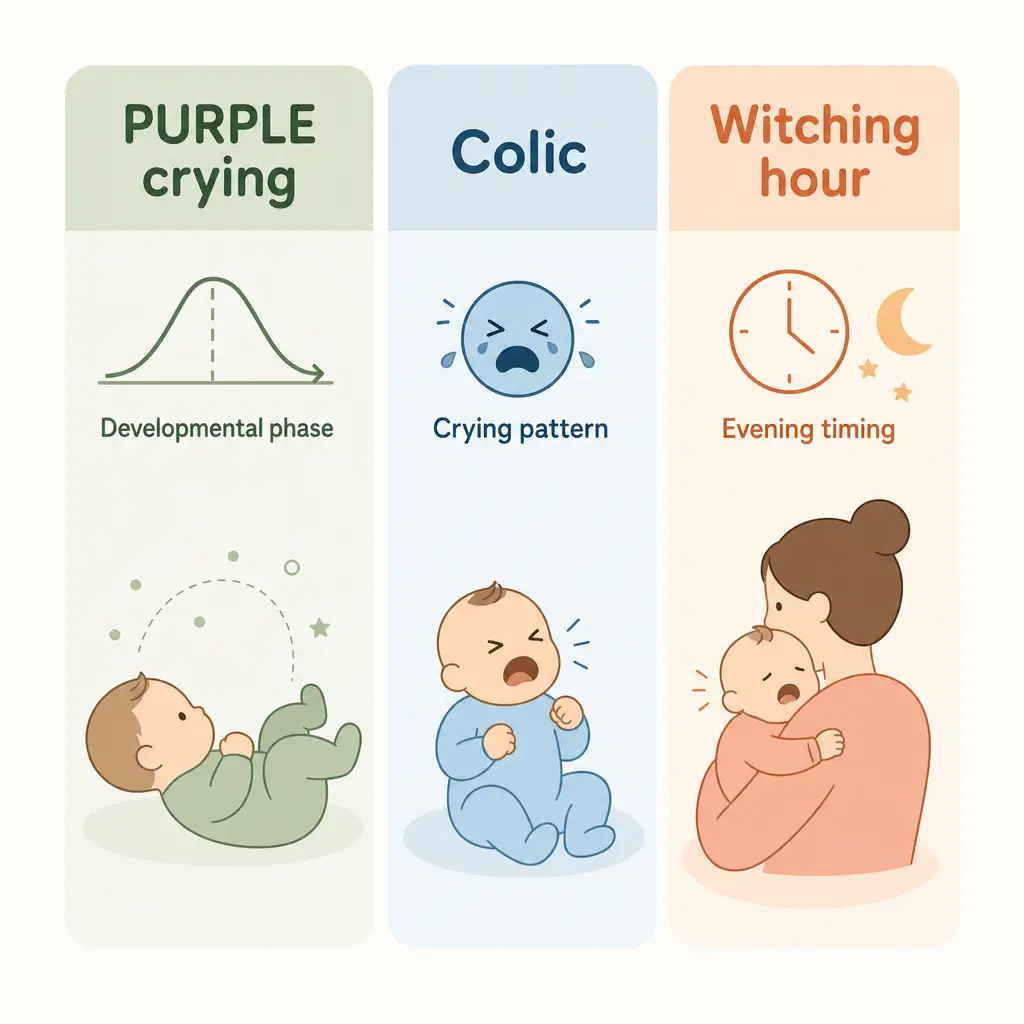
Here’s a practical comparison you can use when you’re trying to make sense of your baby’s crying.
| Feature | PURPLE crying | Colic | Witching hour (evening fussiness) |
|---|---|---|---|
| Core idea | Developmental crying phase | Pattern of excessive crying | A time-of-day pattern (often evenings) |
| Timing | Usually early weeks, rises then falls | Often begins early, improves over months | Often starts in late afternoon or evening |
| Triggers | Can seem random | May cluster with feeds, wind or discomfort | Often linked with tiredness or overstimulation |
| Soothing response | May resist soothing even when needs are met | Some babies settle with comfort or wind strategies | Often improves with a consistent calming routine |
| What you might see | Pain-like face, long crying bouts | Tight tummy, knees up, clenched fists, lots of wind | Fussiness, cluster feeding, shorter bursts of crying |
| Trajectory | Temporary phase | Temporary phase | Temporary daily pattern that comes and goes |
A useful way to think about it: PURPLE crying is a normal crying phase, colic is a description of a crying pattern, and the witching hour is about timing. A baby can fit more than one of these at the same time, which is why it can get confusing.
How Long Does the Purple Crying Period Last?
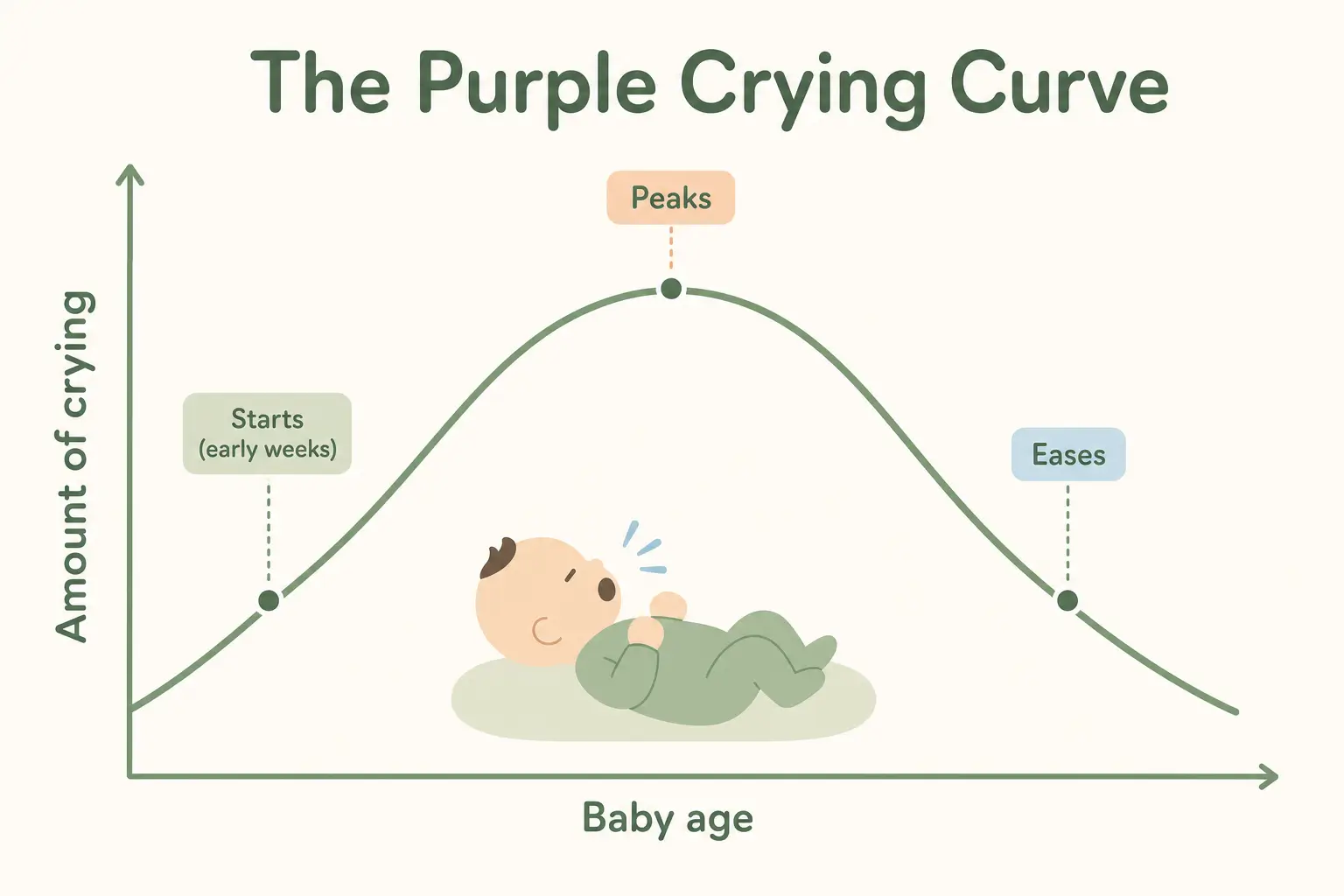
Parents often ask, “how long does purple crying last?” The honest answer is: it depends. Some babies have a brief phase, others have several weeks where crying ramps up and then gradually settles.
What helps is tracking patterns for a few days:
- When does it usually start?
- Is it linked to feeds?
- Does it ease after a burp or after sleep?
- Is your baby otherwise feeding and wetting nappies as expected?
Patterns don’t solve the crying, but they can reduce the mental load. When you can predict the rough patch, you can plan around it.
If the crying feels more like colic than a passing phase, our 2-minute colic quiz can help you make sense of the pattern.
Practical Ways to Cope With Purple Crying (and Colic-Like Fussiness)

You don’t need a “perfect” routine. Small, repeatable steps usually work better. Try a few for a couple of days, then swap what isn’t helping.
1) Start with the environment
Babies often cry harder when there’s too much going on.
- Dim the lights in late afternoon
- Keep voices low and calm
- Try steady white noise at a low volume
- Reduce pass-the-baby handling during fussy spells
If you’re heading into the rough part of the day, start calming earlier than you think you need to.
2) Use calming holds (and switch positions)
Containment can help some babies regulate.
- Upright cuddle against your chest
- Skin-to-skin (parent in a tee or open shirt helps)
- Gentle rocking or a slow sway
- “Colic carry” or tiger-in-the-tree hold (tummy down along your forearm, head supported)
If your baby hates one hold, try another. Some babies change their preference day to day.
3) Add gentle movement
A change of scene can interrupt the crying cycle.
- Pram walk
- Carrier cuddle (keep baby’s airway clear and chin off chest)
- Slow paced walking around the house
- Step outside for a minute of fresh air if it’s safe and calm to do so
Motion doesn’t fix crying, but it can help baby shift gears.
4) Feed in a calmer way
Some crying is linked with hunger, overtiredness, or swallowing air.
For bottle feeding:
- Try paced bottle feeding
- Check teat flow (too fast can increase swallowed air)
- Pause for a burp mid-feed and at the end
For breastfeeding:
- Aim for a deep latch (a feeding support person can be a game changer)
- If you have a fast let-down, short breaks and upright positioning may help
Burping tips are here: best ways to burp a baby.
5) Try wind strategies between feeds
These are simple, low-risk options that many parents find worth trying:
- Clockwise tummy massage with warm hands
- Bicycle legs
- Knees gently toward tummy (slowly, not forced)
- Supervised tummy time when baby is calm and awake
A step-by-step wind guide is here: relieving trapped wind.
6) Create a short reset routine
When crying goes on and on, the goal shifts from “stop the crying” to “help everyone cope safely.”
A reset might look like:
- Put baby down safely on their back in the cot
- Take a sip of water
- Take 10 slow breaths
- Return and try one new strategy
If there’s another adult around, tag-team. Even a 15-minute swap can help you come back calmer.
7) Keep safe sleep separate from settling
When baby is ready for sleep:
- Back to sleep on a firm, flat surface
- Keep the cot clear (no pillows, toys, or loose bedding)
- Avoid overheating
Settling methods can be used, but safe sleep setup stays the same.
Could It Be More Than a Crying Phase?
Sometimes crying is just crying. Sometimes it’s a sign something else is going on. If any of these apply, it’s worth getting medical advice promptly:
- fever
- green (bilious) vomiting
- blood or mucus in the stool
- fewer wet nappies than expected (or a sudden drop)
- poor feeding, poor weight gain, or repeated vomiting
- extreme sleepiness, floppiness, or a baby who seems very unwell
- your baby is inconsolable and you feel something isn’t right
Trust your gut. If you’re worried, speaking with your GP or child health nurse is the right move.
Gentle Herbal Support for Windy Babies

Some families choose to use Infants’ Friend Colic & Wind, with chamomile, lemon balm and dill seed oil, which are ingredients traditionally used in Western herbal medicine to help relieve wind or gas pain, mild indigestion and disturbed or restless sleep in babies. It is alcohol-free, sugar-free, and suitable from birth when used as directed.
Infants’ Friend Colic & Wind (AUST L 367810) contains ingredients traditionally used in Western herbal medicine for colic relief (wind and gas pain). Available Australia-wide since 1935.
You’ll find Infants’ Friend at Coles, Woolworths, and Chemist Warehouse. See our where to buy page for full stockist details.
Frequently Asked Questions
Final thoughts
Crying phases can feel endless when you’re living them, especially at night. Still, most babies move through this stage with time and steady support. Focus on simple steps, keep your baby safe, and lean on your support people when you can.
AUST L 367810. Always read the label and follow the directions for use. If symptoms persist, talk to your health professional.