
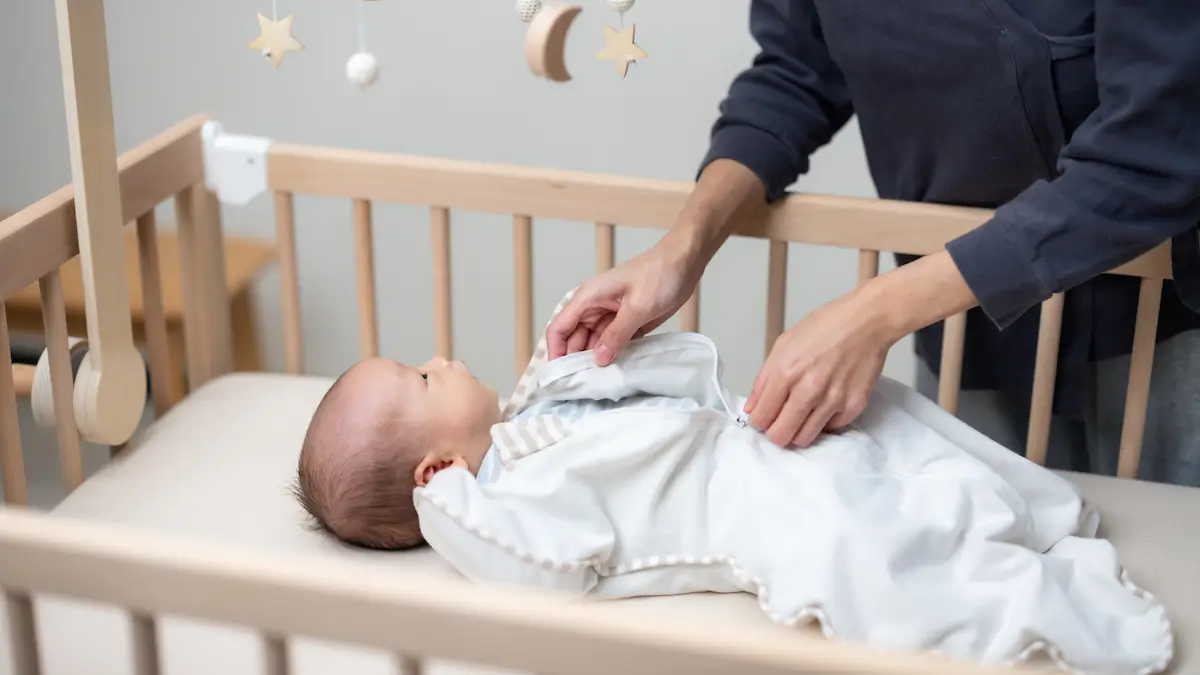
TOG stands for Thermal Overall Grade. It’s a simple measure of how much warmth a fabric or garment provides. For baby sleepwear, like swaddles and sleeping bags, TOG helps you choose the right level of insulation for your room temperature. Think of TOG as a guide, not a rule. Your baby’s comfort cues always come first.
TOG Ratings Explained
A higher TOG means a warmer garment. A lower TOG feels lighter and cooler. TOG measures insulation, not thickness. Two items can look the same but feel different because of fabric weave or fill.
TOG is not the same as room temperature. It tells you how warm the sleepwear is, not how warm the nursery should be. You’ll match the garment’s TOG to your room temperature and then adjust layers.
Different brands may test TOG a little differently. That’s why their charts vary. Always read the label and the brand’s guide for the product you’ve chosen.
TOG & Room Temperature: Quick Guide
Use these ranges as a starting point for Australian homes. Every baby and house is different, so adjust by watching your baby’s neck and chest (not hands or feet alone).
- 0.2–0.5 TOG
Best when the room is roughly 24–27 °C or hotter. Warm nights, heatwaves, or very well-heated rooms. - 1.0 TOG
Suits many rooms around 20–24 °C. A common choice for spring and early autumn across much of Australia. - 2.5 TOG
Good for cooler rooms around 16–20 °C. Often used in winter or in homes that cool quickly overnight. - 3.5 TOG
For cold rooms at or below about 16 °C. If the room is this cold, consider improving room warmth first, then layer thoughtfully.
Tip: A quick rule of thumb is to step into the nursery and ask, “Would I feel comfortable resting here in a light layer?” Then check your baby’s neck or chest after 10–15 minutes in bed. A sweaty neck or clammy chest means too warm. A cool chest with fussing may mean they need a touch more warmth.
What Should Baby Wear Under Each TOG?
Use light, breathable fabrics and add or remove a layer as needed. Avoid headwear for sleep and avoid loose blankets in the cot.
- Under 0.2–0.5 TOG
Short-sleeve or singlet bodysuit. If your baby still feels warm to the touch, reduce layers. - Under 1.0 TOG
Short-sleeve bodysuit. Add a lightweight long-sleeve layer if the room is closer to 20 °C or your baby tends to run cool. - Under 2.5 TOG
Long-sleeve bodysuit with a soft cotton onesie or pyjama. If your baby is naturally warm, the bodysuit alone may be enough. - Under 3.5 TOG
Long-sleeve bodysuit plus a cotton onesie. If baby still seems cool, add a singlet bodysuit. Try to warm the room rather than over-layering.
Check the neckline and chest after settling. Adjust layers slowly and recheck.
Checking the Room Temperature
Use a room thermometer placed near the sleep space, away from direct sun, heaters, or open windows. Consider insulation, airflow, fans, and whether your baby sleeps against an external wall or near a draught.
Your baby’s cues are the most reliable guide. A sweaty neck or damp hair suggests overheating. A cool chest with restlessness can mean slightly under-dressed. Hands and feet often feel cooler than the chest and aren’t a reliable measure on their own.
Beyond TOG: Fabric, Fit, and Brand Variations
Breathable fabrics help keep temperature more stable. Cotton, bamboo-viscose blends, and merino blends are popular because they wick moisture and feel comfortable against the skin.
Fit matters for safety and comfort. The neck and arm openings should be the right size so the bag can’t ride up over your baby’s face. Choose the correct size for your baby’s weight and length.
Expect some differences between brand charts. If your sleepwear brand provides a specific table, use it as your primary reference and then fine-tune by checking your baby’s cues.
Safe Sleep Basics
- Place your baby on their back for every sleep.
- Use a firm, flat mattress in a safe cot that meets Australian/New Zealand standards.
- Keep the cot clear: no pillows, doonas, loose blankets, soft toys, or bumpers.
- Stop swaddling when your baby shows signs of rolling and transition to arms-out sleeping.
- Keep cords, heaters, and gaps away from the cot.
- Avoid overheating. Choose a TOG and layers that suit the room, then check your baby’s chest and neck.
If you’re using a swaddle plus a sleeping bag, avoid stacking high-TOG items together. Instead, choose one appropriate TOG and adjust the under-layers.
Evening Fussiness & Comfort
Clothing alone won’t solve evening fussiness, but it can help your bedtime routine feel calmer. If nights are tough, try:
- A simple wind-down in a dim room
- White noise at a low, steady volume
- Paced bottle feeds or breastfeeding position tweaks
- Burp breaks during and after feeds
- Upright cuddles for 20–30 minutes post-feed
For more ideas, see relieve trapped wind, burp a baby, soothe your crying baby, and signs your baby might have colic.
FAQs
What TOG for 20 °C?
Many families choose around 1.0–2.5 TOG depending on their baby’s cues and layers. If your baby runs warm, lean lighter. If they tend to feel cooler, choose the higher end. Always recheck your baby’s chest after settling.
When should I use 2.5 TOG instead of 1.0 TOG?
If your nursery sits closer to 16–20 °C, a 2.5 TOG often works well. In the low 20s, a 1.0 TOG with the right under-layers can be enough. Use the brand’s guide, then adjust based on how your baby feels.
Do I need different TOGs for summer and winter?
Usually, yes. Many families keep at least two options, such as a lighter 0.2–1.0 TOG for warmer months and a 2.5 TOG for cooler periods.
Why is my baby still sweaty or chilly at the “right” TOG?
Brand charts are only guides. Fabric type, fit, layers, airflow, and your baby’s natural temperature all play a part. Tweak the under-layers and re-check your baby’s chest and neck after 10–15 minutes.
Does washing change the TOG?
Washing can affect how fabric drapes and feels. Follow care instructions and keep an eye on how your baby responds after washes. If the garment feels thicker or thinner over time, adjust layers accordingly.
Is TOG the same as CLO?
They are related concepts but used in different contexts. TOG is a consumer-friendly measure for warmth in textiles like bedding and sleeping bags. CLO is more common in clothing science. For baby sleepwear, TOG is the practical guide you’ll see on labels.
A Simple Layering Planner
Use this quick prompt when you’re tired and deciding fast:
- Check room temperature.
- Choose a TOG for that range.
- Add the lightest under-layer you think will work.
- Settle your baby, then check chest and neck after 10–15 minutes.
- Too warm? Remove a layer. Too cool? Add a light layer or warm the room a little.
If Evenings Are Still Tricky
Some families also use gentle options to support tummy comfort as part of their routine. Infants’ Friend Colic & Wind Oral Liquid contains ingredients traditionally used in Western herbal medicine to relieve wind, bloating and mild indigestion in babies. It’s alcohol-free and sugar-free, and suitable from birth when used as directed. Learn more about Colic & Wind Oral Liquid and see how to use Infants’ Friend for dosage by age and mixing tips.
For personalised questions about the product, you can contact us.
AUST L 367810. Always read the label and follow the directions for use. If symptoms persist, talk to your health professional.


